Baruch Spinoza was 23 when Amsterdam's Portuguese-Jewish congregation cast him out with the harshest ban it ever issued. Born in that city on November 24, 1632, he spent the rest of his short life grinding glass lenses and writing books so dangerous he would not sign his name to them.
Nearly three centuries later, Albert Einstein named him when asked whether he believed in God.
The ban of 1656
Spinoza grew up in a merchant family whose ancestors had fled Portugal for the more tolerant Dutch Republic. He was a gifted pupil at the congregation's Talmud Torah school, then left formal study at 17 to help run the family's importing business.
On July 27, 1656, community leaders issued a writ of herem against him. The Stanford Encyclopedia of Philosophy's entry on Spinoza calls it the harshest such writ the Sephardic community of Amsterdam ever pronounced, and notes it was never lifted. The document itself names only his "abominable heresies" and "monstrous deeds," without spelling them out.
Lenses, microscopes and a quiet village
He did not convert or join another faith. Instead he learned to grind lenses and built microscopes and telescopes, work that put him in touch with the scientist Christiaan Huygens and with Henry Oldenburg, secretary of the Royal Society in London, according to his Wikipedia biography.
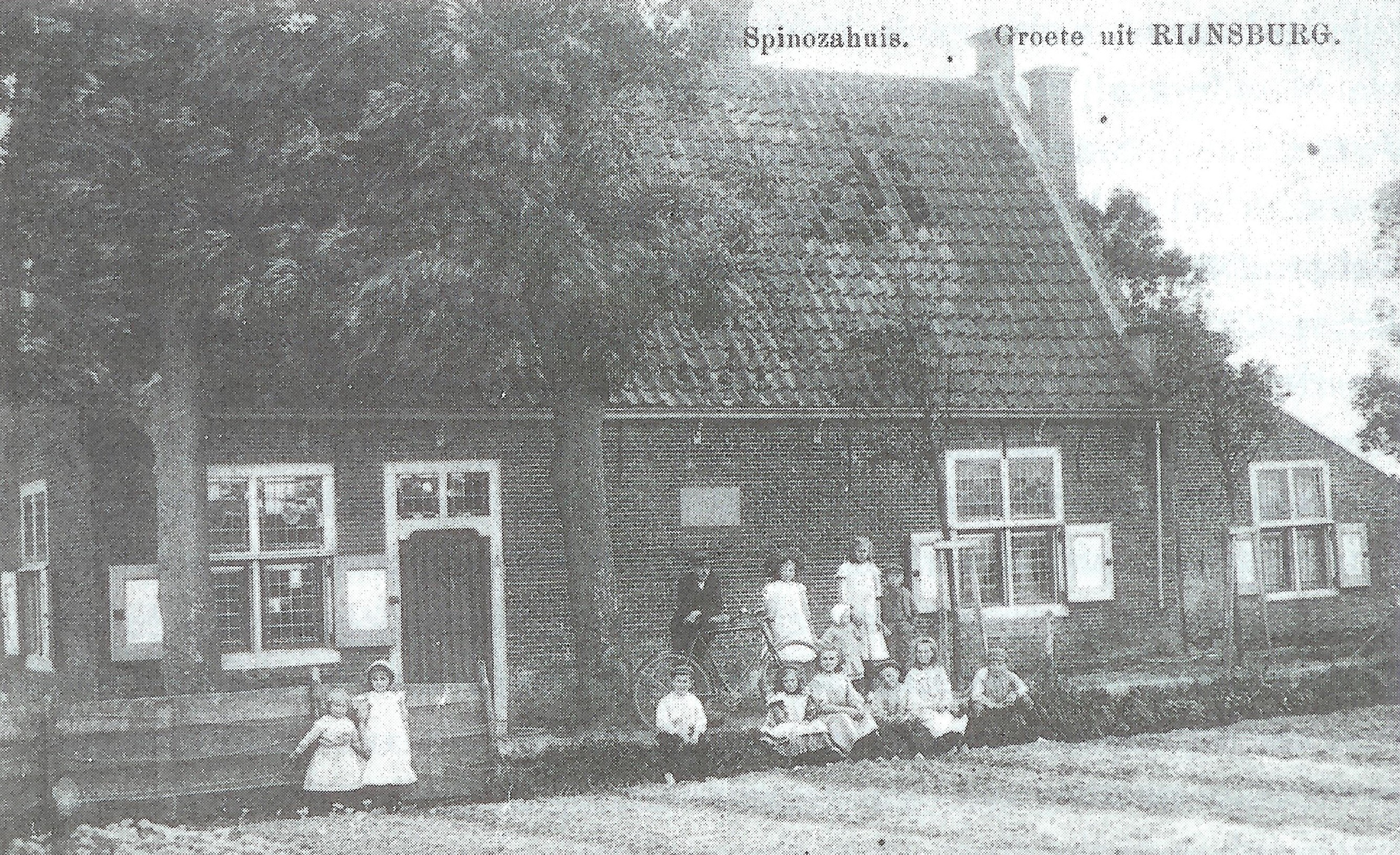
Around 1661 he moved to Rijnsburg, a village near the university town of Leiden; the house where he lodged is now a small museum. Two years later he moved on to Voorburg, and later to The Hague. He even turned down the chair of philosophy at the University of Heidelberg, perhaps fearing it would limit what he could say.
A book "forged in hell"
His Theological-Political Treatise came out in 1670 under a false publisher's name and an invented place of printing. It questioned whether the Hebrew Bible was of divine origin and argued that church authorities should have no part in running a state. One critic called it "a book forged in hell by the devil himself," as the Stanford entry records.
His masterwork, the Ethics, was finished around 1674 but never printed in his lifetime. Its most famous phrase, "God, or Nature" (Deus, sive Natura), sums up his idea that God and the natural world are one and the same.
From the Dutch Golden Age to Einstein, in five dates
- November 24, 1632: born in Amsterdam.
- July 27, 1656: banned by his congregation, aged 23.
- 1670: Theological-Political Treatise published anonymously.
- February 21, 1677: dies in The Hague at 44; friends publish his unprinted works that same year.
- 1929: Einstein answers a question about God by naming him, 252 years after his death.
Spinoza had been ill with a lung condition, probably tuberculosis and possibly made worse by years of breathing glass dust from his lens work.
What Einstein actually said
In 1929 Rabbi Herbert S. Goldstein sent Einstein a telegram asking if he believed in God. Einstein telegraphed back: "I believe in Spinoza's God who reveals himself in the orderly harmony of what exists, not in a God who concerns himself with the fates and actions of human beings." The wording is preserved in the Wikipedia article on Spinoza, which also notes that Einstein named Spinoza as the philosopher with the most influence on his worldview.
Badiyaa has checked several lines pinned on Einstein, including the "explain it simply" quote he probably never said and the "insanity" line that first appears in 1981. The Spinoza telegram is one he did send.
The Rijnsburg house still stands, and 394 years after his birth, the Ethics remains in print in dozens of languages.
Sources
- Baruch Spinoza, Wikipedia, 2026
- Baruch Spinoza, Stanford Encyclopedia of Philosophy, Stanford University, 2023
Image: Unknown photographer, Public domain via Wikimedia Commons
This article was produced with AI assistance and reviewed by our Editorial Desk. How we work.