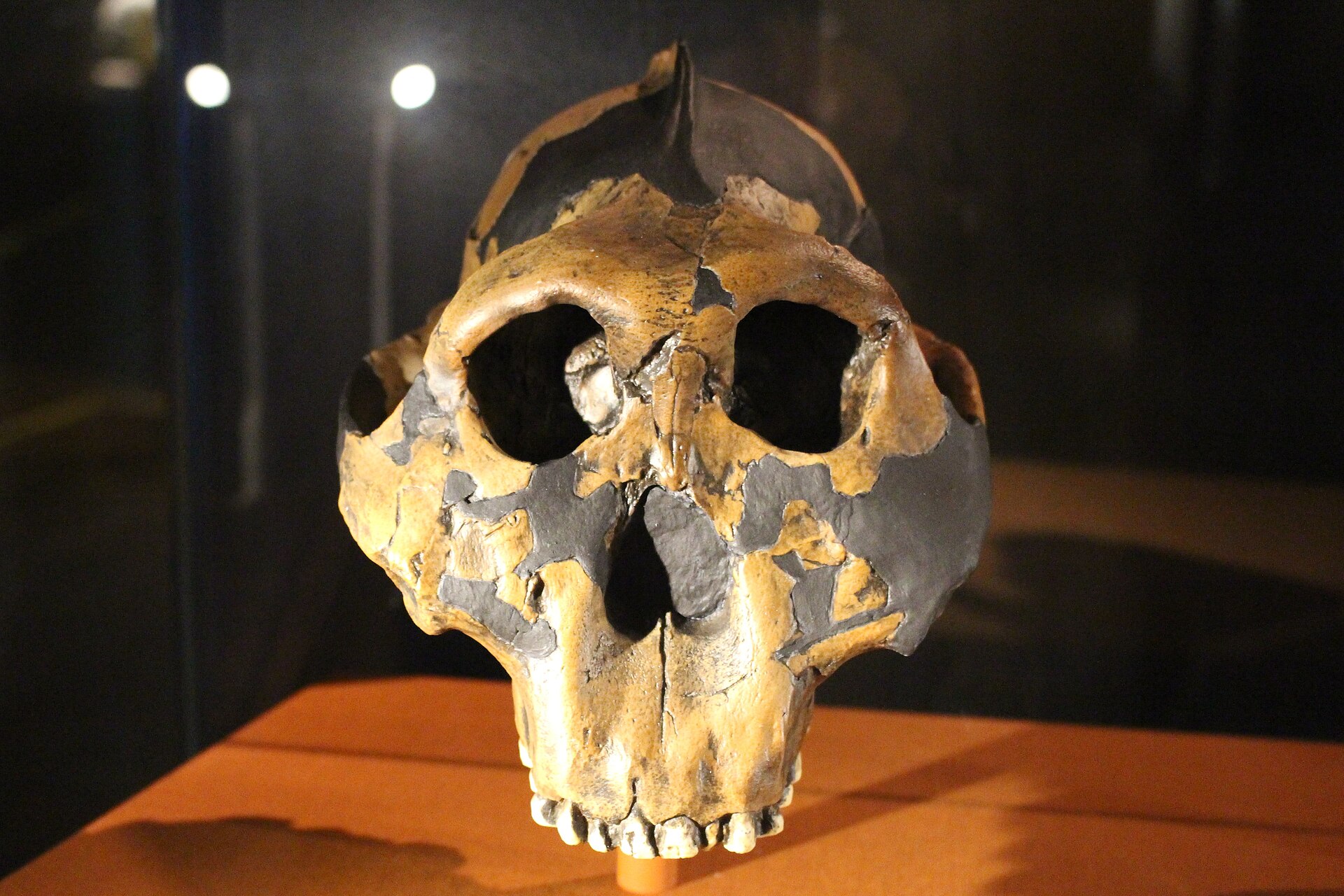
Lucy, the famous 3.2-million-year-old skeleton from Ethiopia, could one day share a genus name with every living person. A Monash University researcher argues that Australopithecus and Paranthropus, the two main groups of early human relatives, should be folded into Homo, stretching our genus back across roughly the last 4 to 5 million years.
The case is laid out by Ian Towle of the Monash Biomedicine Discovery Institute in Melbourne in an August 2026 paper in the American Journal of Biological Anthropology, which is freely readable through the open-access copy in PubMed Central. "Australopithecus is widely considered non‐monophyletic," Towle writes, meaning it does not contain one ancestor and all of its descendants.
The problem with the old labels
Modern biology tries to name only clades, groups made of a common ancestor and every species descended from it. By that test, Towle argues, human evolution is messy. In study after study, some Australopithecus species turn out closer to Homo or Paranthropus than to other members of their own genus. His paper calls Australopithecus a "wastebasket" grade rather than a well-defined clade.
Paranthropus has its own troubles. The robust-jawed hominins lived from about 2.9 million to at least 1.2 million years ago, and Wikipedia's Paranthropus entry notes that the genus's validity is contested, with some researchers treating it as part of Australopithecus.
Homo, meanwhile, has lost its neat definition. Brain size used to be the badge of our genus, yet small-brained members keep turning up. Homo naledi, from South Africa's Rising Star Cave, had a cranial capacity of 465 to 610 cubic centimeters, against 1,270 to 1,330 for modern humans, and lived as recently as 236,000 years ago.
The proposed fix
Towle's answer is to merge rather than split. "One potential solution is the subsumption of Australopithecus and Paranthropus within an expanded genus Homo," he writes. Splitting Australopithecus into many smaller genera would also restore clades, the paper notes, but it would create a crowd of single-species genera that add little information.
On the numbers in the paper, Homo as now drawn spans roughly 2 to 3 million years; the expanded genus would cover about 4 to 5 million, close to doubling its time depth and bringing it nearer the span of other primate genera. Species names would survive the change, so Lucy's kind would still be distinct from ours, just filed under Homo.
Badiyaa has followed the fossils at the center of this debate, from Lucy's discovery at Hadar in 1974 to the new 3-million-year date for the Taung Child.
Limits
This is a proposal, not an adopted rule, and Towle acknowledges similar ideas have been floated before. He also names its main cost: "the loss of taxonomic information relating to adaptive and ecological variation, particularly within Paranthropus and large‐brained Homo." Many specialists will likely prefer to keep separate genera that signal real differences in diet and anatomy.
At a minimum, the paper asks for clearer rules on when a group of species deserves its own genus, a question the next big fossil find could force.
Sources
- "Clades, Grades, and the Genus Problem: A Case for Revising Hominin Taxonomy", American Journal of Biological Anthropology (Monash University), 2026
- Clades, Grades, and the Genus Problem (open-access full text), PubMed Central, US National Library of Medicine, 2026
- Paranthropus, Wikipedia, 2026
- Homo naledi, Wikipedia, 2026
Image: Emőke Dénes, CC BY-SA 4.0 via Wikimedia Commons
This article was produced with AI assistance and reviewed by our Editorial Desk. How we work.