A single atomic clock could, in principle, record time running faster and slower at once, and physicists say today's best ion clocks are close to sensitive enough to catch it. The proposal, set out in an April 2026 paper in Physical Review Letters, describes how a trapped-ion clock whose motion is placed in a quantum superposition would carry a superposition of elapsed times too.
Igor Pikovski, a theorist at Stevens Institute of Technology in Hoboken, New Jersey, led the work. His coauthors are Stevens colleagues Gabriel Sorci and Joshua Foo, experimental physicist Christian Sanner of Colorado State, and Dietrich Leibfried of NIST, the US National Institute of Standards and Technology. "Time plays very different roles in quantum theory and in relativity," Pikovski said in Stevens Institute's announcement.
The quantum twin paradox
Relativity already says moving clocks run slow. The famous twin paradox imagines one twin traveling fast and returning younger; in real life, astronaut Scott Kelly aged about 8.6 milliseconds less than his twin brother Mark during his year on the International Space Station. The effect is usually minuscule. By the Stevens team's own example, a clock cruising at 10 meters per second, roughly the pace of a fast cyclist, would need 57 million years to drift one second behind a twin clock left standing still.
Quantum mechanics adds a twist. A particle can be in two places, or moving at two speeds, simultaneously. Put a clock in that condition and the time it logs should split as well, like a single twin who comes home both younger and older. Pikovski first sketched this quantum twin paradox with collaborators over 10 years ago; until now, nobody had a realistic way to look for it.
How the test would work
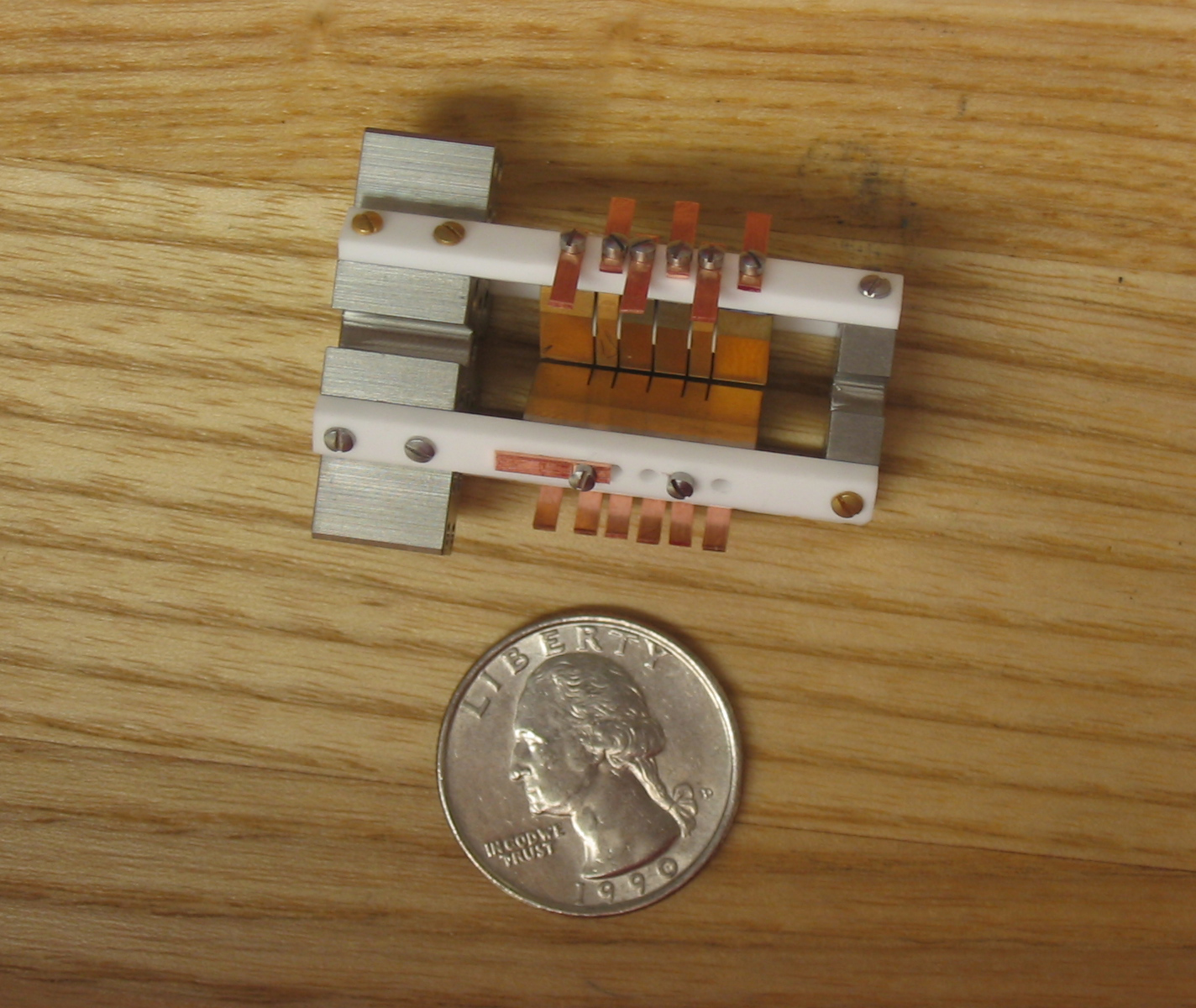
An ion clock holds one electrically charged atom, aluminum or ytterbium for example, in an electromagnetic trap, cools it until it barely moves, and reads its ticking with laser pulses. Sorci noted that even at the lowest possible energy, "the ticking rate will still be affected by just the quantum fluctuations alone." The proposal then goes a step beyond cooling. By "squeezing" the ion's motion, a standard trick from trapped-ion quantum computing, experimenters could tie the clock's rate to its quantum movement, so the two become entangled.
The numbers explain the optimism. That one-second lag over 57 million years is a fractional shift of about 5.6 parts in 10 quadrillion, while NIST's aluminum quantum logic clock reached a total uncertainty of 9.4 parts in 10 quintillion in 2019, roughly 600 times finer. "We have the technology to generate the required squeezing and a path to reach the clock precision needed in ion clocks to observe such effects for the first time," Sanner said. The authors' preprint on arXiv ends on the same note, concluding that "experiments with trapped ion clocks are within reach" of this quantum regime.
Why it matters
Quantum theory and general relativity, which Einstein first wrote down in his November 1915 field equations, rarely meet in a laboratory. A clock that shows time itself in superposition would be one of the cleanest places where both apply. It joins other tabletop gravity work, such as the University of Queensland team that sent a message with gravity.
Limits
Nothing has been measured yet. The paper is theory, the predicted signals are tiny, and they rely on squeezing control that still has to be shown in a working clock. The experimental partners at Colorado State and NIST are part of the collaboration, and the team says a lab demonstration is its next goal.
Pikovski framed the stakes plainly: "Physics is still full of mysteries at the most fundamental level."
Sources
- Quantum Signatures of Proper Time in Optical Ion Clocks, Physical Review Letters (Stevens Institute of Technology, NIST, Colorado State University), 2026
- "Scientists at Stevens Institute of Technology Reveal That Time Can Go Quantum in Ion Clock Experiments", Stevens Institute of Technology, 2026
- Quantum signatures of proper time in optical ion clocks (preprint, arXiv:2509.09573), arXiv, 2026
- Twin paradox, Wikipedia, 2026
- Quantum logic clock, Wikipedia, 2026
Image: National Institute of Standards and Technology, Public domain via Wikimedia Commons
This article was produced with AI assistance and reviewed by our Editorial Desk. How we work.