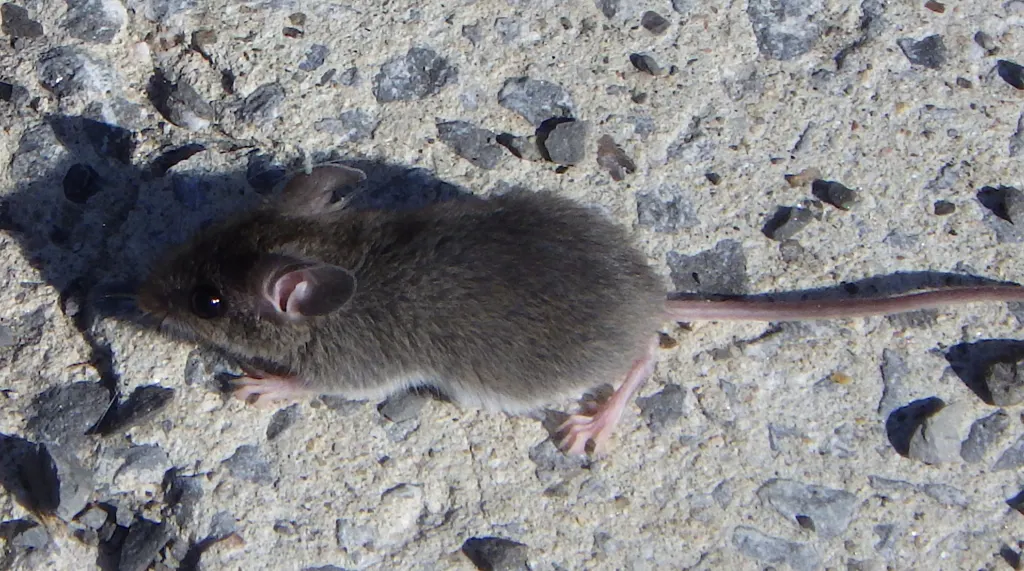
Male mice that spent eight days only watching other mice fight walked into their own bout ready to go. In a Princeton University experiment, these spectators attacked a tough opponent faster than untrained mice, yet they were no more aggressive overall, and their brains had shifted roughly halfway toward those of experienced fighters.
The study, led by postdoctoral researcher Jorge Iravedra-Garcia in the lab of neuroscientist Annegret Falkner, appeared on November 4 in a 2026 paper in Nature, “Aggression experience and observation drive shared behavioural and neural changes”.
How the mouse fight club worked
The team split male mice into three groups and trained them three times a day, in 10-minute sessions, for eight days straight:
- Fighters sparred with an easy-to-beat partner each session.
- Spectators sat on a raised platform behind a clear barrier, where they could see, hear and smell a different pair sparring but could not join in.
- Novices spent the same time with a mouse-sized soft toy and saw no fights.
On day nine every mouse faced three four-minute rounds against a hard-to-beat rival. Spectators and fighters both struck sooner than novices and spent less time with their backs turned. None of the groups spent more total time attacking, which suggests the training made them prepared rather than meaner.
The watchers were hooked during training, too. They ignored the sparring pair when it was simply walking around, but turned to look once an attack began. “They’re kind of midway between the truly experienced fighters and the naive animals,” Falkner said in Princeton University’s release on the study.
What changed in the brain
To see inside, Iravedra-Garcia engineered excitatory brain cells to glow green and inhibitory cells to glow red, then threaded optical fibers into a dozen connected brain regions so he could follow both cell types at once. He spent a year perfecting the device.
The “mirror” activity earlier work had found in one aggression area turned up across nearly every region tracked. While watching, spectators’ inhibitory cells fired much like a fighter’s, while their excitatory cells looked more like a novice’s. Over the eight days, inhibition on key aggression hubs eased off in both fighters and spectators, like a foot lifting from a brake. When the researchers restored that inhibition, the mice fought like novices again.
“Observation’s not a replacement for experience,” Falkner said in the same release. “But it gets you part of the way there.”
Why we watch
The finding offers one answer to an old puzzle: why so many animals, people included, cannot look away from a fight. Watching may be a cheap way to rehearse a dangerous situation. That fits a long line of work on observational learning, from Albert Bandura’s 1961 Bobo doll experiment with children to the mirror neurons first described in monkeys in 1991.
Badiyaa has covered other Princeton work on what animals pay attention to, including macaques that looked away from lifelike digital monkey faces, and speed in animal choices in the Tübingen study of carrion crows.
Limits
Only male mice were tested, and the fights were short, staged bouts. Falkner says it is unclear how the results translate to humans, and that circuit changes useful in a violent setting are probably not useful outside one. Next, the lab plans to test how female mice watching males fight use what they see, and whether replaying the recorded brain patterns into an untrained mouse can make it act as if it had watched a fight.
Sources
- “Aggression experience and observation drive shared behavioural and neural changes”, Nature (Princeton University), 2026
- “Mice that watch fights come away battle-ready”, Princeton University, 2026
- “Observational learning”, Wikipedia, 2026
Image: Ahunt, CC0 via Wikimedia Commons
This article was produced with AI assistance and reviewed by our Editorial Desk. How we work.