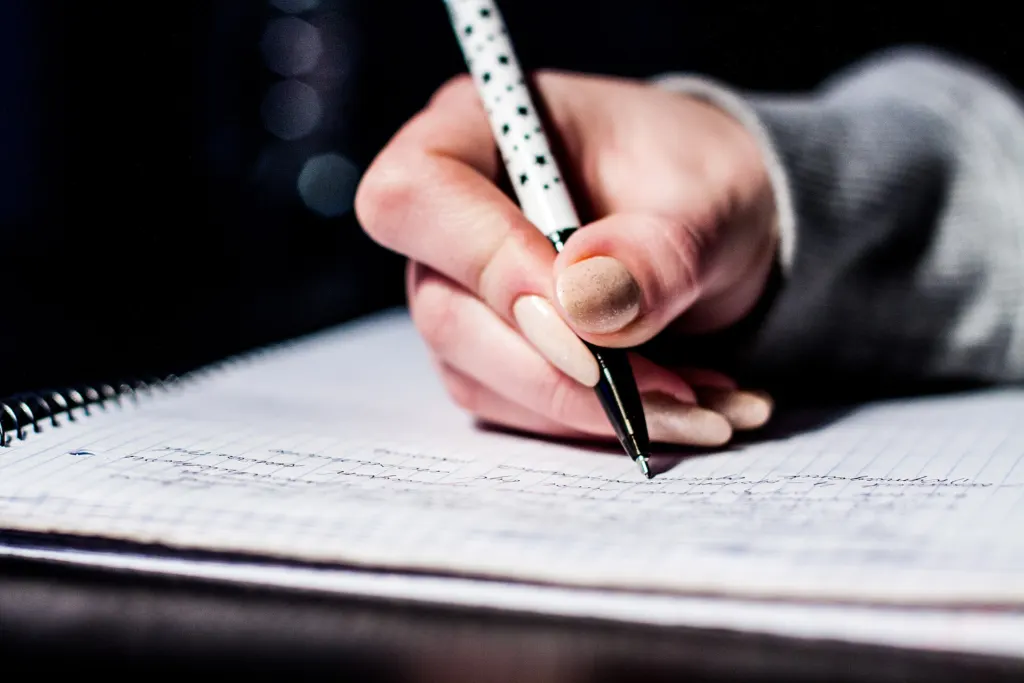
Students who penciled appointments into a paper planner recalled them more accurately an hour later than peers who tapped the same dates into a smartphone, and brain scans showed their hippocampus working harder during recall. That is the finding behind a claim circulating this week that paper-calendar users process information differently, and the numbers come from a 48-person experiment at the University of Tokyo, published in a peer-reviewed neuroscience journal on March 19, 2021.
The viral version says “psychologists agree.” The research says something narrower and more interesting.
What the Tokyo team actually did
Keita Umejima, Kuniyoshi Sakai and colleagues split 48 Japanese university students, aged 18 to 29, into three groups of 16. Each read scripted conversations containing 14 appointments and copied them into a monthly calendar: one group with a four-color pen in a paper notebook, one with a stylus on an iPad, and one by thumb-typing into a Google Nexus 5 phone.
The paper group filled in the calendar in about 11 minutes, against 14 for the tablet and 16 for the phone, according to the university’s own summary. After an hour spent on a distracting listening task, every participant answered 16 multiple-choice questions about the appointments while lying inside a 3-tesla MRI scanner.
Three results stood out in the published paper:
- The paper group finished writing the schedule significantly faster than the tablet and phone groups (p = 0.003).
- On the five simplest questions, the paper group scored higher than the tablet group (p = 0.04).
- During recall, the paper group showed stronger activity in the hippocampus, the precuneus, visual cortex and language-related frontal regions than the device groups combined.
Overall accuracy across all 16 questions did not differ between the groups, a detail most retellings skip. The authors read the brain data as evidence that paper supplied richer encoding cues, including the fixed spatial layout of a physical page, that the brain later used as retrieval hooks.
Why the pen keeps winning in the lab
The Tokyo study built on a 2014 paper in Psychological Science by Pam Mueller and Daniel Oppenheimer, who ran three experiments comparing longhand and laptop note-taking. Laptop users tended to transcribe lectures almost word for word and then did worse on conceptual questions; the authors argued typing encourages shallower processing.
A 2024 study from the Norwegian University of Science and Technology, added electrical evidence in a paper published in January 2024. Audrey van der Meer and Ruud van der Weel fitted 36 students with 256-electrode EEG caps while they wrote words in cursive with a digital pen or typed them with one finger. Handwriting produced far more widespread connectivity in the theta and alpha bands across parietal and central regions, patterns the authors link to memory formation. Typing did not.
Put the three together and a pattern emerges: the deliberate hand movements of writing, plus the stable geography of a page, appear to give the brain more to hang a memory on than a tap on glass.
The limits, which the headline leaves out
None of these papers tested whether paper-planner people have a “different mental processing” as a trait. Each measured what happened in the minutes after a single writing task, in young university students, with sample sizes of 36 to 48.
The Tokyo tablet group wrote with a stylus, so the gap between paper and tablet was not about handwriting versus typing at all; the authors credit the physical paper itself. And the Norwegian experiment recorded only the first five seconds of each trial and never tested recall, so it shows brain activity, not proven learning.
The Mueller and Oppenheimer result has also wobbled. A 2021 direct replication led by Heather Urry, listed alongside the original on PubMed, carries the title “Don’t Ditch the Laptop Just Yet,” and the original paper itself received a corrigendum in 2018.
What this means for your calendar
Sakai, the corresponding author, put it bluntly in the university’s release: “Our take-home message is to use paper notebooks for information we need to learn or memorize.”
The honest takeaway is a modest one. If you want to remember a dentist appointment without looking it up, writing it on paper gives you a measurable edge in the lab. If you need a reminder to buzz on your wrist at 8:45, the phone still wins, because no study here measured whether anyone actually turned up on time.
The Tokyo authors closed by calling for research on what long-term exposure to mobile devices does to brain activation. That study, as of November 2026, has not been published.
Further reading
- Umejima et al. 2021, Paper Notebooks vs. Mobile Devices (journal paper, DOI)
- Van der Weel and Van der Meer 2024, Handwriting but not typewriting leads to widespread brain connectivity
- PubMed: Mueller and Oppenheimer 2014, The pen is mightier than the keyboard
Image: Tookapic, CC0 via Wikimedia Commons
This article was produced with AI assistance and reviewed by our Editorial Desk. How we work.