Magnus Carlsen became world chess champion on November 22, 2013, when a draw in game 10 against Viswanathan Anand in Chennai, India, gave the 22-year-old Norwegian an unbeatable 6½–3½ lead. Two of the 12 scheduled games were never needed.
The match was held at the Hyatt Regency Chennai under the auspices of FIDE, the International Chess Federation. Anand, the defending champion, was playing in his home country; he was 43 and rated 2775, while Carlsen came in as world No. 1 at 2870, according to Wikipedia's record of the 2013 championship.
How the match turned
The first four games were draws. Then Carlsen won three of the next five, all from long, grinding positions where he squeezed small edges:
- Game 5, November 15: Carlsen won a rook endgame after Anand's 45th move was called the decisive mistake.
- Game 6, November 16: he won again in a rook ending that analysts had thought was drawn.
- Game 9, November 21: Anand, needing to attack, blundered on move 28 just after Carlsen promoted a pawn to a queen with check.
- Game 10, November 22: a draw in a knight endgame clinched the title.
Garry Kasparov and others hailed the result as the start of a new era, because Carlsen was the first champion whose game was formed in the age of super-strong chess computers.
The road to Chennai
Carlsen had earned his place by winning the 2013 Candidates Tournament in London on a tiebreak over Vladimir Kramnik, despite losing his final game. The choice of Chennai as host drew a public complaint from Carlsen, who said he was disappointed that FIDE had not gone through a bidding process or picked neutral ground.
The prize fund was 2.65 million euros. Carlsen took home about $1.53 million and Anand about $1.02 million.
What came next
Carlsen's Wikipedia biography lists him as a five-time world champion who held the classical title from 2013 to 2023, when he declined to defend it, citing a lack of motivation. His peak rating of 2882, reached in May 2014, is the highest since FIDE adopted the Elo system in 1970. His official FIDE profile still lists him as a Norwegian grandmaster born in 1990.
Before the match, the two had met 29 times at classical time controls since 2005, with Anand winning six, Carlsen three and 20 drawn. In Chennai, Carlsen won three and lost none.
Mind games have a long history on Badiyaa too, from how Scrabble's letter values were set from newspaper front pages to the Grand Master of Memory title.
By Badiyaa's count, Carlsen's three wins in Chennai equaled his entire classical win total against Anand in the eight years before the match.
Sources
- World Chess Championship 2013, Wikipedia, 2026
- Magnus Carlsen, Wikipedia, 2026
- Carlsen, Magnus: FIDE profile, International Chess Federation (FIDE), 2026
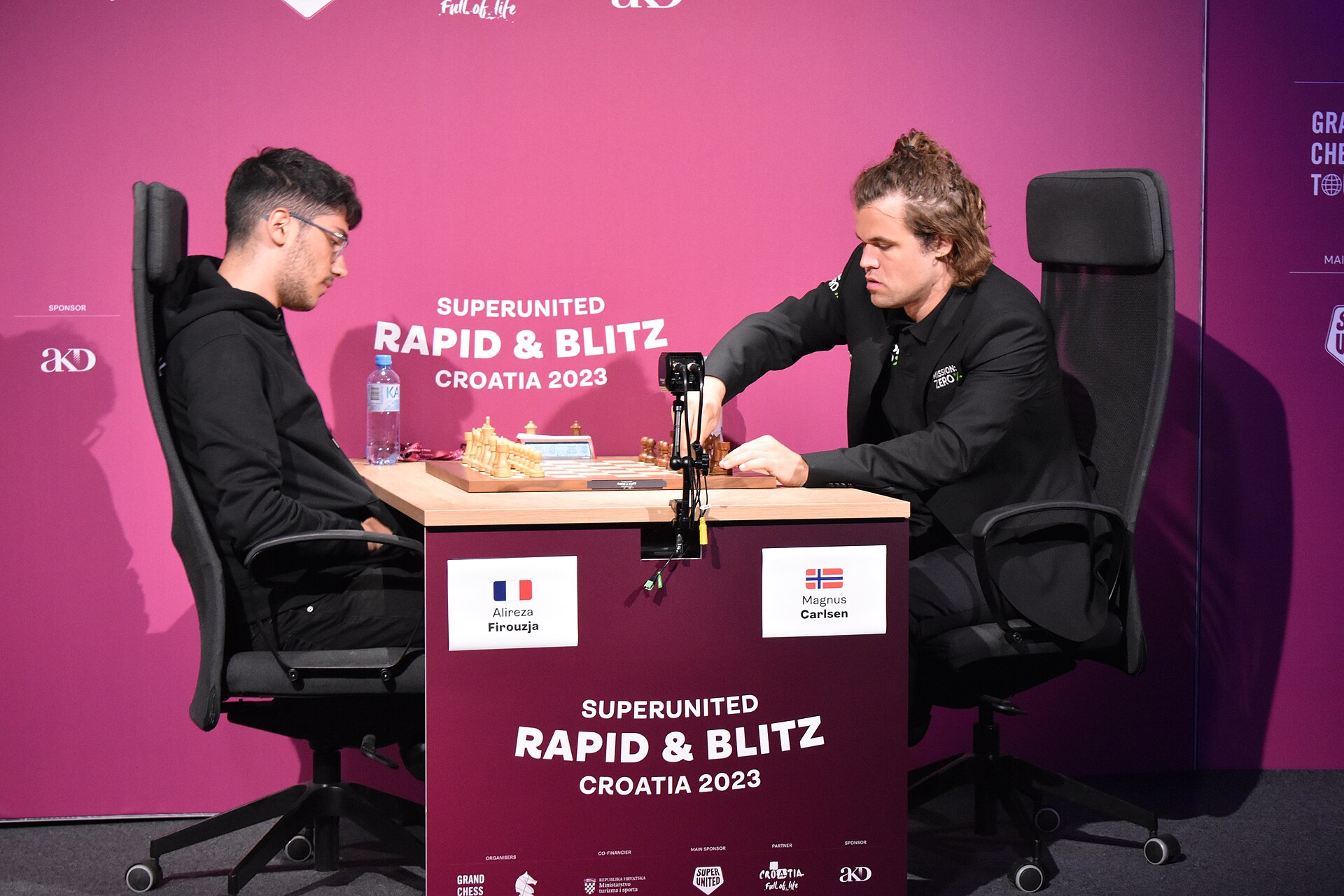
Image: Miroslav.vajdic, CC BY-SA 4.0 via Wikimedia Commons
This article was produced with AI assistance and reviewed by our Editorial Desk. How we work.