To earn the title Grand Master of Memory, you had to memorize the order of a shuffled deck of 52 playing cards in under 40 seconds. That was only one of three tests. As of November 2016, just 154 people in the world held the title.
The rank was handed out by the World Memory Sports Council, the body behind the World Memory Championships, and it works a lot like a chess title. First awarded in 1995, it became one of the stranger badges of honor in competitive sport.
The three tests
Under the classic standard, a candidate had to pull off all three of these feats at competitions approved and refereed by the council:
- Memorize 1,400 random digits in one hour.
- Memorize the order of 14 shuffled decks of cards in one hour.
- Memorize a single deck in less than 40 seconds.
The tests did not have to be passed at the same event, or even at the world championships, as long as the competitions were officially sanctioned.
Fourteen decks means 728 cards held in order in your head.
A ladder of titles
In 2013 the system grew into three ranks, from hardest to easiest: International Grandmaster, Grand Master and International Master. From January 2013, an International Grandmaster needed more than 6,000 total points, while the Grand Master title went to the top five finishers on 5,000 points or more who did not already hold it.
The International Master rank now uses a lower bar: 1,000 digits in an hour, 10 decks in an hour and one deck in two minutes or less. By November 2016 there were 22 International Grandmasters, 154 Grand Masters and 149 International Masters, from more than two dozen countries, with the large majority from China.
How they actually do it
None of this relies on a photographic memory. Most competitors use the method of loci, better known as the memory palace. You picture a place you know well, such as your home or a route you walk every day, and plant a vivid, often absurd image at each stop. To recall the list, you walk the route again in your head.
The trick is ancient. It is traditionally linked to the Greek poet Simonides of Ceos and described in Cicero’s De Oratore from 55 BCE. Englishman Dominic O’Brien, an eight-time world champion, built his own card and number code, the Dominic System, on top of it.
How the records compare
Set the Grand Master standards next to today’s world records and the gap is startling:
The hour-numbers record is 4,620 digits, set by Ryu Song I of North Korea in 2019, about 3.3 times the 1,400-digit Grand Master bar. The hour-cards record is 2,530 cards by Kim Su Rim, also in 2019, roughly 48 and a half decks, or about 3.5 times the 14-deck bar. And the speed-cards record is 12.74 seconds, by Shijir-Erdene Bat-Enkh of Mongolia in 2018, a little over three times faster than the 40-second cutoff.
In other words, the people at the top of memory sport now clear the old grandmaster tests with room to spare.
Feats of mental speed have a long history of stunning audiences. Badiyaa has told the story of how Shakuntala Devi found the 23rd root of a 201-digit number faster than a computer, and you can browse more human records in our offbeat section.
The current council world champion is Naranzul Otgon-Ulaan of Mongolia, who won the 2025 title in Ho Chi Minh City. The city hosts again next month: the 35th World Memory Championships run December 11 to 13, 2026, at the Rex Hotel Saigon, with competitors from more than 20 nations.
Further reading
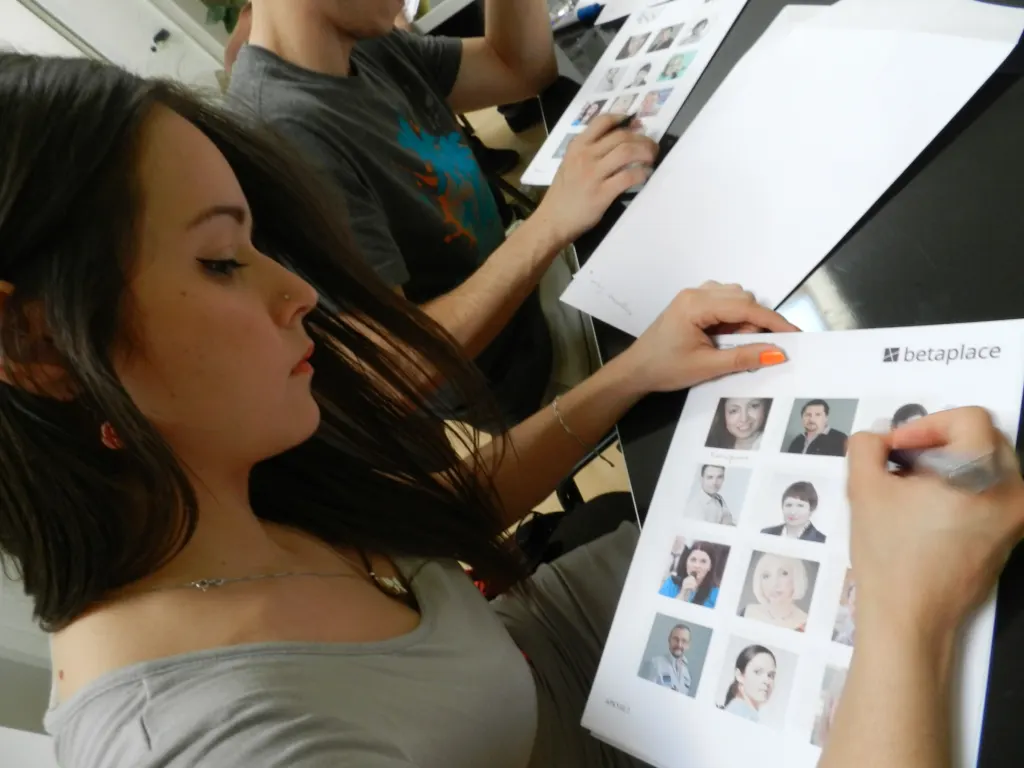
Image: Memoacademy, CC BY-SA 3.0 via Wikimedia Commons
This article was produced with AI assistance and reviewed by our Editorial Desk. How we work.