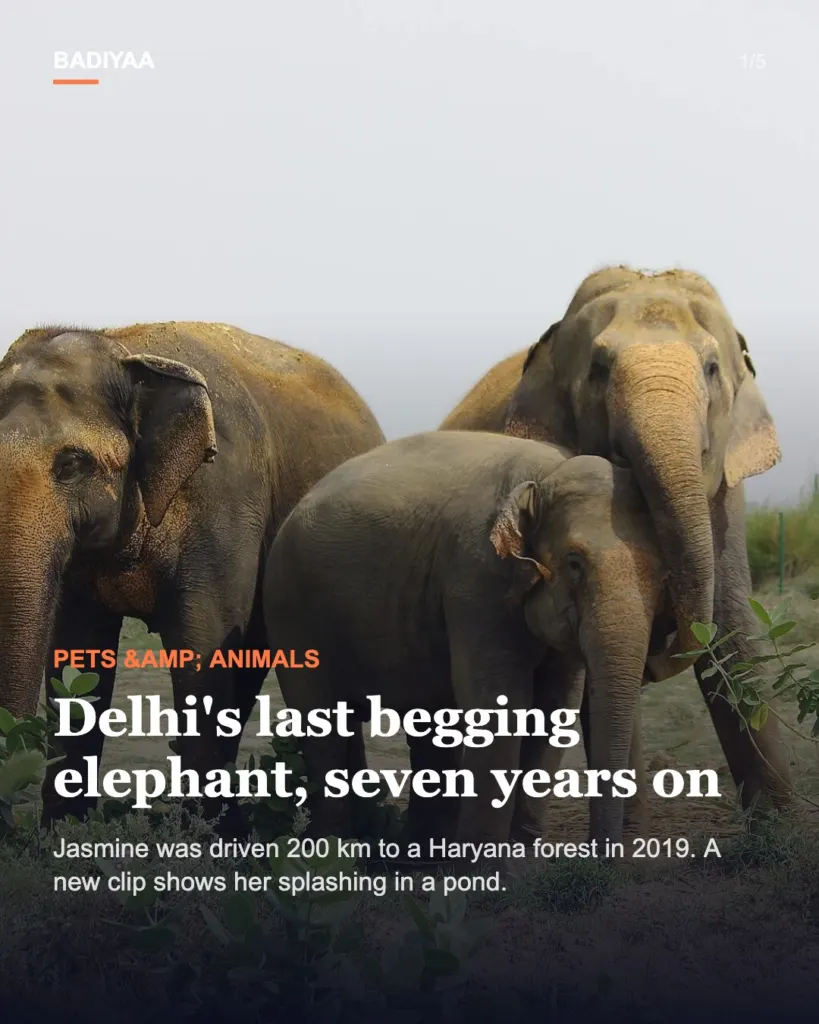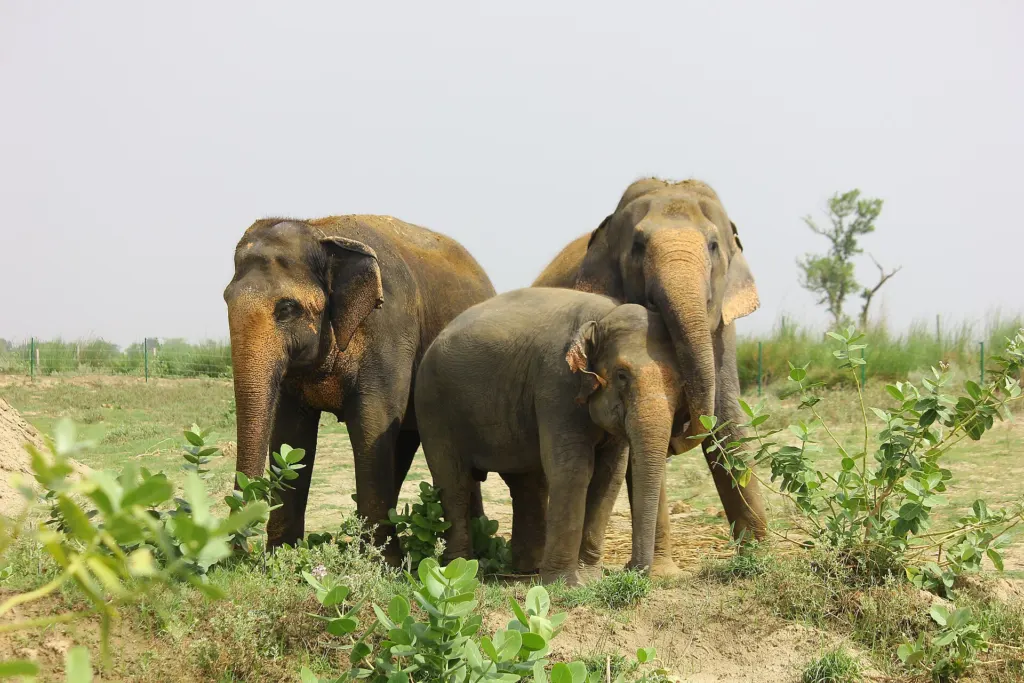
Wildlife SOS, the Indian rescue charity, posted a 44-second clip on Monday, October 19, of an elephant named Jasmine hosing herself with her trunk and wallowing in a pond, and by Wednesday it had passed 280,000 views. The caption sets up the contrast: a former street beggar “rediscovering her childhood.” For readers outside India, the story behind those few seconds of splashing is what makes the clip land.
Why an elephant was begging in Delhi
For most of her life Jasmine was known as Lakshmi, a working elephant in India’s capital. By the charity’s account she gave rides, was hired out for ceremonies and events, and was walked through traffic to beg for money from passersby. Her home was the bank of the Yamuna, the heavily polluted river that runs through the city, where she ate and bathed.
Street elephants were a familiar sight in Delhi for years. That changed after the Delhi High Court ordered the city’s remaining captive elephants moved to proper facilities, finding that the city was no place to keep them. Accounts give slightly different numbers, but a handful of privately owned elephants were left by 2019, and by that July all of them except Lakshmi had been rehomed.
When forest officials came for her that month, she disappeared with her keeper. She was found about two months later, still in Delhi near the Yamuna. On September 18, 2019, a team from the Delhi and Haryana forest departments and Wildlife SOS loaded her onto a ten-wheel truck for a nine-hour, 200-kilometer night drive north to the Elephant Rehabilitation Centre at Ban Santour in Haryana state. The charity runs that forest center with the Haryana Forest Department. Staff renamed her Jasmine, and she was widely described as Delhi’s last begging elephant.
What years of pavement did to her feet
The first veterinary check at Ban Santour found overgrown toenails and footpads, a problem common in captive elephants, plus cracked nails on her hind feet that needed long-term care. A year later the charity said she weighed 4,155 kilograms, about 9,160 pounds, and was getting regular nail trims and foot soaks in Epsom salt and turmeric. Her age is reported inconsistently, from 35 to 41 at the time of her rescue, so the safest reading is that she spent close to four decades working before she reached the forest.
The clip: what it shows, and what it leaves out
The new video is short and simple. Jasmine sprays water, digs at the ground with a foot and scoops up mud, and stands in a pool. The charity’s description calls her “a total water baby” and lists her favorite pastimes as pond time, trunk spraying and mud baths.
Those are real elephant behaviors, and seeing them in an animal that once spent her days on asphalt is affecting. In Delhi, the only water she bathed in regularly was a polluted riverbank.
Some caution is fair, though. “Rediscovering her childhood” is a charity’s framing, not a measurement, and the clip gives no date for when it was filmed. It does not show her feet, which were her most serious injury, so it says little about how her health has held up. The video also ends with a fundraising and awareness pitch, and the charity’s message that “elephants belong in the wild” sits a little awkwardly beside the fact that Jasmine, like most rescued working elephants, will live out her life in managed care rather than in the wild.
None of that undercuts the core story, which holds up across records from 2019 and 2020. A seven-year span separates the September 2019 truck ride from this week’s footage, and the elephant in it is no longer working the streets of Delhi.
Further reading
Image: Rhealopez168, CC BY-SA 4.0 via Wikimedia Commons
This article was produced with AI assistance and reviewed by our Editorial Desk. How we work.
Spot an error? Help verify this story
The story in 5 slides