In 1841, the census takers counted 8,175,124 people on the island of Ireland. Nearly two centuries later, after a long boom, a tech-driven economy and record immigration, the island still has not caught up. The 2024 estimate was about 7.2 million, with Northern Ireland’s 1.91 million added to the Republic’s 5.35 million.
That makes Ireland a rare case in Europe, a country whose population peak sits in the age of horse-drawn carts. The reason is the Great Famine of the late 1840s and the emigration that followed it for more than a century.
A fall that lasted 120 years
Ireland was growing fast before the famine. The island held fewer than three million people around 1700 and passed eight million by the 1841 count. Ten years later, at the end of the famine, the figure had dropped to about 6.5 million, a fall of nearly 20% in a single decade.
The decline did not stop when the potato blight ended. Emigration became a normal stage of life for generations of young Irish people. By 1891 the island had slipped below five million, and by 1931 it was just over four million. It hovered around that level until the 1960s.
The Central Statistics Office, which runs the census in the Republic, puts the low point there in 1961, when the state counted 2,818,341 people. Growth then returned, and the 2022 census recorded 5,149,139, the first time in 171 years that the Republic’s population had passed five million. That 2022 figure was 83% higher than the 1961 trough, the office said.
The county-by-county gap
The island-wide total hides how unevenly the recovery has fallen. Historical census tables show the west still far emptier than it was before the famine, while the east has boomed:
- Leitrim: about 155,000 people in 1841 and about 35,000 in 2022, a drop of roughly 77%.
- Mayo: about 388,000 in 1841 against 137,000 in 2022, around 65% lower.
- Roscommon: about 254,000 then and 70,000 now, a loss of about 184,000 people.
- Dublin: about 372,000 in 1841 and 1.46 million in 2022, nearly four times bigger.
Put another way, County Dublin today, at about 1.46 million, holds more people than the whole province of Connacht did in 1841, when it counted about 1.42 million. Connacht itself was down to about 591,000 in 2022.
How close is the island now?
Taking the 2024 estimate of about 7.2 million against the 1841 count of 8.18 million, the island is still roughly 975,000 people, or about 12%, short of its peak. The Republic’s growth between 2016 and 2022 averaged almost 65,000 people a year, with net migration adding more than natural increase did. Divide the gap by that rate and you get about 15 years, which would put a new record around the end of the 2030s. That is a back-of-envelope sum that ignores Northern Ireland’s own growth, not an official projection.
For more stories that dig into how places and people changed over centuries, browse the Badiyaa history section. Until the gap closes, the 1841 census keeps one odd title: the largest headcount the island has ever recorded, at 8,175,124.
Further reading
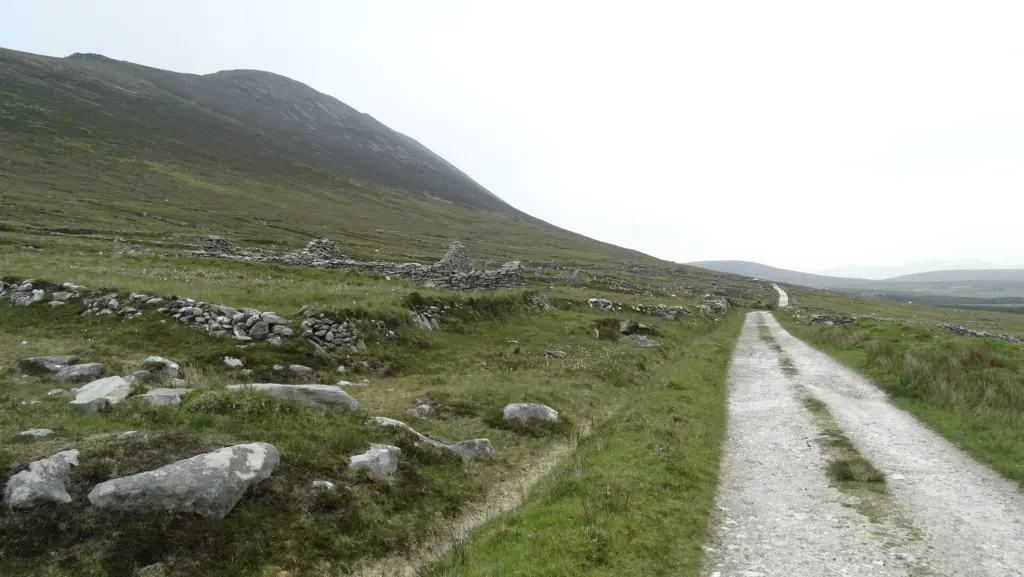
Image: Colin Park, CC BY-SA 2.0 via Wikimedia Commons
This article was produced with AI assistance and reviewed by our Editorial Desk. How we work.