On the night Hattie McDaniel made Oscar history, the hotel would not have let her in at all without a special favor. She became the first African American to win an Academy Award on February 29, 1940, and she collected it from a segregated table for two pushed against the far wall.
Inside the Coconut Grove
The 12th Academy Awards were held at the Coconut Grove nightclub in Los Angeles' Ambassador Hotel. McDaniel's Wikipedia biography says the hotel had a strict policy barring Black guests and admitted her as a favor. She sat with her escort and her white agent, William Meiklejohn, away from her Gone with the Wind castmates.
Her win was Best Supporting Actress for playing Mammy. Presenting it, actress Fay Bainter called the award "a tribute to a country where people are free to honor noteworthy achievements regardless of creed, race or color," according to the record of the 12th Academy Awards. McDaniel, gardenias in her hair, told the room: "This is one of the happiest moments of my life." She added, "I sincerely hope I shall always be a credit to my race and to the motion picture industry."
The party did not include her. Her white co-stars moved on to a club that admitted no Black guests, and McDaniel was turned away at the door.
Shut out of her own premiere
The snub had begun two months earlier. Gone with the Wind premiered on December 15, 1939, at Loew's Grand Theater in Atlanta, a whites-only venue under Georgia's segregation laws. Producer David O. Selznick asked for McDaniel to be allowed in; MGM told him not to push it. Clark Gable threatened to boycott the night unless she could come. McDaniel persuaded him to go anyway.
"$7 a week being one"
McDaniel had worked hard to get there. The youngest of 13 children of formerly enslaved parents, she cleaned houses and worked as a washroom attendant between gigs. She appeared in more than 300 films but was credited in only 83. When critics, including the NAACP, attacked her for playing maids, she reportedly answered with the line she is best remembered for: "Why should I complain about making $700 a week playing a maid? If I didn't, I'd be making $7 a week being one."
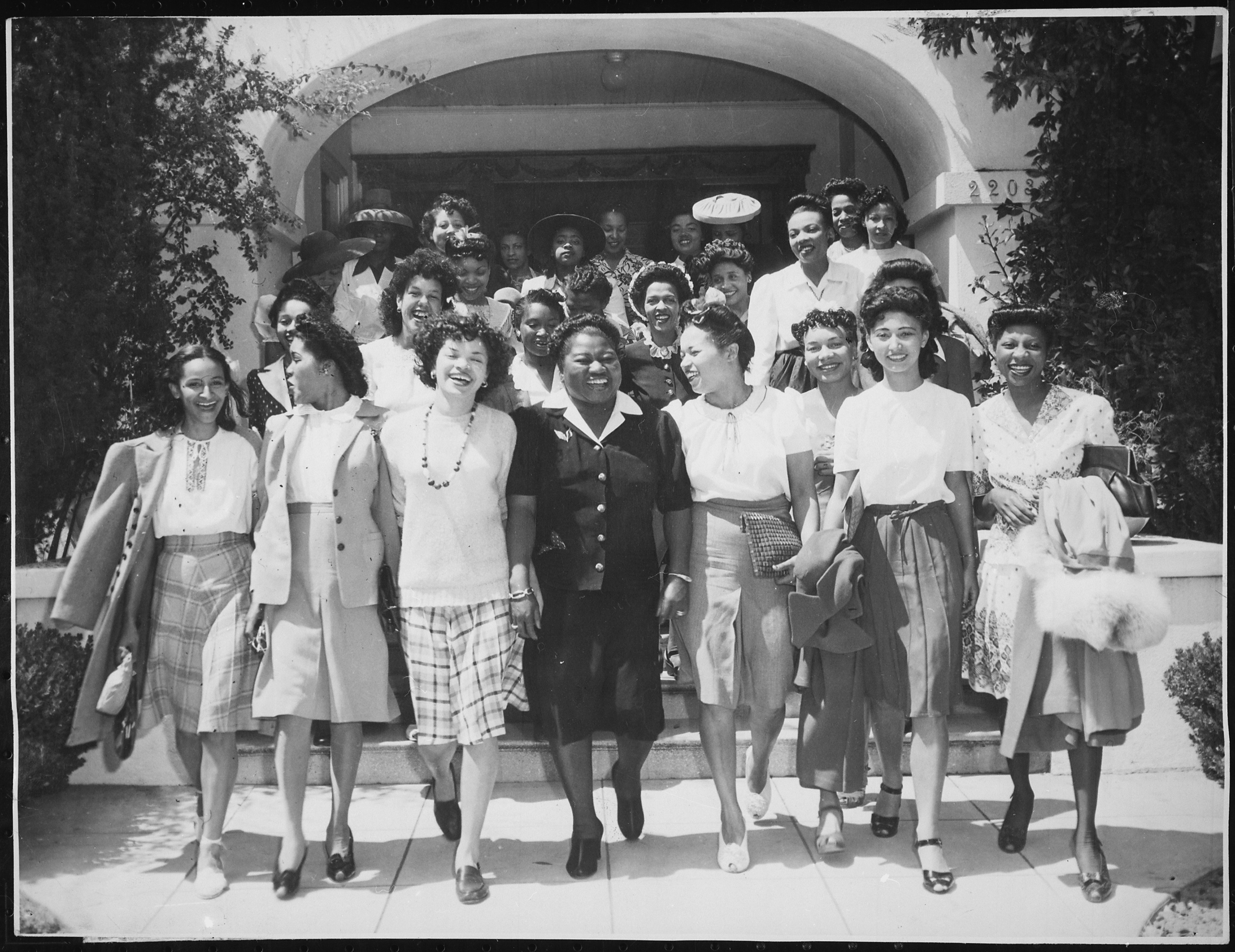
She was also a fighter offscreen. In 1945 she helped organize Black homeowners in Los Angeles' West Adams Heights, the area nicknamed Sugar Hill, against a lawsuit to enforce a whites-only property covenant, and a judge threw the case out. During World War II she chaired the Negro Division of the Hollywood Victory Committee, the role shown in a wartime photograph held by the US National Archives.
The Oscar that disappeared
McDaniel's award was not a statuette but a plaque about 6 inches wide, the style given to supporting winners at the time. In her 1951 will she left it to Howard University in Washington. It was displayed there, then went missing in the 1960s or 1970s and has never been found. In 2023 the Academy gave Howard a replacement, handed over in a ceremony on October 1.
It took half a century for another Black woman to win an Oscar, Whoopi Goldberg for Ghost. When Mo'Nique won the same supporting award in 2010, she wore a blue dress and gardenias in her hair, as McDaniel had, and thanked her "for enduring all that she had to so that I would not have to."
Gable, who stood up for her in 1939, has his own Hollywood saga in Badiyaa's story on how Carole Lombard won him over and eloped with him. For another civil rights first, read about Ruby Bridges' walk into a New Orleans school in 1960.
Sources
- Hattie McDaniel, Wikipedia, 2026
- 12th Academy Awards, Wikipedia, 2026
- Hattie McDaniel, Chairman of the Negro Division of the Hollywood Victory Committee (photograph 535875), US National Archives, 1942
Image: Unknown photographer (US National Archives), Public domain via Wikimedia Commons
This article was produced with AI assistance and reviewed by our Editorial Desk. How we work.