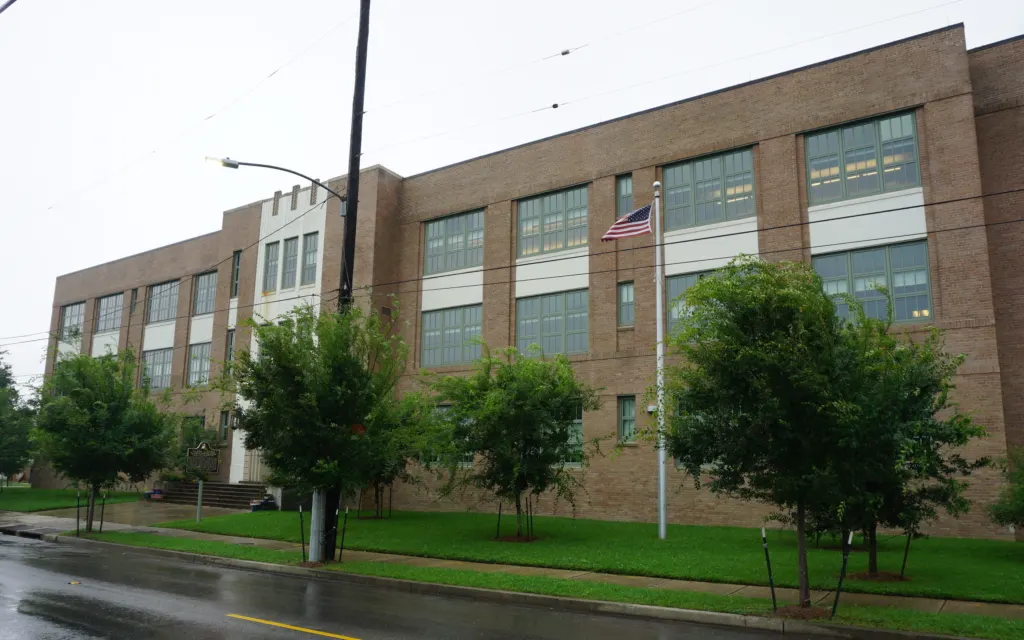
When six-year-old Ruby Bridges rode up to William Frantz Elementary School in New Orleans on November 14, 1960, she saw a shouting crowd throwing things and took it for a street celebration. “Living in New Orleans, I actually thought it was Mardi Gras,” she later said. It was a mob, and she was walking through it as the first Black child at the formerly whites-only school.
Four federal marshals walked her in. Three years later, Norman Rockwell turned that walk into one of the defining paintings of the civil rights era. Tomorrow marks 66 years since the morning it shows.
How one child ended up alone
The school board in New Orleans, under federal pressure to integrate after the 1954 Brown v. Board of Education ruling, set an entrance test meant to keep Black children out of white schools. Six Black children passed in 1960. Two stayed at their old school. Three girls, Gail Etienne, Leona Tate and Tessie Prevost, went to McDonogh No. 19. Bridges went to Frantz by herself.
Her father hesitated. Her mother insisted the family should “take this step forward … for all African-American children.” On the first day, white parents pulled their children out, and every teacher but one refused to teach her. That one, Barbara Henry from Boston, taught Bridges by herself for more than a year, “as if she were teaching a whole class.”
The cost at home was heavy. Her father lost his job at a gas station, the family’s grocery store turned them away, and her grandparents were put off the Mississippi land they sharecropped. Neighbors, Black and white, pushed back the other way: one found her father new work, others watched the house and walked behind the marshals’ car.
Deputy Marshal Charles Burks later remembered: “She showed a lot of courage. She never cried. She didn’t whimper. She just marched along like a little soldier.”
What the Rockwell painting shows
The Problem We All Live With ran as a centerfold in a national magazine on January 14, 1964. Rockwell had just left his longtime magazine employer, frustrated by limits on political subjects. The canvas, 36 by 58 inches, now belongs to the Norman Rockwell Museum.
- The marshals are cropped at the shoulders, so the girl is the only person fully in view.
- The wall behind her carries the letters KKK, a racial slur and the burst of a thrown tomato.
- The protesters never appear. The viewer stands where they stood.
Rockwell did not paint Bridges from life. A local girl, Lynda Gunn, posed as the model. He received “sacks of disapproving mail” after publication. Bridges never met him, but as an adult she praised his nerve: “I commend him for that.”
Her life since
Bridges, now Ruby Bridges Hall and 72, graduated from a desegregated high school and spent 15 years as a travel agent. In 1999 she founded the Ruby Bridges Foundation. “Racism is a grown-up disease and we must stop using our children to spread it,” she has said.
Here is how the decades since have unfolded:
2000: made an Honorary Deputy US Marshal. 2001: awarded the Presidential Citizens Medal. 2005: lost her New Orleans home to Hurricane Katrina flooding, then fought to keep Frantz open. 2011: viewed the Rockwell painting with President Barack Obama outside the Oval Office. 2014: a statue of her was unveiled at the school, with Burks in attendance. 2024: inducted into the National Women’s Hall of Fame.
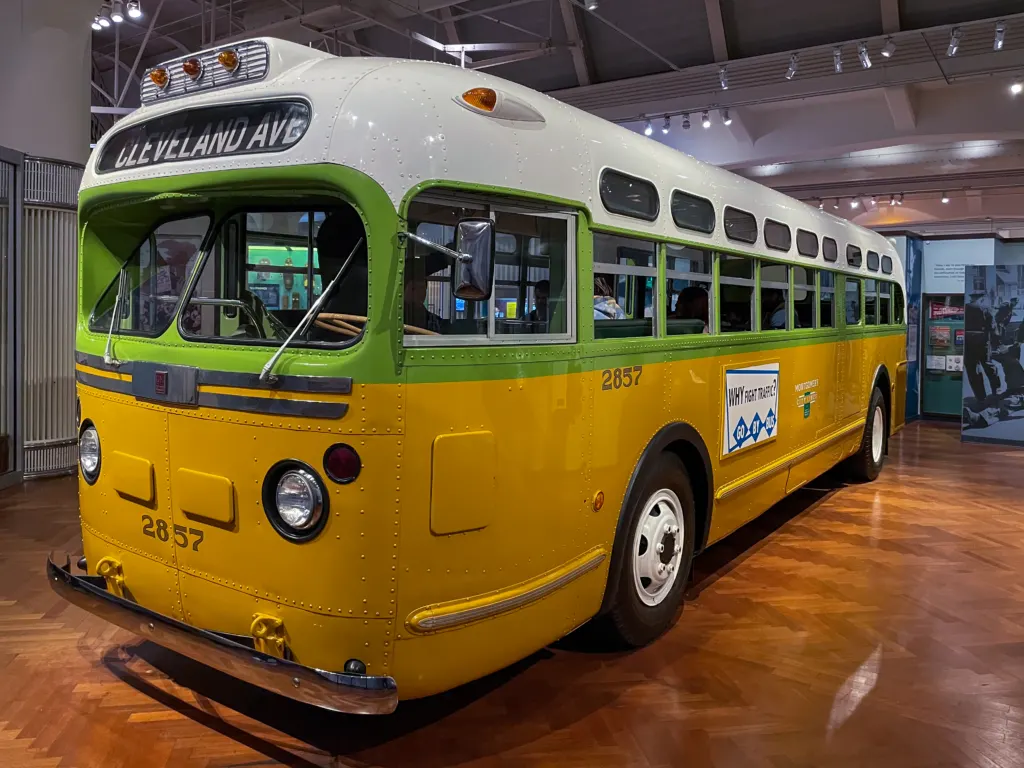
The same Montgomery-to-New Orleans thread runs through our stories on Claudette Colvin’s bus seat protest and Rosa Parks as a veteran organizer.
Of the statue in the school courtyard, Ruby Bridges said she hopes children “think to themselves, ‘I can do something great too.'”
Further reading
Image: Owen Allen, CC BY 2.0 via Wikimedia Commons
This article was produced with AI assistance and reviewed by our Editorial Desk. How we work.