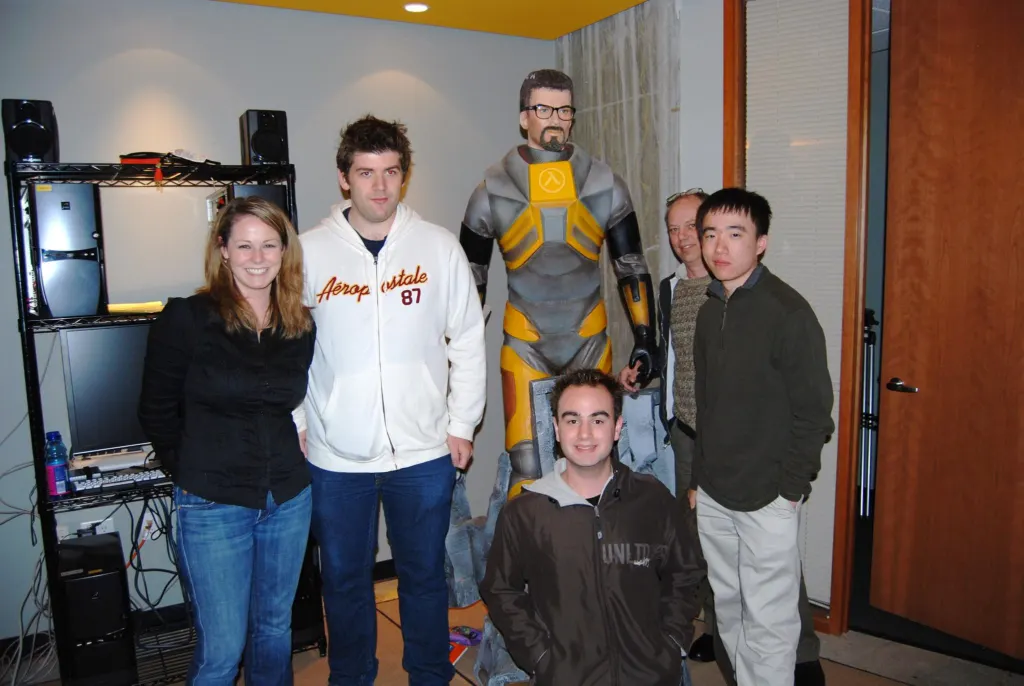
Valve expected its first game to sell about 180,000 copies over its whole life. Half-Life, released on November 19, 1998, had passed 9.3 million copies at retail by 2008, roughly 52 times that forecast, and it turned 28 this week with a 96% positive rating from almost 60,000 English-language reviews on Valve’s own Steam store page for Half-Life.
The store page still carries Valve’s original pitch: the game was named Game of the Year by more than 50 publications.
A first game from a brand-new studio
Gabe Newell and Mike Harrington, both former Microsoft employees, founded Valve in Kirkland, Washington, in 1996. Rather than write an engine from scratch, the small team licensed id Software’s Quake technology and reworked it so heavily that Newell later put Valve’s share of the final code at around 75%. The result became known as GoldSrc.
Publishers were wary. Sierra On-Line finally signed a one-game deal, and when a playtest in late 1997 showed the game simply was not fun, Newell borrowed money to pay for a rework and a delay of a full year, according to the Wikipedia account of Half-Life’s development.
Why it felt different
Players step into the boots of Gordon Freeman, a physicist at the Black Mesa Research Facility, after an experiment goes wrong and opens the base to creatures from another dimension. What set the game apart was how the story was told. Instead of cutting away to movie scenes, Half-Life kept the camera in Freeman’s eyes almost the whole time and let events play out around the player in scripted moments. Freeman never speaks and is never seen.
A rotating design group nicknamed the cabal shaped those moments, producing a 200-page design document, while science fiction novelist Marc Laidlaw was brought in to help with the script.
The sales curve, then and now
The game started slowly in the US, with fewer than 100,000 copies sold there by November 30, 1998, then built steadily:
- End of 1998: 212,173 copies sold in the US.
- January 1999: global sales pass 500,000 after two full months.
- April 1999: Sierra reports almost 1 million copies worldwide.
- July 2001: 2.5 million copies globally.
- 2008: 9.3 million copies sold at retail.
Its software development kit also launched a generation of mods. Counter-Strike, Day of Defeat and Team Fortress Classic all started on Half-Life’s engine.
The 25th anniversary update
In November 2023, Valve rereleased the game on Steam with fixes and extras listed on Valve’s official Half-Life 25th anniversary page: the Uplink demo bundled in for the first time, four new multiplayer maps built by Valve designers, Steam Deck support and widescreen options. Valve now calls that version the definitive one. Two days after the update, the game hit its highest ever count of 33,471 players at once on Steam.
Valve is still busy today: its newest project shows up in our report on Deadlock reaching 303,347 players without a release date, and Steam’s demo charts feature in our story on the haystack game Find The Needle.
Half-Life sells on Steam for $9.99, 28 years after its first release.
Sources
- Half-Life on Steam, Valve Corporation, 2026
- Half-Life 25th Anniversary Update, Valve Corporation, 2023
- Half-Life (video game), Wikipedia, 2026
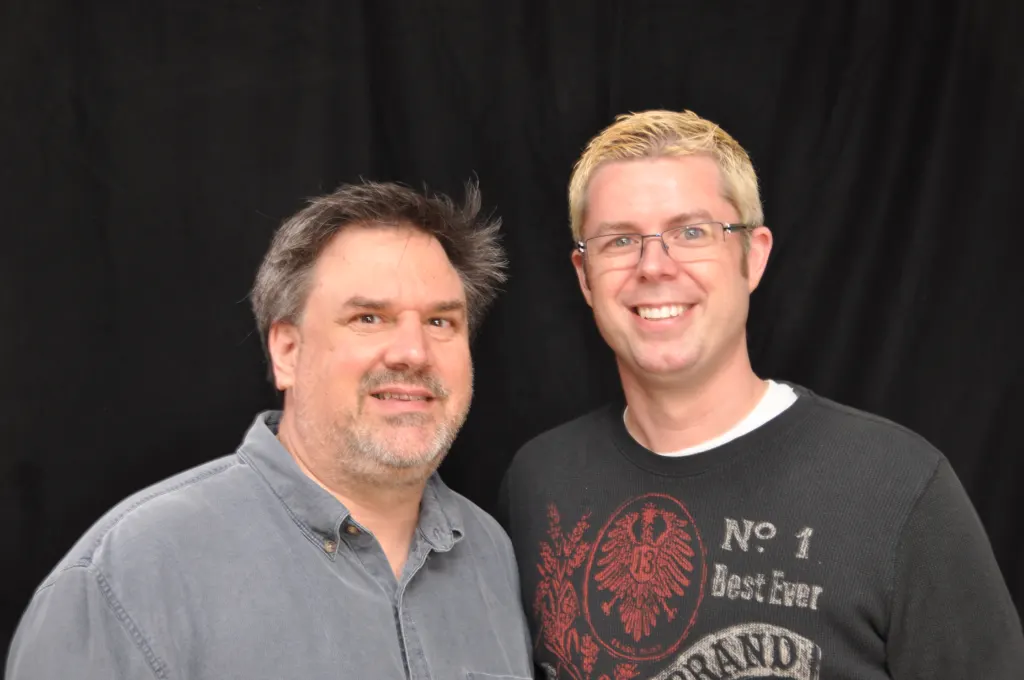
Image: Long Zheng from Melbourne, Australia, CC BY-SA 2.0 via Wikimedia Commons
This article was produced with AI assistance and reviewed by our Editorial Desk. How we work.