For at least four decades, the Gulf of Panama ran on a schedule: by about January 20 each year, cold water surged up from the deep, chilled the surface to roughly 19 C (66 F), and stayed for 66 days. In 2025 the cold arrived 42 days late, on March 4, lasted just 12 days, and never got the surface below 23.3 C (74 F). That is an 82 percent cut in the season’s length, the shortest in the 40-year satellite record, and the Smithsonian Tropical Research Institute team that documented it in the journal PNAS calls the event unprecedented.
The paper came out in September 2025, but the finding is circulating again this week, a year on, as the next upwelling season approaches. The question hanging over Panama’s Pacific coast for this coming January is simple: does the cold water come back?
How Panama’s winter cold-water machine works
Upwelling is the ocean breathing in. When wind pushes warm surface water away from a coast, cooler, nutrient-rich water from below rises to replace it. On most tropical coasts that happens weakly or not at all. The Gulf of Panama is special because of geography.
Between January and April, the band of equatorial storms known as the Intertropical Convergence Zone slides to its southernmost position. Northerly trade winds then pour across Central America, and the Isthmus of Panama has a low gap in its mountains, the same low ground the canal follows. The wind funnels through that gap and forms what researchers call the Panama low-level jet. The jet blows out over the gulf, shoves the warm surface layer offshore, and the deep water rises across an area of roughly 60,000 square kilometers (about 23,000 square miles) of the Pacific.
The payoff is enormous. The deep water carries nutrients that feed phytoplankton, which feed the fish. Lead author Aaron O’Dea has said more than 95 percent of Panama’s marine biomass comes from the Pacific side, thanks to that nutrient pulse, and that it underpins a marine export industry worth about $200 million a year. The cold water also acts as a thermal buffer for coral reefs, taking the edge off the heat that drives bleaching.
What the team measured
The researchers, from the Smithsonian Tropical Research Institute and the Max Planck Society, did not rely on a single data stream. They combined 40 years of satellite sea-surface temperature records (1985 to 2025), 30 years of in-water temperature logs (1995 to 2025), and water-column profiles collected from the research sailing yacht Eugen Seibold. From that they calculated three things for each year: when upwelling started, how long it lasted, and how cold it got. They also analyzed local wind speed and wind stress and compared them with modeled regional anomalies.
The wind data told the story. When northerly winds did blow in early 2025, they were as strong as in any previous year. They simply did not blow often enough. The frequency of northerly winds was 74 percent lower than normal, the hours of wind “relaxation” between gusts rose by 25 percent, and the cumulative push on the sea surface fell well short of what it takes to start the pump. Profiles from the yacht showed the classic layered upwelling structure in March 2024 and a strongly stratified, warm-on-top water column in March 2025.
Put the numbers side by side and the scale is clear. A normal season delivers about 66 cold days; 2025 delivered 12, so the gulf lost roughly 54 days of cooling and nutrient supply, or close to eight weeks. A 19 C minimum against a 23.3 C minimum is a gap of more than 4 C (nearly 8 F) at the surface, which for a coral living near its heat limit is the difference between relief and stress.
Why it matters beyond Panama
The study’s authors point to the position of the Intertropical Convergence Zone during the weak 2024 to 2025 La Nina as a possible driver. The twist is that the gulf has sat through far stronger El Nino and La Nina cycles without the upwelling failing, so a weak La Nina alone is not a satisfying explanation. Previous research suggests a warming climate may be narrowing and weakening that storm band. Panama shows the opposite can happen in the tropics, which is why the authors say regional dynamics, not blanket global predictions, are what count for these systems.
The stakes are concrete: lower plankton production rippling through the food web, declines in commercial and subsistence fisheries, and longer heat exposure for reefs that have long relied on the seasonal cold.
Limits
This is a brief report documenting one anomalous season, not a trend. The mechanism remains, in the authors’ own words, unclear. One failed year cannot show whether 2025 was a one-off or the start of a pattern, and the paper does not measure the fisheries or coral damage directly; it flags those as likely consequences to be checked. Wind anomalies were inferred partly from reanalysis models rather than measured everywhere offshore. The authors call for better monitoring and predictive modeling, noting that few tropical upwelling sites anywhere are watched as closely as this one, so similar failures elsewhere could be going unrecorded.
The next test begins around January 20, 2027, the date by which the gulf’s cold water has reliably shown up for 40 years.
Further reading
- PNAS: Unprecedented suppression of Panama's Pacific upwelling in 2025 (O'Dea et al., 2025)
- Wikipedia: Gulf of Panama
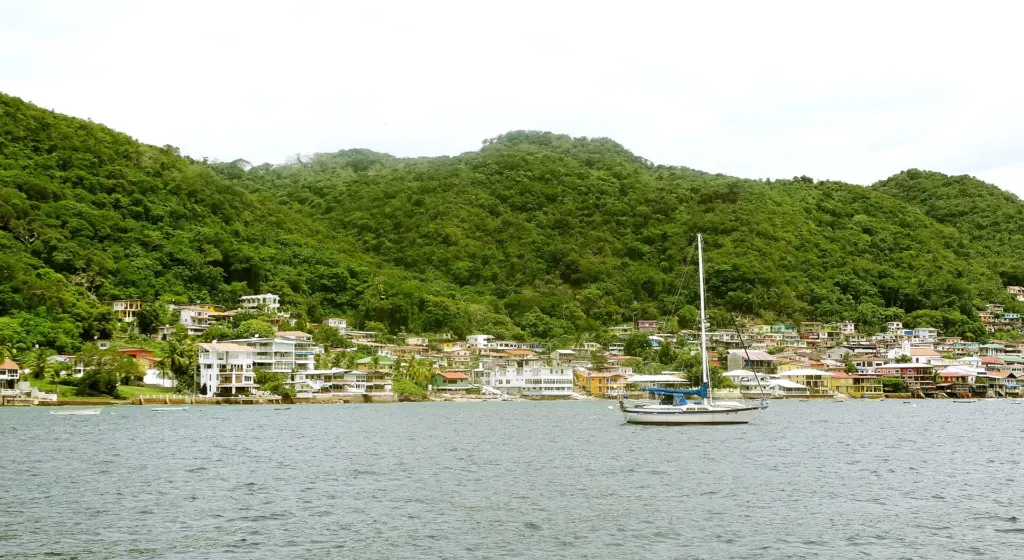
Image: randreu, CC BY 3.0 via Wikimedia Commons
This article was produced with AI assistance and reviewed by our Editorial Desk. How we work.