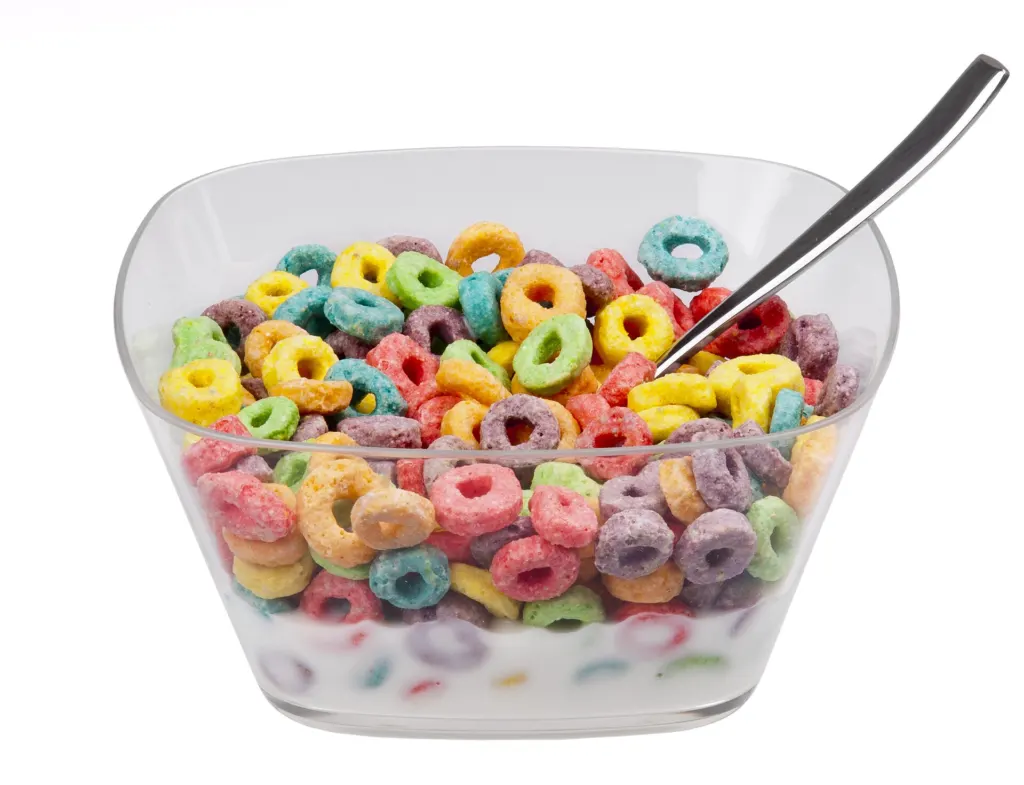
The red ones are not cherry and the green ones are not lime. Every loop in a box of Froot Loops has the same flavor, whatever its color, and that 63-year-old cereal fact just shot up Reddit’s “Today I learned” page again, reaching No. 16 among the day’s top posts.
If you have always tasted a difference, you are not imagining your experience. You are just wrong about what is in the bowl.
One flavor, six colors
Kellogg’s launched Froot Loops in 1963, and the ring-shaped cereal is now made by WK Kellogg Co for the United States, Canada and the Caribbean, and by Kellanova for the rest of the world, after the original company split off its North American cereal business in late 2023. Despite the rainbow, every color carries one shared fruity flavor.
The palette has changed over time:
- 1963: Only red, orange and yellow loops.
- 1990s: Green, blue and purple join the mix.
- 1996: Blue is the last color added.
The mascot, Toucan Sam, still wears the original lineup on his bill: his beak stripes match the three founding colors. Outside the United States, Froot Loops are made differently, swapping artificial colors for a smaller set of colors taken from plant-based ingredients, so a bowl in one country can look noticeably duller than in another while the idea stays the same.
Why your brain disagrees
If the loops are identical, why do so many people swear red tastes like strawberry? Food scientists have a good answer: your eyes set up the flavor before the cereal touches your tongue.
The tongue itself is a blunt instrument. Taste buds detect five basic tastes (sweet, sour, salty, bitter and savory), and most of what we call flavor comes from smell, texture and temperature layered on top. That leaves a lot of room for expectation to fill in the gaps.
Oxford experimental psychologist Charles Spence reviewed decades of lab work on exactly this in the journal Flavour in 2015. “Colour is the single most important product-intrinsic sensory cue when it comes to setting people’s expectations regarding the likely taste and flavour of food and drink,” he wrote. Changing a food’s hue or color intensity, the review found, can have a sometimes dramatic effect on what people expect and then report tasting, and those color meanings differ between age groups and cultures.
Put the two facts together and the Froot Loops illusion explains itself. A red loop can suggest berry and a green one lime, and a brain primed by that color fills in the rest from one identical base flavor.
Try it yourself
The fix is a simple blind test. Have someone hand you single loops while your eyes are closed and guess each color. If the flavors were truly different, you would beat the one-in-six odds of a random guess by a wide margin; if they are the same, your hit rate should sit close to about 17%.
Brand names on the cereal aisle hide other surprises too; Badiyaa has looked at how a wholesaler invented the name Chilean sea bass in 1977 and how the Twinkie was born at an idle Illinois bakery in 1930.
The loops keep spreading, too. In 2025 WK Kellogg added Cocoa Loops, a chocolate version, and Toucan Sam has been voiced by Collin Cassidy since 2021.
Further reading
- Wikipedia: Froot Loops
- Spence (2015), On the psychological impact of food colour (Oxford University Research Archive)
Image: Evan-Amos, CC0 via Wikimedia Commons
This article was produced with AI assistance and reviewed by our Editorial Desk. How we work.