FFmpeg 9.1, codenamed “Gauss,” landed on November 20, 2026, and the free multimedia toolkit that quietly powers countless video players, editors and streaming pipelines now reads and writes ASTC, the compressed texture format used across mobile and console graphics. The release also brings what the developers call an extensively improved AAC encoder.
FFmpeg’s official download page lists 9.1 as the newest stable release, built from a branch that was cut from the main development line on October 24. The project ships a new major release about every six months, and 9.1 comes just five months after the 9.0 “Lei” branch was cut in June.
What is new in FFmpeg 9.1
The FFmpeg 9.1 changelog in the project’s source repository lists 20 entries. The ones most people will feel:
- Better audio encoding: the reworked native AAC encoder, and xHE-AAC encoding through libfdk-xhe-aac.
- Old formats revived: a DVD-Audio LPCM decoder with demuxing support, a Panasonic RW2 raw photo decoder and an Infinity IMM6 video decoder.
- GPU work: an APV encoder running on Vulkan and an interpolation filter, vf_fruc_vulkan, that uses NVIDIA’s optical flow hardware to generate in-between frames.
- Terminal output: a muxer for the iTerm2 inline image protocol, so frames can appear directly in a supporting terminal window.
- ASTC textures: encoding and decoding through the libastcenc library, plus muxers and demuxers for .astc files and KTX 1.0 containers.
Smaller items fill out the list. The asf_o demuxer is gone, macOS capture can pick a camera by unique ID or USB serial number, and H.264 gains data partitioning support. Windows users running AI filters get zero-copy D3D12 DirectML inference for the ONNX Runtime backend, which keeps frames on the graphics card instead of copying them back and forth.
Why the codename is Gauss
FFmpeg names each major branch after a scientist or mathematician, and this one points to Carl Friedrich Gauss, the German mathematician, astronomer and physicist who lived from 1777 to 1855 and directed the observatory at Göttingen, according to Wikipedia’s biography of Gauss. There is a neat family link in the release list: FFmpeg 5.1 was named “Riemann,” and Bernhard Riemann was one of Gauss’s own doctoral students.
A busier project behind the scenes
The release follows a sharp jump in testing load. In a November 10 post on the FFmpeg news page, the developers said their continuous integration system ran about 860 hours of jobs in April and more than 4,000 in October, with queues of up to 18 hours before GitHub and Blacksmith stepped in with sponsored runners. A third of that time goes to RISC-V, MIPS64 and PPC64 jobs emulated under QEMU.
FFmpeg itself only publishes source code; ready-made builds for Windows, macOS and Linux come from third-party packagers linked on the download page, so most users will see 9.1 arrive through their distribution or app updates. Every release is signed with the project’s PGP key, and 9.1 also carries a post-quantum signature file.
Open-source runtimes have had a busy week: PHP 8.6 shipped partial function application and a Duration class, and Cloudflare published its Kitesurf browser for AI agents as open source.
Point releases on the 9.1 branch will carry bug fixes only; new features now go to the development branch that will become the next major version.
Sources
- Download FFmpeg, FFmpeg project, 2026
- FFmpeg 9.1 Changelog, FFmpeg project, 2026
- FFmpeg news: GitHub and Blacksmith Sponsor FFmpeg’s CI, FFmpeg project, 2026
- Carl Friedrich Gauss, Wikipedia, 2026
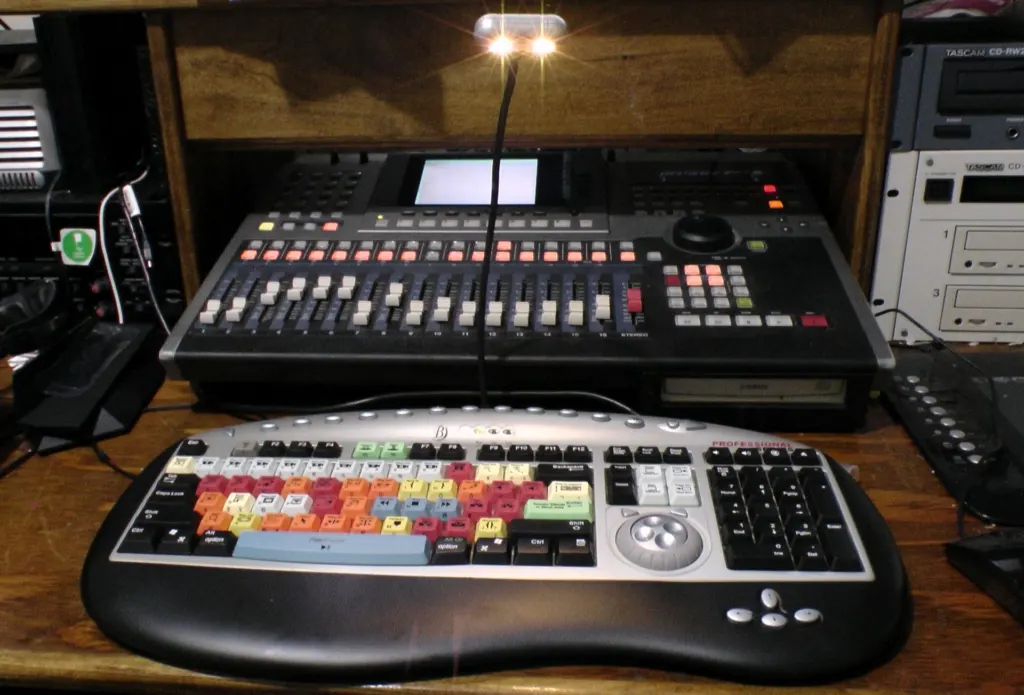
Image: Ben2742, CC0 via Wikimedia Commons
This article was produced with AI assistance and reviewed by our Editorial Desk. How we work.