Pete Warden’s speech AI startup is gone, but he has bought its open-source voice framework out of liquidation and is still betting that AI belongs on your own device. The former Google Brain engineer says Moonshine Voice, which has more than 11,000 stars on GitHub, now pays its own way.
In his November 12 post “Moonshine is dead, long live Moonshine”, Warden writes that after four years and $12 million in investment the company could not find the revenue or growth it needed, his cofounder left for OpenAI, and no buyer emerged. He personally bought the IP, data and code for Moonshine Voice, and says the remaining customers “more than cover the costs of maintaining and updating the models and code.”
“I’m still convinced running AI locally, on the edge, is the future,” he wrote.
A medieval RPG becomes the test bed
His first project since is a game mod. Warden played through Kingdom Come: Deliverance II, Warhorse Studios’ 2025 role-playing game set in 1403 Bohemia, which had sold more than 6 million copies by June 2026 according to Wikipedia’s entry on the game. He then built an open-source mod called Talk to Anyone that pairs Moonshine speech recognition with the Qwen3 language model to give thousands of unnamed villagers histories, relationships and the ability to hold and remember spoken conversations with the player.
His case for games is about cost. Titles sold once, without subscriptions, cannot afford to call paid cloud AI services every time a player talks, he argues, and he sees little modern language model support in mainstream games today.
What Moonshine actually does
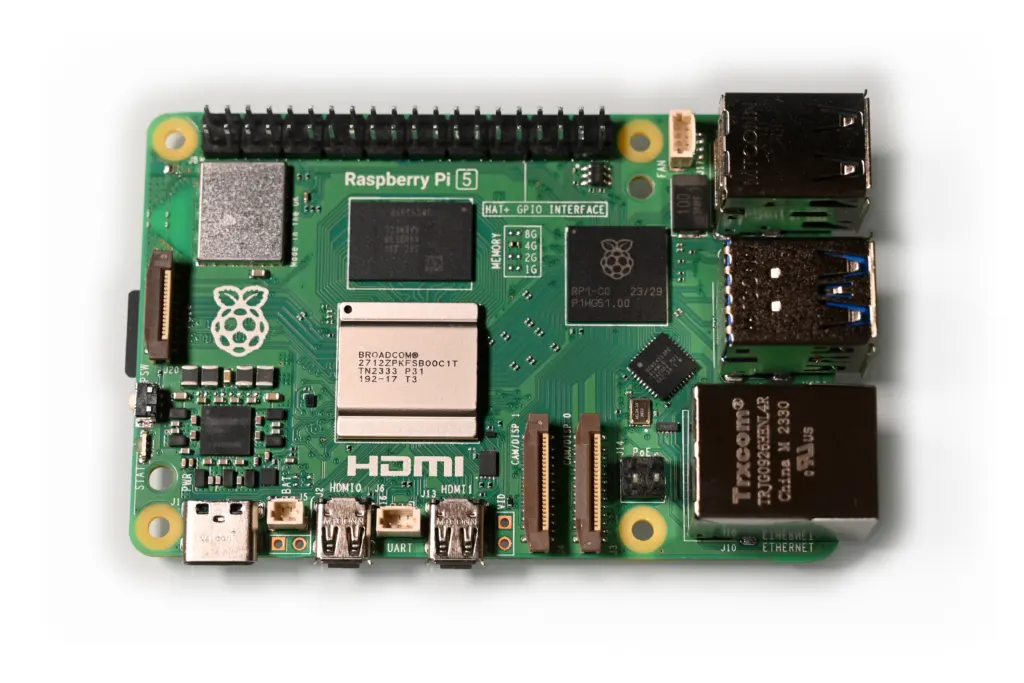
Moonshine Voice turns speech into text on the device itself, starting work while the speaker is still talking. When it launched in February, Warden’s announcement of Moonshine Voice put the largest model at 245 million parameters with a 6.65% word error rate on an open speech recognition leaderboard, against 7.44% for OpenAI’s Whisper Large v3, which has 1.5 billion parameters. It runs on an ordinary CPU, with no graphics chip or neural accelerator, ships for iOS, Android, Python, macOS, Windows, Linux and Raspberry Pi, and is released under the MIT License.
Local versus cloud, in numbers
Putting Warden’s own figures side by side shows why he thinks small models matter:
- Size: 245 million parameters for Moonshine’s largest model against 1.5 billion for Whisper Large v3, roughly one-sixth the size, while scoring a lower error rate on the same leaderboard.
- Memory: Moonshine Micro, launched in July, runs a voice interface in 520KB of RAM, according to Warden’s Moonshine Micro launch post.
- Chip cost: the Micro demo runs on an 80-cent Raspberry Pi RP2350 chip, with a 50-word command recognizer and text-to-speech.
- Goal: full speech recognition and synthesis on a 50-cent chip running a year on a coin battery, a target he says he set at Google Brain in 2017.
Why it matters beyond one startup
Warden’s argument runs against much of the industry, where the largest models live in data centers and are rented by the request. His view is that speech should work like a keyboard or a camera: local, instant and free to use once installed. The failure of his company shows how hard that is to fund, but the code he kept is open for anyone to build on.
The local AI toolchain is growing elsewhere too, as with ggml, the tensor library behind llama.cpp, reaching version 1.0, and Apple’s pitch for on-device AI in its M6 iMac.
Warden says a longer post-mortem on the company is still to come.
Sources
- Moonshine is dead, long live Moonshine, Pete Warden’s blog, 2026
- Kingdom Come: Deliverance II, Wikipedia, 2026
- Announcing Moonshine Voice, Pete Warden’s blog, 2026
- Launching Moonshine Micro, Pete Warden’s blog, 2026
Image: SimonWaldherr, CC BY 4.0 via Wikimedia Commons
This article was produced with AI assistance and reviewed by our Editorial Desk. How we work.