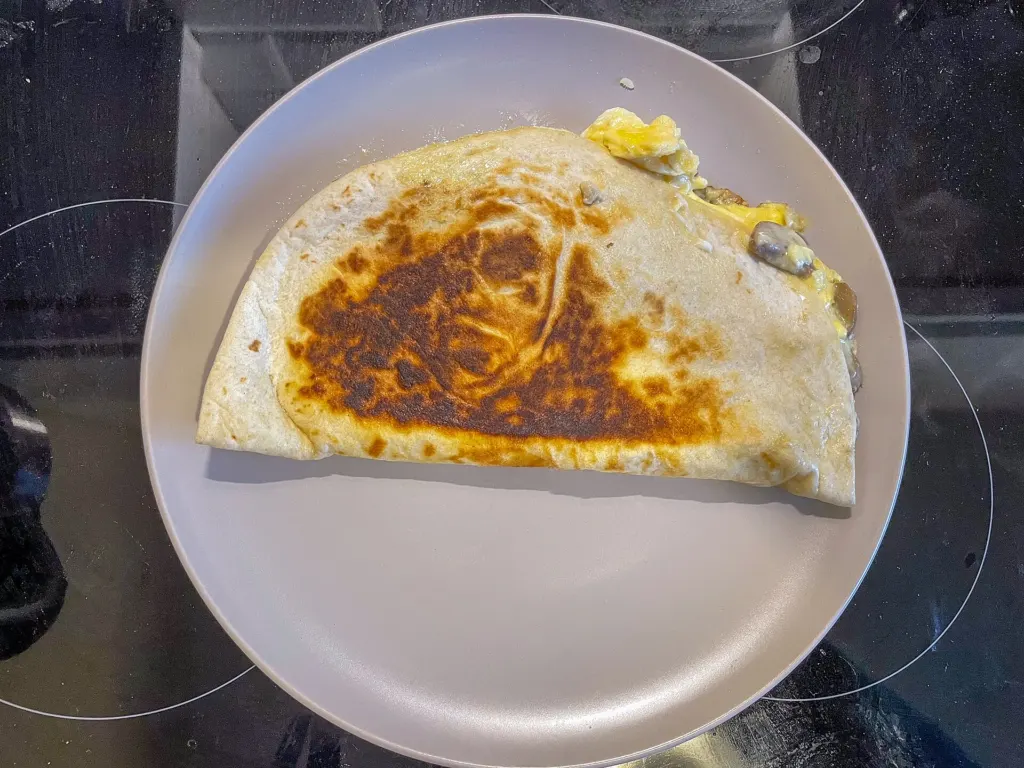
The short answer: the “Pour 1 Egg on a Tortilla” breakfast going around this week is a two-tortilla breakfast quesadilla, and it is only safe once that single egg is fully set. The egg ends up sealed between two layers of bread, so melted cheese on the outside tells you nothing about the middle. Federal food-safety guidance sets the bar at 160°F for any dish containing eggs.
The recipe comes from Hands Touch, a cooking channel with about 2.11 million subscribers, which posted the 4-minute-34-second clip on October 15. It had passed 107,000 views within roughly a day.
The method, stripped down
For one round, built in two nonstick pans:
- Make two small flour tortillas from 1/2 cup (60 grams) of all-purpose flour and a pinch of salt. Knead to a smooth ball, roll thin on a floured board, and cook each one in a dry pan until it puffs a little and freckles. Store-bought tortillas will also work; an on-screen caption says only that the cook prefers fresh ones.
- Beat one egg with black pepper. Brush the second pan with oil, lay in a tortilla and spread the egg over it.
- Scatter on chopped tomato, green onion, sliced sausage, shredded mozzarella and oregano.
- Cap it with the second tortilla, brush the top with oil, flip, and brown the underside.
- Add more cheese and chili flakes, cover until melted, then cut in half.
For scale, a dozen large eggs must weigh at least 24 ounces under USDA size rules, so the one large egg here is about 2 ounces, stretched across a round the width of the pan. That thin layer is why the dish cooks quickly, and also why it is easy to misjudge.
The egg rule that matters
Raw shell eggs can carry Salmonella even when the shell is clean and uncracked. The FDA’s egg guidance says to cook eggs until both white and yolk are firm, and to bring dishes containing eggs to 160°F, checked with a food thermometer. The USDA’s Food Safety and Inspection Service gives the same 160°F figure and adds that scrambled egg should not be runny.
The common mistake with this kind of stacked breakfast is to judge doneness by the cheese. Cheese on top is not a thermometer for the egg underneath, and a gooey top can sit over a wet middle. Two fixes: let the egg firm up on the first tortilla before adding toppings, and keep the lid on over medium-low heat after the flip so the center heats through. If you own an instant-read thermometer, push it into the middle from the side.
Leftovers go in the fridge within 2 hours and keep 3 to 4 days. The FDA wants cooked egg dishes reheated to 165°F before serving.
How the clip holds up
As a demonstration, it is tidy. Close overhead shots make every layer visible, and the on-screen captions name each ingredient as it goes in, which helps if you watch with the sound off, as a few commenters said they did.
As a recipe, it has gaps. There are no cooking times and no heat settings anywhere, which is exactly the information the egg needs. The salt amount also disagrees with itself: the on-screen caption reads 1/4 teaspoon while the written ingredient list under the video says 1/2 teaspoon. For a half-cup of flour, the smaller amount is the safer bet.
The title also oversells the novelty. Cheese and fillings sealed between two flour tortillas, fried in oil and flipped, is an established dish; in parts of Mexico it is called a gringa or a sincronizada, and breakfast quesadillas with eggs, cheese and bacon are a familiar variation. One viewer summed it up in seven words: “So, you made a breakfast quesadilla.”
Other viewers asked whether two pans were really needed. They are not. Cook the tortillas first, stack them under a towel, and use one pan for the assembly.
Easy swaps
The channel itself suggests pepperoni in place of sausage. Viewers suggested cheddar instead of mozzarella and bacon instead of the sausage. Whatever goes in, precook raw meat separately, because the filling gets only a few minutes of heat. The finished round should read 160°F in the center before it comes off the stove.
Further reading
Image: Mike Peel, CC BY-SA 4.0 via Wikimedia Commons
This article was produced with AI assistance and reviewed by our Editorial Desk. How we work.