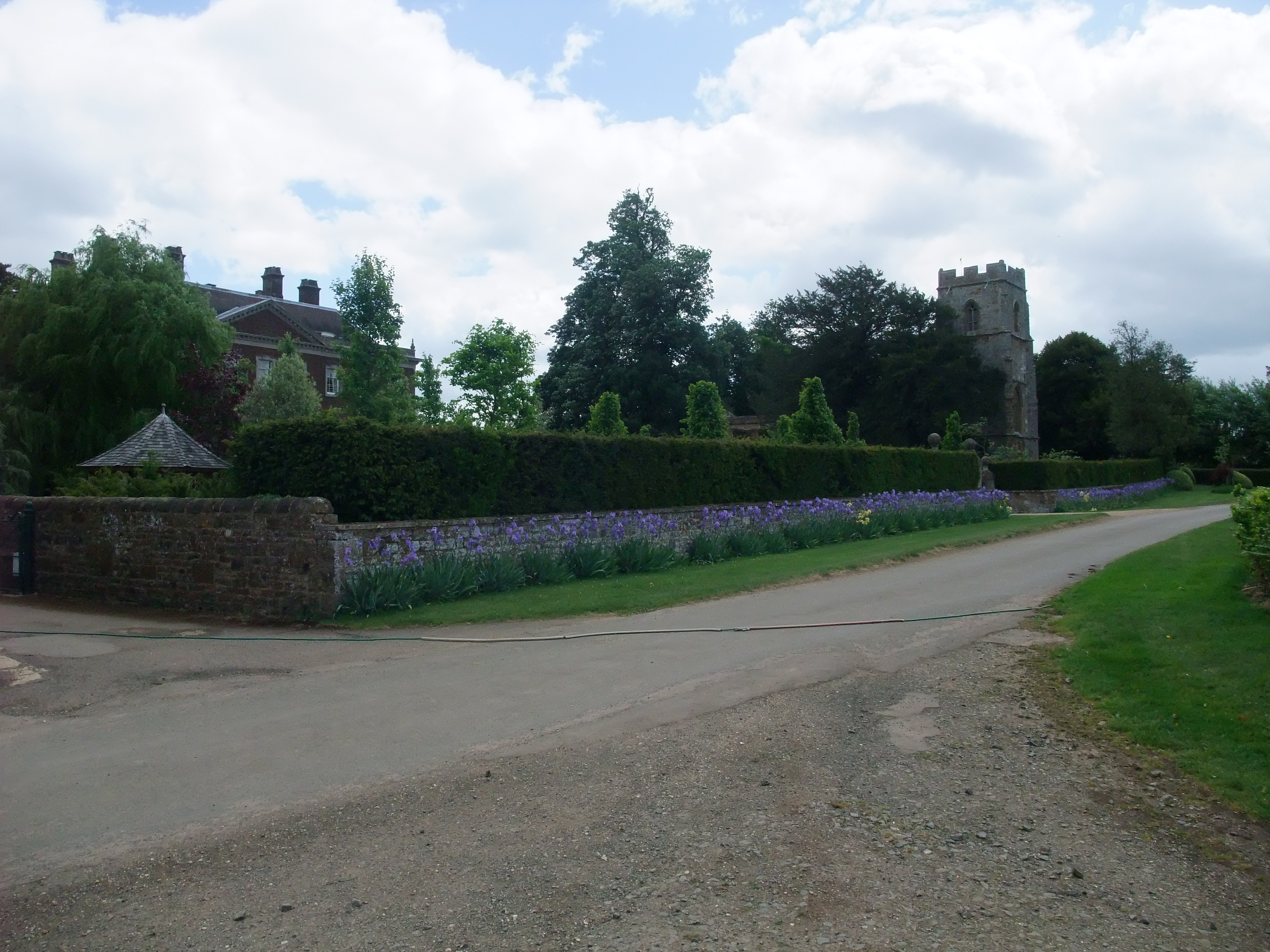
A Georgian squire once moved an entire village so it would not spoil his view. Two centuries later, his house became Mr. Bingley's Netherfield in the BBC's 1995 Pride and Prejudice. That house is Edgcote House in Northamptonshire, and it is trending in Britain as Austen fever runs hot again.
Edgcote is a Grade I listed country house of two storeys plus a basement, with a nine-bay front, about 25,900 square feet of floor space and walls of local ironstone. Inside, Wikipedia's entry on Edgcote lists a carved mahogany staircase and a drawing room done in the Chinese style.
Netherfield, the house of the ball
The BBC serial used Edgcote for both the interior and the exterior of Netherfield, the estate Bingley rents at the start of the story, while Brocket Hall in Hertfordshire supplied the Netherfield ballroom. According to the 1995 series' Wikipedia page, producers spent three days filming that ball, and between 10 and 11 million people watched the original run on BBC One.
The off-screen chemistry was real too. Colin Firth and Jennifer Ehle began a romantic relationship during filming, one that only drew attention after they had split. Not bad for a story about a man who first refuses to dance.
A king slept here, sort of
The site's history is far older than the Georgian walls. In 1543 William Chauncy bought the estate, once held by Anne of Cleves, from the Crown. In October 1642, an earlier house on the site served as a headquarters for Charles I's army before the Battle of Edgehill, the first major battle of the English Civil War.
The fields nearby had already seen bloodshed. The Battle of Edgcote was fought on 24 July 1469 during the Wars of the Roses, a rebel victory that briefly handed power to the Earl of Warwick and cost the royal side 168 knights and gentry.
The maid who would not stop writing
Edgcote's juiciest footnote belongs to a kitchen maid. The poet Mary Leapor worked at the house, and her poem "Crumble-Hall" was inspired by her time there. Her Wikipedia biography says she lost a post with Sir Richard Chauncy's family because she kept writing even in the kitchen; a 1784 account claimed she would take up her pen while the roasting jack stood still and the meat scorched.
The house she knew did not last. Richard Chauncy, a London merchant, had architect William Jones build the present house between 1747 and 1752. His son, William Henry Chauncy, then had Edgcote village moved some time before 1788, purely to improve the view.
Edgcote by the numbers
- 1,700 acres of 18th-century parkland, holding a Roman villa's remains and a lake supplied by the Cherwell.
- 57 people lived in the parish at the 2001 census.
- 79 years of Cartwright ownership, from 1847 to the sale to the Courage family in 1926, by Badiyaa's count.
- 2005, when businessman David Allen bought the estate.
The house is even heated with energy drawn from that lake. For more on the series that made it famous, see Badiyaa's look at Colin Firth's wet-shirt lake scene, and our report on Emma Corrin as Netflix's new Elizabeth Bennet.
Sources
- Edgcote, Wikipedia, 2026
- Pride and Prejudice (1995 TV series), Wikipedia, 2026
- Battle of Edgcote, Wikipedia, 2026
- Mary Leapor, Wikipedia, 2026
Image: Tim Heaton, CC BY-SA 2.0 via Wikimedia Commons
This article was produced with AI assistance and reviewed by our Editorial Desk. How we work.