A wagging tail does not always mean a happy dog, and the direction of the wag carries part of the message. Dogs tend to wag more to the right when they meet something they want to approach, such as their owner, and more to the left when faced with something unsettling, such as an unfamiliar dog.
The pattern was first described in a 2007 study in Current Biology by Angelo Quaranta, Marcello Siniscalchi and Giorgio Vallortigara, and it is now a standard part of Wikipedia’s overview of tail wagging by dogs.
A left brain and right brain wag
The leading explanation lies in how the brain is wired. Wags biased to the right are linked to the left side of the brain, and wags biased to the left to the right side, because the nerve pathways cross over on their way to the spinal cord. In many animals the left hemisphere is associated with approach and the right with withdrawal, which fits the right-for-friendly, left-for-wary pattern.
Researchers also noticed that dogs wag less when stressed and more often when they are relaxed or excited, and that they seldom wag at all when alone. That points to the tail as a social signal aimed at someone else.
Other dogs read the direction
The more surprising finding came six years later. In a 2013 Current Biology paper from the University of Bari and the University of Trento, dogs watched videos of other dogs wagging. According to the study’s abstract on PubMed, dogs watching left-biased wagging showed higher heart activity and more anxious behavior than dogs watching right-biased wagging.
In other words, the asymmetry is not just a quirk of the wagger. Other dogs appear to pick it up and respond to it.
How to read a wag at home
- Height: a tail held high signals confidence; a tail held low or tucked under signals fear or submission.
- Direction: a wag that swings more to the dog’s right tends to go with approach, more to the left with caution.
- Speed and size: broad, loose wags tend to go with relaxed dogs; stiff, small movements deserve a closer look at the rest of the body.
- Context: dogs rarely wag when nobody is around, so ask who the wag is for.
Left and right here mean the dog’s own left and right, not yours, so face the same way as the dog to judge it. The difference is often small, and it is easier to see on video than in real time.
Tail length changes the conversation
Tail shape matters too. Dogs are more likely to approach a wagging dog with a long tail than one with a short tail, perhaps because a longer tail is easier to read. Tails are docked in almost one-third of recognized domestic breeds, which may leave those dogs harder for others to interpret.
Tail wags sit alongside other dog signals Badiyaa has covered, from the play sneeze that tells a wrestling partner the game is friendly to the head tilt seen in dogs that learned their toys’ names.
The 2013 Bari-Trento team says the finding may prove useful to canine welfare theory and practice.
Sources
- Asymmetric tail-wagging responses by dogs to different emotive stimuli, Current Biology (Quaranta, Siniscalchi, Vallortigara), 2007
- Tail wagging by dogs, Wikipedia, 2026
- Seeing left- or right-asymmetric tail wagging: emotional responses in dogs (Siniscalchi et al.), Current Biology (University of Bari, University of Trento), 2013
- PubMed record 24184108, US National Library of Medicine, 2013
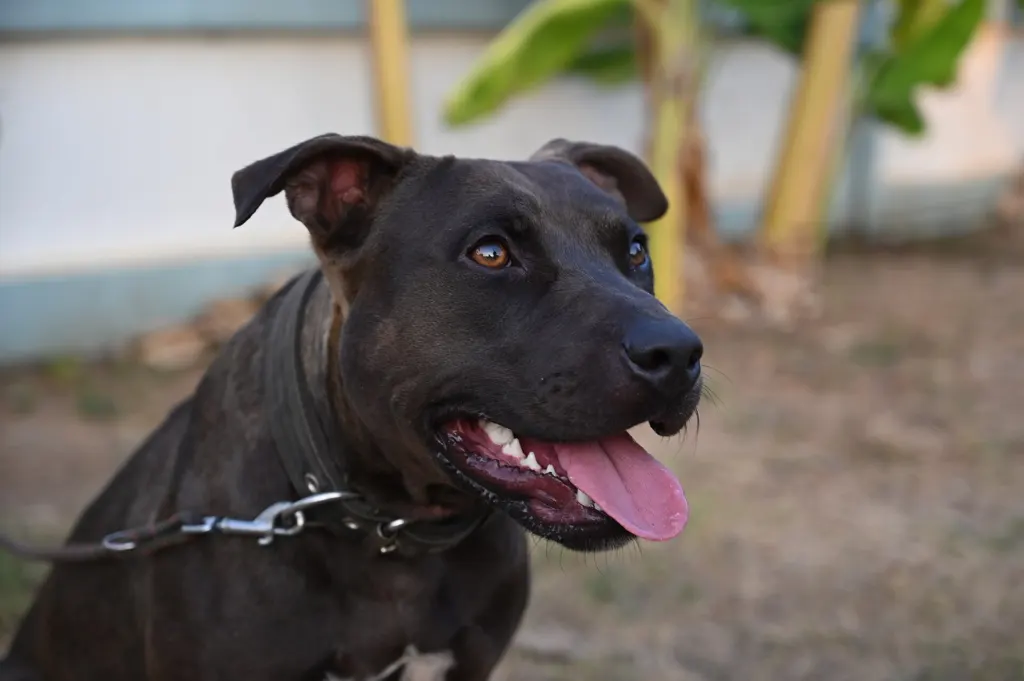
Image: PattayaPatrol, CC BY-SA 4.0 via Wikimedia Commons
This article was produced with AI assistance and reviewed by our Editorial Desk. How we work.