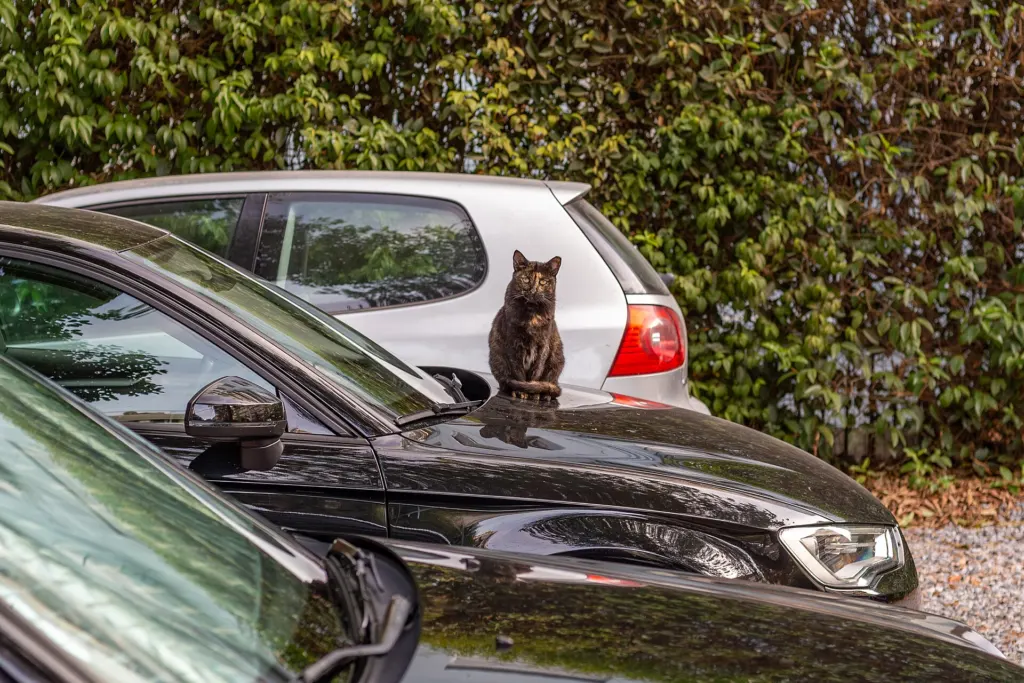
When the temperature drops, a parked car can look like the best shelter on the street to an outdoor cat. The engine stays warm for a while after you switch it off, the space under the hood is tucked away from wind, rain and snow, and a cat can squeeze into gaps that seem far too small for it.
The trouble comes the next time someone turns the key. A cat curled up near the engine can be badly hurt once the motor and its belts start moving. That is why carmaker Nissan in Japan and veterinary hospital chain VCA both push the same simple habit: knock on the hood before you drive.
Why cats pick engine bays
Cats that live outdoors, whether neighborhood pets, strays or feral colonies, spend winter looking for anywhere out of the weather. VCA describes the space under a car or truck hood as one of the most tempting yet dangerous of those spots, because the leftover engine heat draws cats in after the driver has gone indoors.
Size works against them. Cats can wedge themselves into very tight spaces, and a sleepy cat in a warm hiding place may take a little time to wake and climb out even after it hears you.
The knock-knock habit
In Japan the habit has a name. Nissan’s #KnockKnockCats campaign, known in Japanese as neko banban, asks drivers to bang on the hood in winter before starting the engine. The company’s Japanese account promoted it in a post on November 19, 2015, urging people to check the engine room and hood for any cry or sign of a cat. Nissan offers the campaign logo and stickers as free downloads for non-commercial use, and its campaign page, updated in February 2026, says the effort “has now become a huge phenomenon.”
Nissan’s own explanation is plain: in the cold of winter, it says, some cats try to warm up by hiding under car hoods, and starting the car without checking can end in tragedy.
A 30-second check before you drive
- Make sure your own cat is inside the house.
- Glance under the vehicle for any cat hiding there.
- Knock or thump firmly on the hood to rouse a sleeping cat.
- Give the horn a honk.
- Listen for scrambling or meowing.
- Wait a few moments so a cat has time to get out before you start the engine.
The whole routine takes well under a minute, which is less time than most drivers spend scraping frost off a windshield.
If a cat does climb out
A cat that bolts from under your hood has simply found a warm bed for the night. Leave it be, and if strays shelter in your street every winter, local shelters and humane groups can advise on safer outdoor shelters. Cats are full of habits that come from comfort and instinct, from kneading with a kitten’s nursing motion to raising the tail in a friendly greeting, and seeking out warmth is one of the strongest.
VCA’s checklist ends on the point Nissan makes too: a few moments of noise before you start the car can save a cat’s life.
Image: Nikolai Bulykin, CC BY-SA 4.0 via Wikimedia Commons
This article was produced with AI assistance and reviewed by our Editorial Desk. How we work.