For 99 years, the United States kept a federal court of appeal for rejected tea. The Board of Tea Appeals heard complaints from importers whose leaves had been turned away by government tea tasters, and it could wave a shipment through or send it to be destroyed or shipped back out.
The board was born with the Tea Importation Act of 1897 and died with the Federal Tea Tasters Repeal Act of 1996. In between, every chest of imported tea had to pass a sip test against official samples before it could be sold.
A law “to prevent the importation of impure and unwholesome tea”
That is the act’s long title. Senator David B. Hill of New York introduced it, and President Grover Cleveland signed it on March 2, 1897. It took effect on May 1 that year and replaced an earlier 1883 law aimed at spurious tea.
The core rule was blunt. It became unlawful to bring in “any merchandise as tea which is inferior in purity, quality, and fitness for consumption to the standards kept at customhouses.” The whole act ran to just twelve sections.
How the tea test worked
The machinery had three layers, and it ran every year:
- The experts: a federal official appointed a board of seven members, “each of whom shall be an expert in teas,” to prepare standard samples.
- The standards: those samples fixed the bar for purity, quality and fitness, and copies were lodged at customhouses in ports of entry.
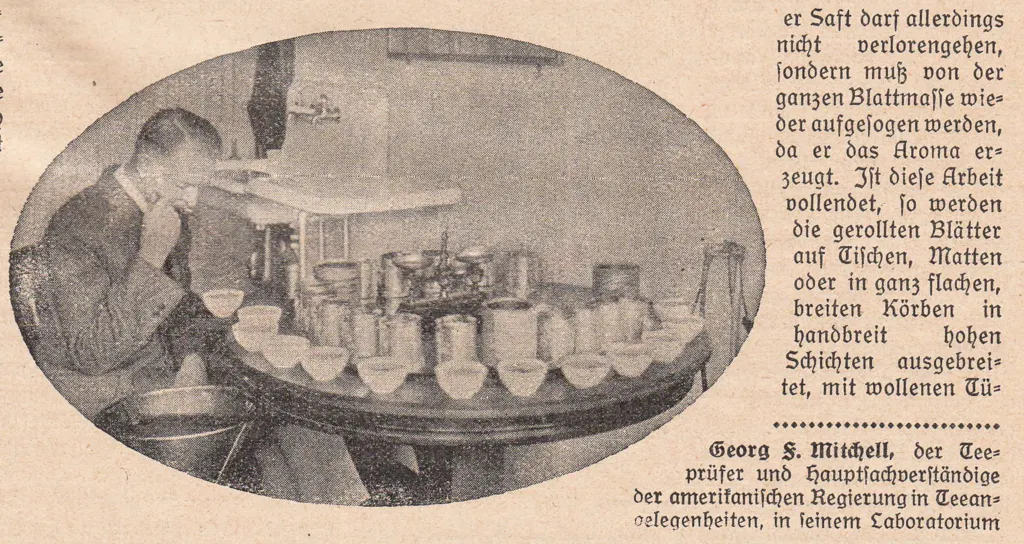
- The examiners: importers handed over samples of each shipment, and a qualified examiner compared them with the standard, including by brewing an infusion in boiling water and, if needed, running a chemical analysis.
An importer who lost at that stage could take the fight to the Board of Tea Appeals. By the end of the law’s life, the act’s own text put this under the Secretary of Health and Human Services rather than the Treasury Department that first ran it, and the appeals board sat within the Food and Drug Administration.
Tea waste got a carve-out
In 1908 Congress amended the law so that tea siftings, sweepings and waste could still be imported for one purpose: extracting caffeine, also called theine, and other chemical products. Leaves too poor to drink were fine as raw material for a lab.
The arithmetic of a long-lived board
Run the dates and the board outlasted a lot. It was created in 1897, when Cleveland was still in office, and it was abolished in 1996, which means it served through the administrations of 18 more presidents, from William McKinley to Bill Clinton. The FDA itself did not exist in its modern form until decades after the tea board began work.
Tasting is the part that makes the story stick. For most of the 20th century, a person employed by the US government had the job of brewing imported tea, sipping it, and comparing it with a reference cup, as the act required.
What replaced it
The 1996 repeal did not leave tea unregulated. The FDA still oversees imported tea under the Federal Food, Drug, and Cosmetic Act of 1938, the same law that covers most other foods. What disappeared was the special arrangement: the annual expert board, the reference samples at the customhouses and the dedicated appeals panel.
The president who signed the tea law has his own odd footnote in history, as our story on Grover Cleveland’s White House wedding to Frances Folsom explains. For more forgotten rules and offices, browse Badiyaa’s Offbeat section and our History coverage.
The 1897 statute’s place in the US Code was 21 U.S.C. sections 41 and following, a block of numbers that has pointed to a repealed law since 1996.
Further reading
Image: Unknown photographer, Public domain via Wikimedia Commons
This article was produced with AI assistance and reviewed by our Editorial Desk. How we work.