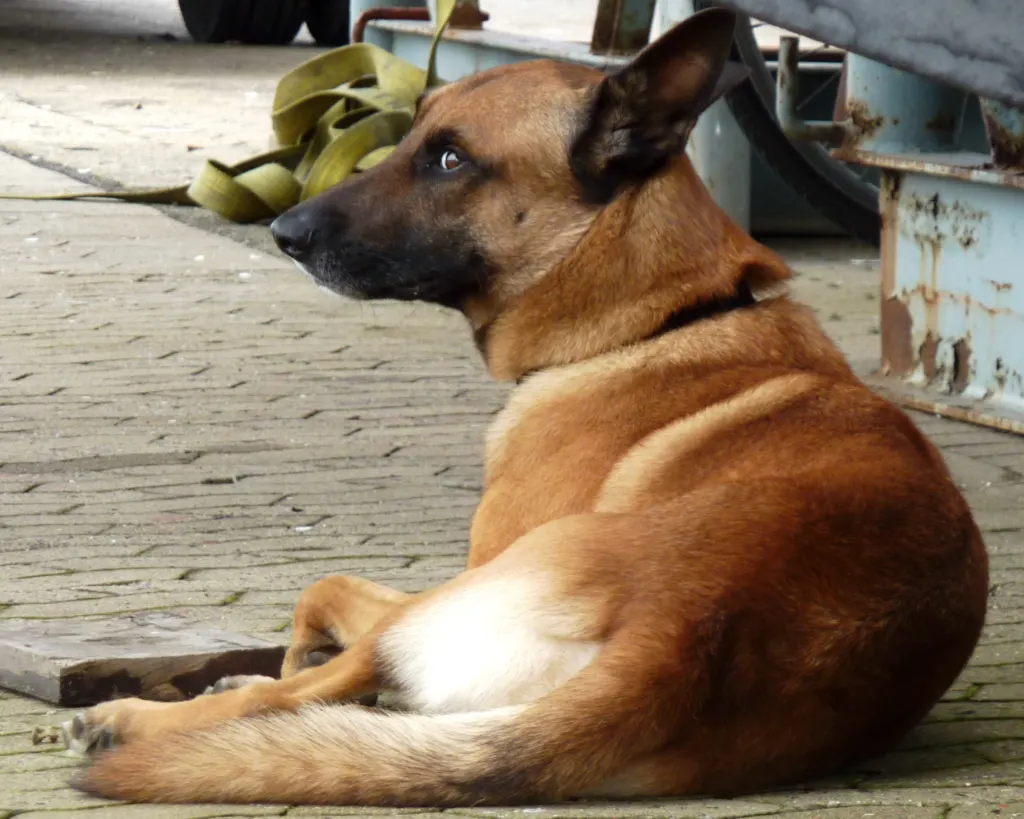
The Belgian Malinois got its name from a city. Malines is the French name for Mechelen, the Flemish region where short-haired fawn sheepdogs were the type local shepherds relied on, and those dogs became one of four official types of the Belgian Shepherd.
The Malinois is now the version most people picture: a lean, fawn dog with a black mask and black-tipped coat, standing 56 to 66 centimeters at the shoulder and weighing about 20 to 30 kilograms. Clips of Malinois holding perfectly still on command, or springing into action on a single word, circulate constantly on social media. The breed’s real history is less flashy and more interesting.
A breed rescued by a survey
For centuries Belgian shepherds bred their dogs purely for work and paid little attention to looks. By the late 1800s, while neighboring countries were standardizing their own herding breeds, the Belgian type was fading and at risk of disappearing.
In 1891 a group of enthusiasts formed the Club de Chien Berger Belge. A team led by Adolphe Reul of the Cureghem Veterinary School went out and examined working dogs, gathered 117 of them and found they varied wildly in appearance. Reul’s group treated them as one breed and began sorting them by coat type and color.
From six types to four
- 1892: The first breed standard is drafted, initially with six types.
- 1905: Breeding between types is banned.
- 1920: After losses in the First World War, the ban is lifted to protect numbers and avoid inbreeding.
- 1945: After the Second World War, cross-type matings are actively encouraged.
- 1956: The current standard fixes four types: Groenendael, Laekenois, Malinois and Tervueren.
Over those 64 years, official lists swung between as few as two and as many as eight types before settling on the four still used today. Most kennel clubs, including the international federation, treat them as one breed. The American Kennel Club counts four separate breeds, which can cause headaches when a European Groenendael litter throws a pup with Tervueren coloring.
The Malinois was reportedly the first of the four to breed true to type. It was so dominant in Belgium that for a time the others were lumped together as “other-than-Malinois”.
Why Malinois look so obedient on camera
Belgian Shepherds are described as highly intelligent, alert and sensitive, quick to learn and keen to work, and they respond best when training starts early. The Malinois is the most active of the four, a trait often linked to its long breeding for security work. That combination, a dog that is eager for a task and fast to read its handler, explains the drills seen in viral videos.
It also explains where the breed works. Customs, border, police and military services have turned to it in growing numbers, including the US armed forces, the US Secret Service and the Australian Defence Force, while an anti-poaching dog unit at South Africa’s Kruger National Park also uses Malinois. Police use of dogs has deep Belgian roots, as our piece on Ghent’s first police dog unit and a £5 patrol dog in Nottingham explains.
That drive is the catch for families. A Malinois needs plenty of exercise and a job to do, though the breed copes well with living indoors. A 2024 UK study put Malinois life expectancy at 12 years, slightly below the 12.7-year average for purebred dogs, and the Belgian breed authority recommends hip, elbow and epilepsy screening.
For another working breed whose original role looks very different from its modern image, read our history of Great Danes as boar-hunting and chamber dogs.
Further reading
Image: Oxfordian Kissuth, CC BY-SA 3.0 via Wikimedia Commons
This article was produced with AI assistance and reviewed by our Editorial Desk. How we work.