The internet’s ancestor got its first always-on connection 57 years ago this week. On November 21, 1969, a leased line joined the routing computers at UCLA and the Stanford Research Institute, turning a crash-prone experiment into the first permanent link of the ARPANET.
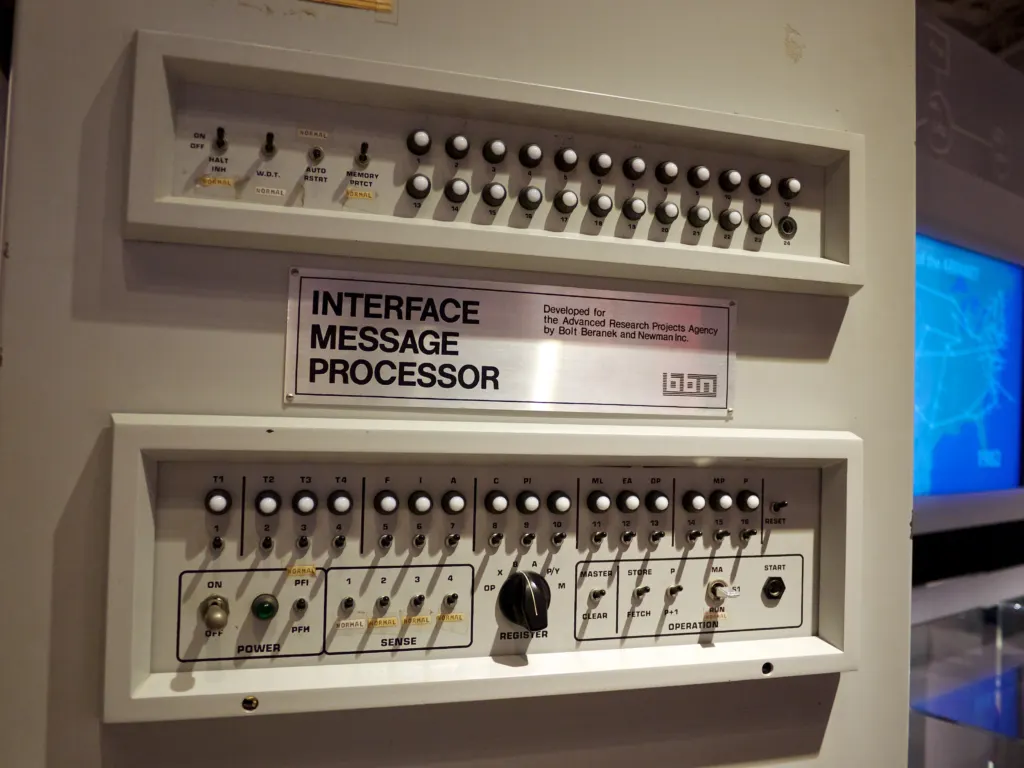
That date is recorded in the Wikipedia history of the ARPANET, which notes that a four-node network linking UCLA, SRI, UC Santa Barbara and the University of Utah was running by December 5, 1969. Each site had an Interface Message Processor, or IMP: a ruggedized Honeywell DDP-516 minicomputer that handled the traffic so the big host computers did not have to. In modern terms, the IMPs were the first routers.
“lo,” then a crash
The permanent link came three weeks after a famous false start. Leonard Kleinrock’s own UCLA page on the first ARPANET message reproduces the IMP log entry from 22:30 on October 29, 1969. His student programmer Charley Kline tried to log in to Bill Duvall’s SDS 940 at SRI from UCLA’s SDS Sigma 7. In Kleinrock’s words, “They succeeded in transmitting the “l” and the “o” and then the system crashed!” The full login worked about an hour later.
So the first word ever sent across the network was “lo.” The November link is less quotable but matters more: it was the moment the connection stayed up.
Who built it
The project began in 1966, when Bob Taylor at the Advanced Research Projects Agency persuaded its director, Charles Herzfeld, to redirect about $1 million from a missile defense program. Taylor had three terminals in his office, each tied to a different computer with its own commands, and wanted one terminal that could reach them all. Larry Roberts ran the program; the Cambridge firm Bolt Beranek and Newman won the contract to build the IMPs in January 1969 and delivered a working system in nine months. The packet-switching idea itself drew on Donald Davies at Britain’s National Physical Laboratory and Paul Baran at RAND.
The Badiyaa timeline: from four nodes to everything
Lined up in order, the growth curve is steep:
- December 1969: four IMPs in California and Utah
- March 1970: the network reaches the East Coast at BBN in Cambridge, Massachusetts
- 1971: declared operational; Ray Tomlinson sends the first network email
- June 1973: a satellite link reaches Norway and onward to University College London
- January 1, 1983: “flag day,” when TCP/IP replaces the original protocol
- February 28, 1990: the ARPANET is decommissioned
That is roughly 20 years from a two-letter crash to a network retired because its successor, the internet, had outgrown it. By 1973, according to an ARPA study cited in the same history, three-quarters of ARPANET traffic was already email.
The ARPANET’s DNA turns up across computing history. Ethernet pioneer Robert Metcalfe’s ideas fed into TCP/IP, a thread in our story on 3Com, the Ethernet company Metcalfe co-founded. More computing anniversaries live in our Tech section.
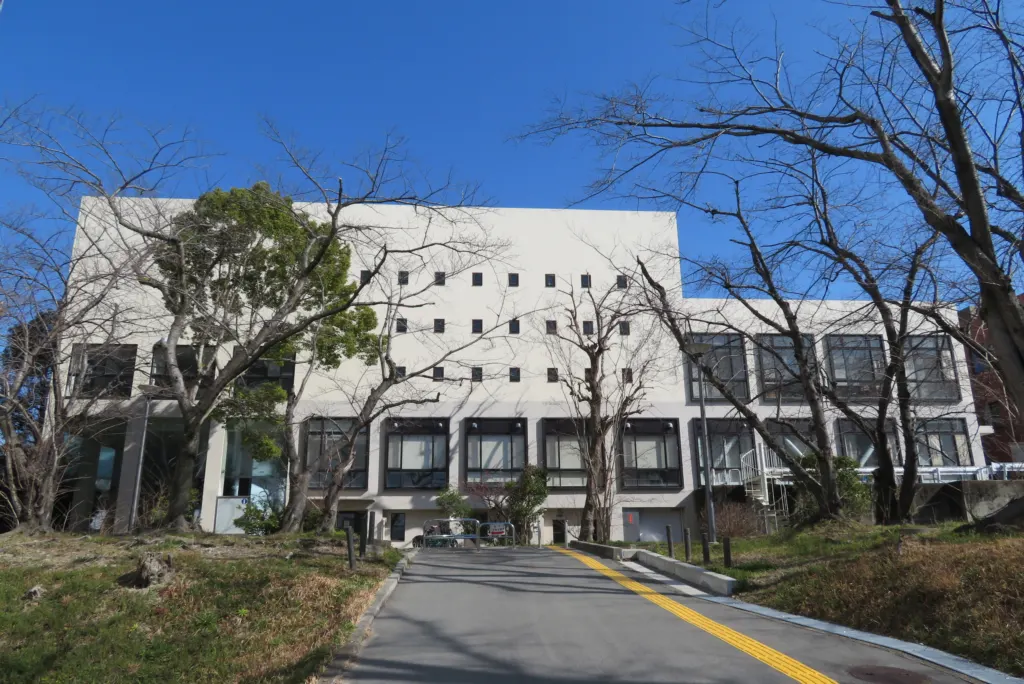
The first host computer sat in Boelter Hall room 3420 at UCLA, and the first permanent link turns 57 on Saturday, November 21.
Sources
- ARPANET, Wikipedia, 2026
- The Day the Infant Internet Uttered its First Words, Leonard Kleinrock, UCLA, 2026
Image: Don DeBold, CC BY 2.0 via Wikimedia Commons
This article was produced with AI assistance and reviewed by our Editorial Desk. How we work.