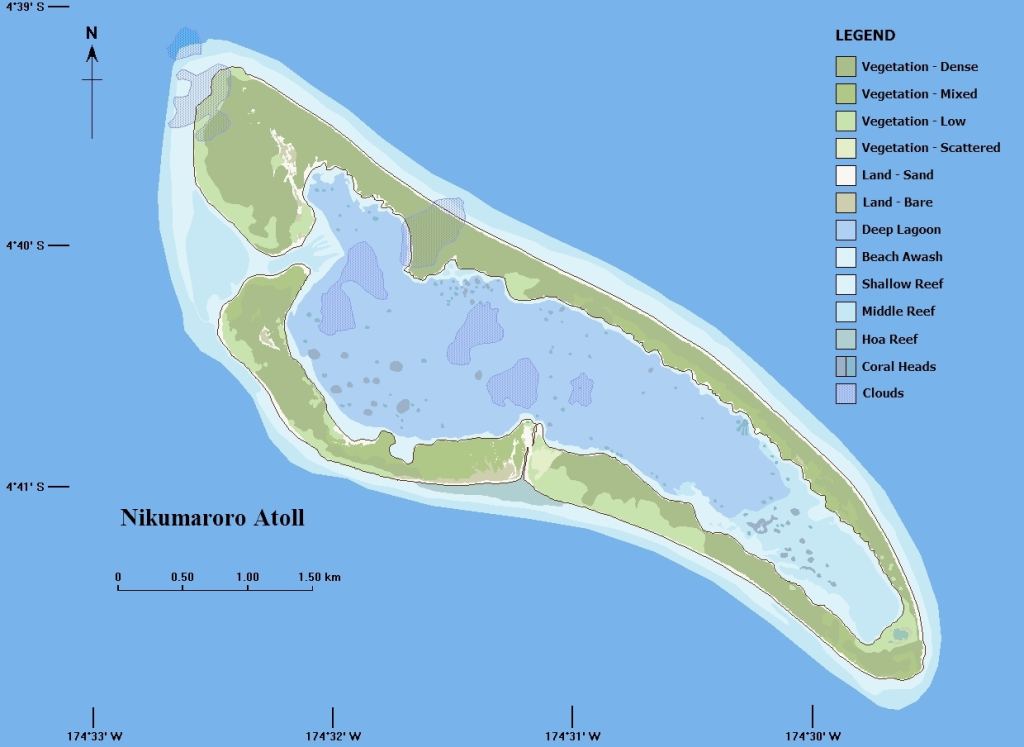
A search team backed by Purdue University reached Nikumaroro, a remote coral atoll in Kiribati, around 12 October 2026 to investigate a shape in the island’s lagoon that it believes could be the wreck of Amelia Earhart’s Lockheed Electra. The target, which the team calls the Taraia Object, was picked out in satellite imagery, and nobody has yet put eyes or instruments on it underwater.
The expedition is led by the Archaeological Legacy Institute (ALI) with the Purdue Research Foundation. According to Purdue’s published updates, the crew flew out from Purdue University Airport in Indiana, regrouped in Tarawa, the Kiribati capital, and then began a six-day sea voyage south-east to the atoll. A later update said the vessel was 72 hours from arrival.
What the team is looking for
The Taraia Object takes its name from the Taraia area of Nikumaroro, where an elongated shape shows up in the shallow lagoon in satellite pictures. Its supporters say its size and outline are consistent with an aircraft of the Electra’s class. Sceptics have offered more mundane candidates, including a fallen coconut tree or other debris settled in the sand. Only a close inspection can separate the two, and that is the point of the trip: survey the site, document what is there and, if it is metal, look for features that can be matched to Earhart’s aircraft.
The search was first planned for November 2025. Purdue announced that autumn that it had been pushed to 2026 because of the Kiribati permit approval process and the weather window. The university’s interest is not incidental. Earhart joined Purdue’s staff in 1935, and the Electra she flew on her final attempt was bought with money raised through the Purdue Research Foundation.
How the Nikumaroro idea took hold
Earhart and her navigator, Fred Noonan, disappeared on 2 July 1937 while trying to reach Howland Island, a tiny refuelling stop on their round-the-world flight. The official US conclusion was that they ran out of fuel and went down at sea near Howland, a view often called the crash-and-sink hypothesis.
The alternative, that they landed on the reef at Nikumaroro (then Gardner Island), about 350 nautical miles to the south-east, has been championed since the late 1980s by The International Group for Historic Aircraft Recovery (TIGHAR), led by Ric Gillespie. Over more than a dozen trips, the group has collected artefacts it argues point to a castaway presence: fragments of aluminium, a piece of plexiglass, glass jars and bits of a cosmetics container.
The most discussed evidence is skeletal. In 1940, a British colonial officer, Gerald Gallagher, recovered partial human remains on the island. A doctor in Fiji measured them in 1941 and judged them to be male; the bones were later lost. In 2018, Richard Jantz, an anthropologist at the University of Tennessee, re-analysed those surviving measurements in the journal Forensic Anthropology and concluded they were closer to Earhart’s estimated dimensions than 99% of individuals in a large reference sample.
How strong is the evidence?
Circumstantial, and contested. Jantz’s study works from 1941 notes, not bones, and its conclusion depends on estimates of Earhart’s limb proportions drawn from photographs and clothing. None of the artefacts recovered on Nikumaroro has been tied conclusively to the Electra. A 2019 expedition led by Robert Ballard, who found the Titanic, surveyed the atoll’s reef slopes with remotely operated vehicles and found no aircraft wreckage.
The crash-and-sink camp has had its own false start. In early 2024, the company Deep Sea Vision released a sonar image from near Howland that it said resembled an aircraft; by November 2024 it said follow-up imaging showed a natural rock formation.
That history sets a high bar for the Taraia Object. A shape in a satellite image is a hypothesis; an identifiable part, such as a serial-numbered component or a structural piece that matches Electra drawings, would be evidence. The next Purdue update from the atoll should say which of the two the team has.
Further reading
- Purdue University: Earhart expedition update, crew at sea
- Purdue University: Expedition postponed to 2026
- Wikipedia: Nikumaroro
- Wikipedia: TIGHAR
Image: P Minton, from Ikonos image (04-2001), CC BY 2.0 via Wikimedia Commons
This article was produced with AI assistance and reviewed by our Editorial Desk. How we work.