Darker evenings are on the way. The clocks go back by an hour this autumn on both sides of the Atlantic, but not on the same weekend.
UK: Sunday, October 25
In the UK, the clocks go back at 2am on Sunday, October 25, 2026, ending British Summer Time and returning the country to Greenwich Mean Time. The change always happens on the final Sunday of October, in the middle of the night to keep disruption to schools and businesses to a minimum.
US: Sunday, November 1
In the United States, daylight saving time ends at 2am local time on Sunday, November 1, 2026. The US rule is different: daylight saving time runs from the second Sunday in March to the first Sunday in November.
That leaves a one-week window, from October 25 to November 1, when the time difference between London and New York is four hours instead of the usual five. Worth remembering if you have transatlantic calls or flights booked that week.
Who does not change their clocks
Arizona and Hawaii do not observe daylight saving time, and nor do American Samoa, Guam, the Northern Mariana Islands, Puerto Rico and the US Virgin Islands.
What you need to do
Smartphones, computers and most internet-connected devices update automatically. Car clocks, ovens and analogue clocks usually need changing by hand.
When do they go forward again?
In the US, clocks spring forward on Sunday, March 14, 2027.
Why we do it
The idea is usually credited to William Willett, who proposed moving clocks forward in spring and back in autumn in 1907. He died in 1915, and Parliament passed the Summer Time Act the following year, in 1916.
Further reading
- When do the clocks change? — GOV.UK
- British Summer Time — Wikipedia
- Daylight saving time in the United States — Wikipedia
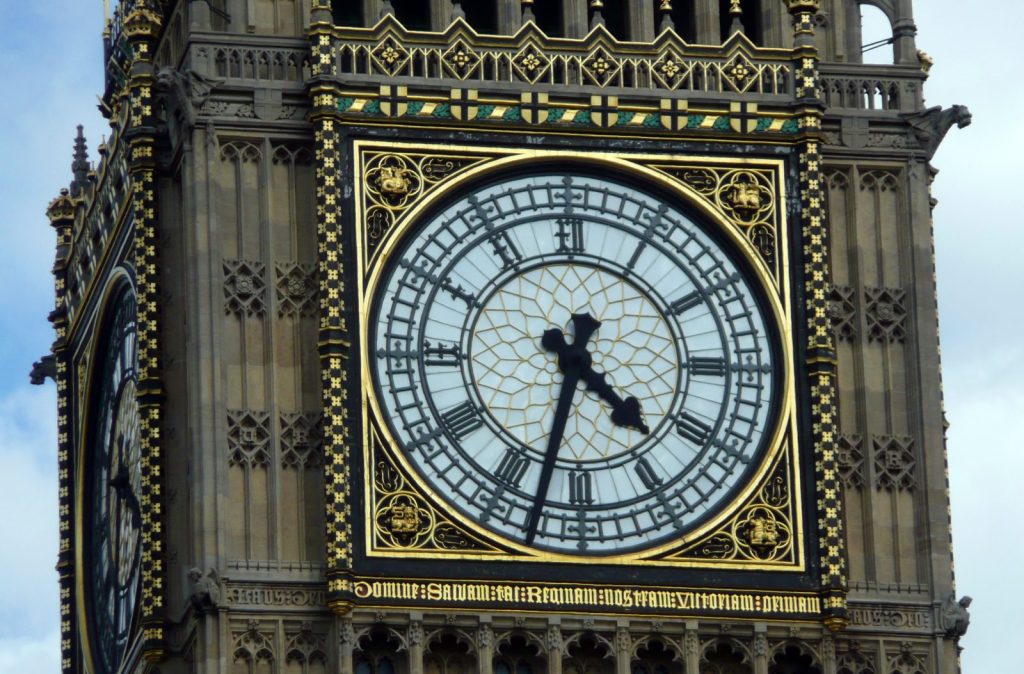
Image: Houses Of Parliament Clock Tower (Big Ben) by Barry Mangham, BY-SA 3.0 via Wikimedia Commons
This article was produced with AI assistance and reviewed by our Editorial Desk. How we work.