For 28 months during World War II, a team of botanists in Leningrad sat beside tonnes of edible seeds, nuts and potatoes and refused to eat any of it. The city was under siege and starving. At least 19 of them died, most from hunger, and the collection they guarded survived.
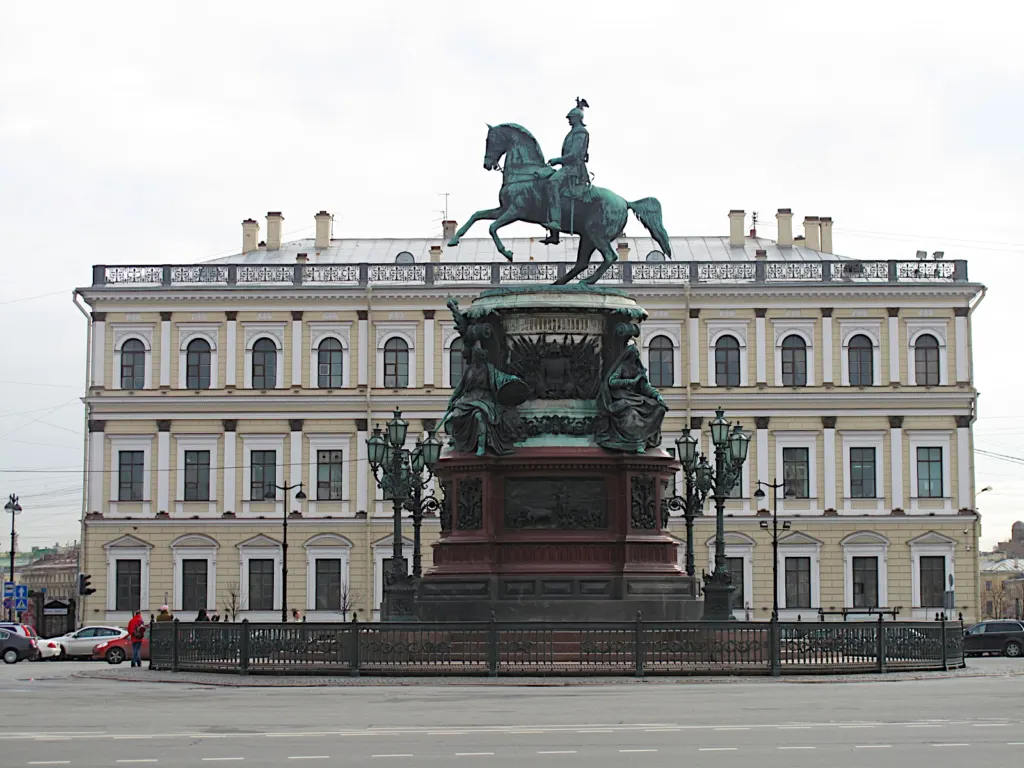
The building they protected still stands on St. Isaac’s Square in present-day St. Petersburg. It houses the institute known since 2015 as the N. I. Vavilov All-Russian Institute of Plant Genetic Resources, one of the oldest seed banks in the world.
A seed bank built by one restless botanist
Nikolai Vavilov, born in Moscow in 1887, grew up obsessed with ending famine; his father had known poverty from repeated crop failures. Vavilov founded the Institute of Plant Industry in Leningrad in 1921 and set out to gather the world’s crops in one place.
His expeditions began in Iran in 1916 and stretched across Afghanistan, Ethiopia, the Mediterranean, East Asia, North America and, in 1932, most of Latin America. From the samples he collected he mapped the “centers of origin,” the regions where crops were first domesticated. By 1933 the Leningrad collection held more than 148,000 specimens, the largest seed bank on Earth.
Arrested before the siege began
Vavilov did not see his collection’s finest hour. Trofim Lysenko, who rejected Mendelian genetics and had Joseph Stalin’s favor, turned the institute against its founder. In August 1940, while collecting seeds in Ukraine, Vavilov was arrested and accused of spying and sabotaging Soviet agriculture. Sentenced to death in 1941, he had the sentence reduced to 20 years, and he died in a Saratov prison on January 26, 1943. Some authors say the cause was starvation.
Guarding the seeds through the siege
When German forces surrounded Leningrad, an attempt to evacuate some staff and a small part of the seed stock failed after the last rail line out was cut. The rest stayed in the city. Accounts of its size differ: about 120 tonnes of seeds, nuts and roots including 6,000 potato varieties, or some 250,000 samples of seeds, roots and fruits.
About 50 botanists stayed with it. They boxed a cross-section of seeds, carried them to the basement and kept watch in shifts against incendiary bombs, deep cold, rats and their own hunger. Split evenly, 120 tonnes across 50 guardians works out to about 2.4 tonnes of potential food per person, every gram of it untouched.
Their reasoning was simple: the seeds were the raw material for feeding people after the war. Eating them would have meant losing varieties that existed nowhere else.
What happened to Vavilov’s name and his seeds
- 1955: A Soviet military court voids Vavilov’s sentence during de-Stalinization.
- 1967–1968: The institute is renamed in his honor.
- 2010: A presidential order saves the Pavlovsk Experimental Station’s plant collection from a planned luxury housing project.
Today the institute runs Russia’s only national seed collection, among the five leading gene banks in the world. Its rye, buckwheat and flax collections are the world’s largest. The idea Vavilov pioneered now underpins facilities such as the vault in Svalbard, covered in our piece on how 75% of crop genetic diversity has vanished since 1900. For more stories like this one, visit the Badiyaa History section.
November 25 marks 139 years since Vavilov’s birth.
Further reading
Image: Dag Endresen, CC BY 3.0 via Wikimedia Commons
This article was produced with AI assistance and reviewed by our Editorial Desk. How we work.