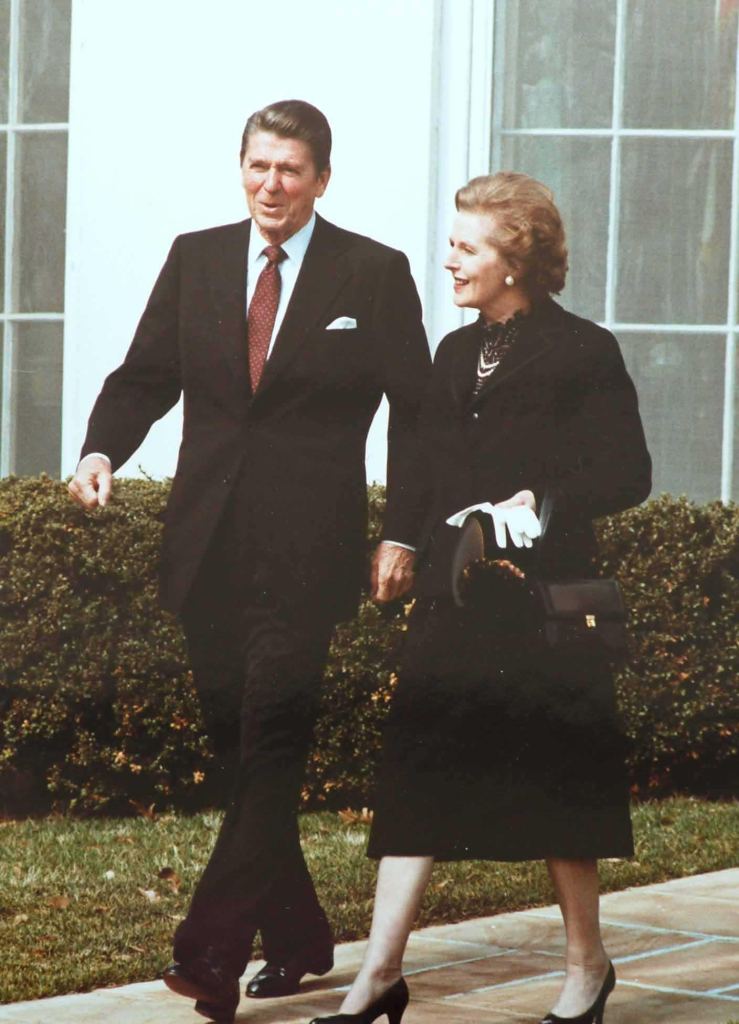
Margaret Thatcher, born in Grantham, Lincolnshire, 101 years ago today, is still best remembered for 11 words she delivered in Brighton on 10 October 1980: “You turn if you want to. The lady’s not for turning.”
The wording is worth getting right, because it is often trimmed. According to the transcript held by the Margaret Thatcher Foundation, she set it up with: “To those waiting with bated breath for that favourite media catchphrase, the ‘U’ turn, I have only one thing to say.” After the line she added: “I say that not only to you but to our friends overseas and also to those who are not our friends.” Versions such as “This lady’s not for turning” are misquotes, and most retellings drop the first sentence altogether.
The pressure in 1980
It was the closing speech of the Conservative Party conference, roughly 3,900 words long, and she was 17 months into her first term. The economy was in recession. Unemployment had climbed to about 2 million by that autumn, up from 1.5 million a year earlier, and inflation was running at around 18%.
The phrase “U-turn” carried a specific memory for her audience. In 1972 her predecessor as party leader, Edward Heath, had abandoned his own free-market programme once unemployment passed one million, switching to higher spending and tax cuts. In 1980 commentators, and Heath himself, were urging Thatcher to do the same with her tight-money policy. The line was her public answer, and the hall gave her a standing ovation that lasted around five minutes.
The playwright behind it
The words were written by Ronald Millar, an actor and dramatist who drafted her major speeches through her years as leader and was knighted after she became prime minister. His joke borrowed the title of Christopher Fry’s 1948 verse comedy The Lady’s Not for Burning, set around 1400, in which a woman accused of witchcraft is caught up in a village witch-hunt. By most accounts Thatcher did not catch the reference herself.
Millar reportedly expected “You turn if you want to” to be the bigger moment, and it did draw its own applause. The headlines went to the second half.
What happened next, and how the line is used
The government held its course. Geoffrey Howe’s budget of 10 March 1981 kept the squeeze in place, and at the end of that month 364 economists signed a statement saying there was “no basis in economic theory or supporting evidence” for the approach. Unemployment went on to pass 3 million in 1982. Inflation fell to about 4% by 1983.
Those two numbers explain why she remains divisive. Supporters read the falling inflation as proof that holding firm worked; critics point to the jobs lost in manufacturing towns and argue the cost fell on people with the least say in it. Both readings use the same speech as evidence.
The phrase itself became a Thatcherite motto, and it has outlived its context. It turns up in leadership talks and opinion columns, usually to mean “I have decided and I am not backing down”. British politicians who reverse a policy can expect it quoted back at them.
Read whole, the passage is less a boast than a dare, and Millar’s first sentence leaves the listener free to choose differently. The full text, including an early interruption by a protester who was removed from the hall, is in the Thatcher Foundation’s online archive as document 104431.
Further reading
- Wikipedia: The lady’s not for turning
- Wikipedia: Ronald Millar
- Wikipedia: The Lady’s Not for Burning
Image: White House Photographic Office, Public domain via Wikimedia Commons
This article was produced with AI assistance and reviewed by our Editorial Desk. How we work.