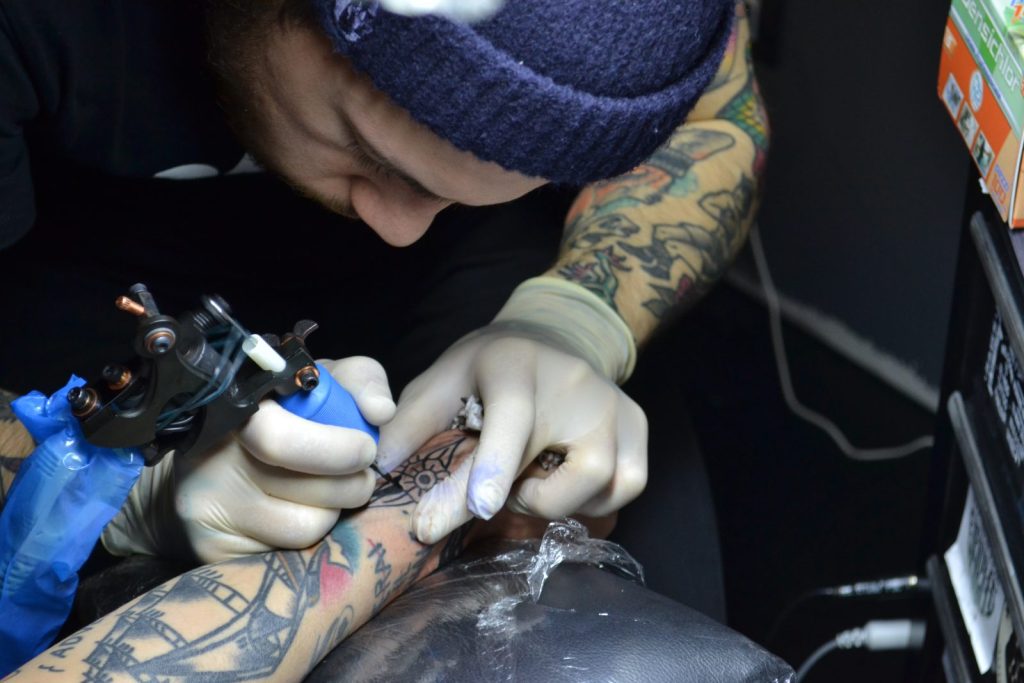
For many people treated with radiotherapy, the most lasting reminder of cancer care is a set of small dots tattooed on the skin. The marks help staff line up the radiation beam precisely, session after session, and they stay for life.
A team at the University of Colorado Boulder thinks those marks do not need to be visible all the time.
A tattoo with an off switch
Led by Carson Bruns, the researchers have developed tattoo inks that stay nearly invisible in ordinary light and show up when exposed to ultraviolet light. The work was published in the journal Matter & Light.
Bruns has spoken about how patients feel about the current marks. “They’re not beautiful, and they become a permanent reminder of a traumatic experience,” he said. “With PhotoTat, we could turn an involuntary medical tattoo into something that’s only visible to the doctor.”
How it would work in a clinic
The inks contain light-sensitive dyes sealed inside tiny particles of PMMA, a medical-grade plastic already used in implants and dermal fillers. A 365-nanometre UV LED switches the colour on in two to three seconds, and bright light fades it again.
In principle, a radiographer could light up the alignment marks for treatment and let them fade afterwards. The team also proposes biopsy site markers that only appear when activated.
Not ready yet
- The evidence that the ink keeps working in human skin comes from a single participant, in whom all three colours could still be switched 1.4 to 2.2 years after tattooing.
- The specific formulations still need independent testing for toxicity, sterility and purity before wider use.
- Sunlight contains UV, so the marks could partly appear outdoors without sun protection.
Bruns has previously developed other medical tattoos, including one that measures UV exposure and another that changes colour when exposed to gamma radiation.
Further reading
- Butterfield, Quigley & Bruns (2024), “Smart Tattoos of Intradermally Implanted Photochromic Nanosensors”, Advanced Functional Materials — earlier work from the same CU Boulder lab
- Poly(methyl methacrylate) — Wikipedia
- Radiation therapy — Wikipedia
- Tattoo ink — Wikipedia
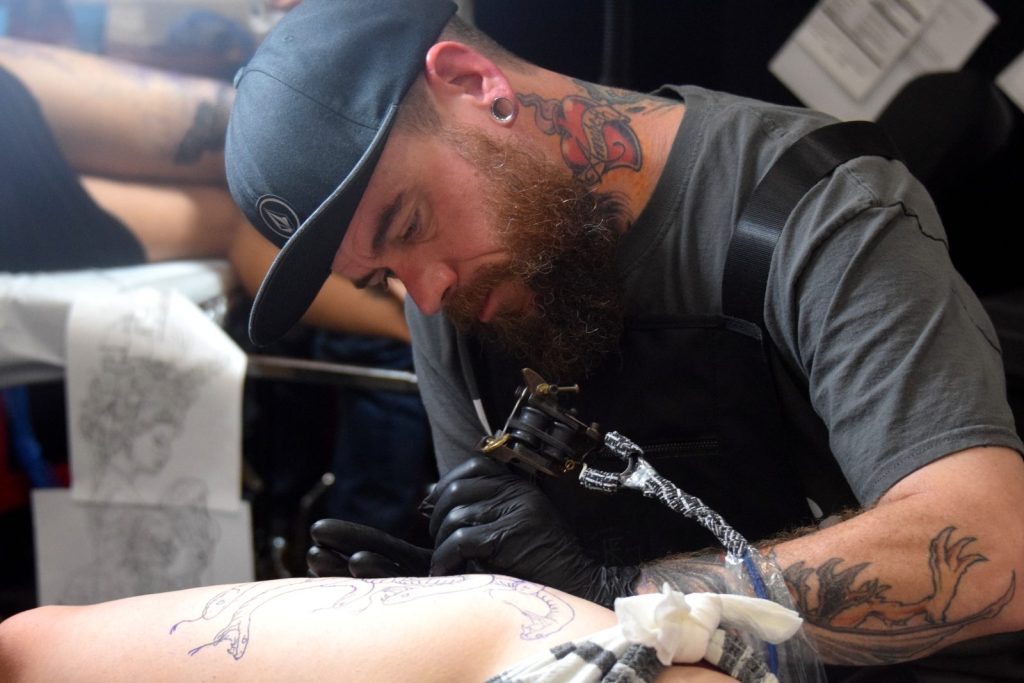
Image: Tattoo artist at 2019 Virginia Beach Tattoo Festival by Tony Alter, BY 2.0 via Wikimedia Commons
This article was produced with AI assistance and reviewed by our Editorial Desk. How we work.