For nine days in September 2023, seismometers around the world logged the same slow, steady hum, rising and falling once every 92 seconds. It was not an earthquake. A team of seismologists, geologists and modelers later showed it came from water sloshing from wall to wall inside Dickson Fjord in East Greenland, after a collapse of rock and ice set off a 200-meter-high tsunami there.
The study, led by Kristian Svennevig and published in the journal Science in 2024, traced the signal to a rock-ice avalanche of about 25 million cubic meters that plunged into the fjord on September 16, 2023. The authors link the collapse to a glacier below the slope thinning over time, which left the mountainside without support.
How a fjord can ring like a bell
The giant first wave did not simply run out to sea. Dickson Fjord is long, narrow and walled in by steep mountains: it runs about 35 kilometers and is at most 5 kilometers wide. Inside that trough, the tsunami settled into a seiche, a standing wave that swings back and forth between the walls of an enclosed body of water, much like water rocking in a bathtub.
According to the paper’s simulations, the seiche stood about 7 meters high and oscillated at 11.45 millihertz. The seismic signal ran at 10.88 millihertz, a near match. Each swing pushed on the fjord’s sides, and the team found that one oscillating sideways force, peaking at about 500 billion newtons, reproduced both the strength of the seismic waves and the direction they radiated relative to the fjord.
The numbers, worked out
A frequency of 10.88 millihertz means one cycle every 1 ÷ 0.01088, or about 91.9 seconds, which is where the 92-second figure comes from. The modeled seiche, at 11.45 millihertz, works out to about 87 seconds per swing. Nine days hold 777,600 seconds; divided by 92, that is roughly 8,450 back-and-forth cycles before the signal faded.
Seiches are old news to physicists. Swiss scientist François-Alphonse Forel measured them on Lake Geneva in the 1890s and found a 73-minute cycle along the lake. The period depends on the length and depth of the basin, which is why a small fjord rings in about a minute and a half while the North Sea can take around 36 hours. What made Dickson Fjord unusual was how long the energy stayed trapped.
Why it matters
The event shows that the planet’s seismic network can pick up more than fault ruptures. A sloshing fjord in a remote part of Greenland, inside Northeast Greenland National Park and with no settlements on its shores, left a fingerprint on instruments thousands of kilometers away. The authors argue that warming is making large landslides more likely in polar fjords, as glaciers that once braced steep slopes thin out. Badiyaa has covered other Arctic science, including the Greenland skull that DNA showed was a narwhal-beluga hybrid, and the giant Antarctic iceberg A-81 stalled off South Georgia.
Limits
The link between the seiche and the signal rests on computer simulations matched to the recordings, not on a gauge in the fjord itself, since nobody was measuring the water there at the time. The match is close but not exact, 11.45 against 10.88 millihertz. A similar ringing followed a huge landslide into Tracy Arm in southeast Alaska on August 10, 2025, and lasted about a day and a half, giving researchers a second case to test the method on.
Further reading
- USGS: A rockslide-generated tsunami in a Greenland fjord rang Earth for 9 days
- Wikipedia: Dickson Fjord
- Wikipedia: Seiche
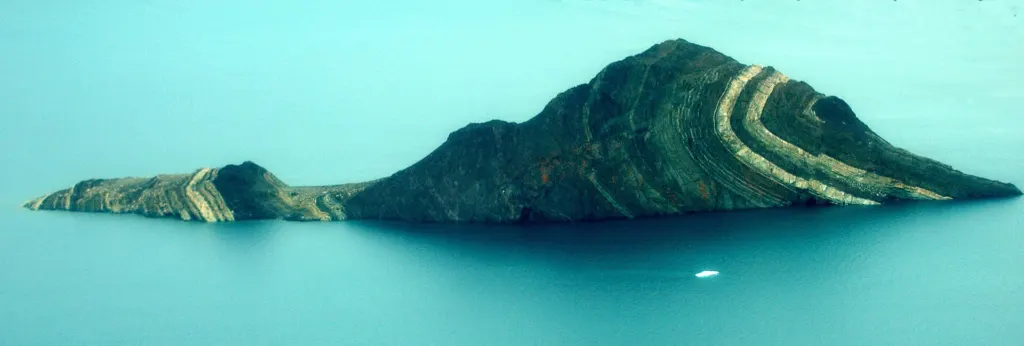
Illustrative image. Image: Håvard Berland, CC BY-SA 3.0 via Wikimedia Commons
This article was produced with AI assistance and reviewed by our Editorial Desk. How we work.