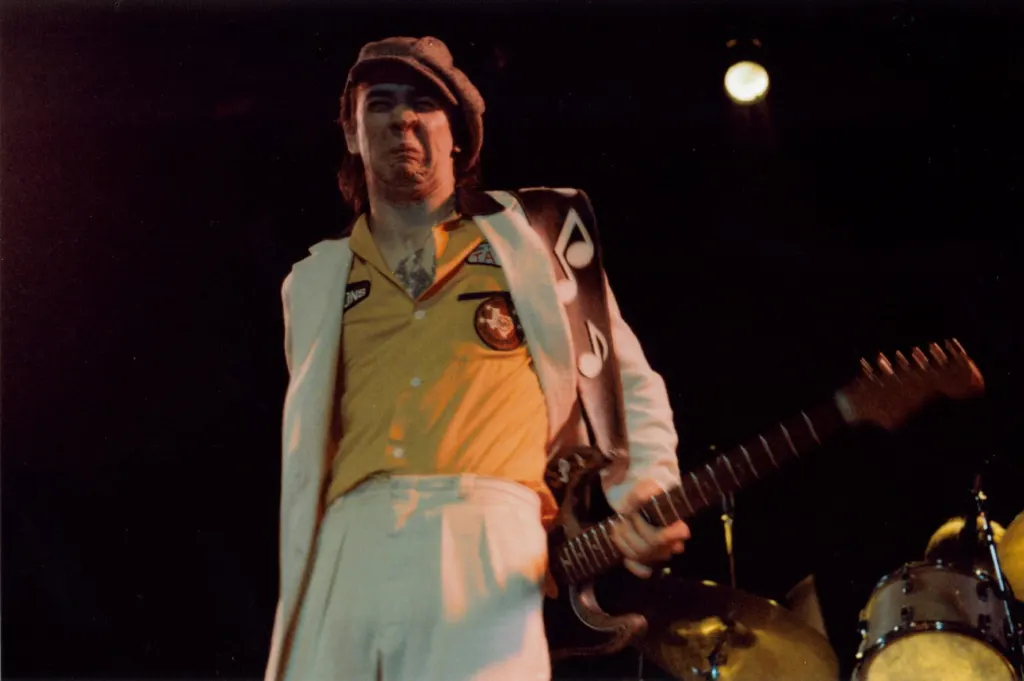
A string snaps on Stevie Ray Vaughan’s guitar in the middle of a song, and most viewers would never notice. Within a few seconds a fresh guitar is on his shoulder and he is still singing, barely dropping a phrase. The clip, posted this weekend to a popular Reddit community for impressive feats, reached number 12 on the site’s trending list.
The person who shared it identified the performance as “Look At Little Sister” from Austin City Limits in 1989 and added a line that the comments took to heart: “Much credit to his guitar tech, Rene Martinez.”
The man behind the swap
Martinez was more than a stagehand. According to Vaughan’s published biography, he looked after the guitarist’s instruments from 1980 onward. He is the one who discovered that Vaughan’s famous “Number One” Stratocaster, which Vaughan believed was a 1959 model, actually carried a 1963 stamp on the body and 1962 on the original neck. When that neck could no longer be refretted in 1989, Martinez fitted the neck from another Vaughan favorite, a guitar nicknamed “Red.”
He also had a hand in the injuries that came with Vaughan’s style. Vaughan’s string attack was so hard that he sometimes split a fingernail, and Martinez is credited with suggesting super glue to hold the split together between sets. He eventually persuaded Vaughan to move to slightly lighter strings.
Why the strings broke in the first place
Vaughan used a custom set of unusually heavy strings, with gauges listed as .013, .015, .019, .028, .038 and .058, and tuned his guitar a half-step below standard. That thick top string is the detail that explains the clip. A .013 high E is very stiff to bend, and Vaughan bent notes constantly, while also leaning hard on the vibrato bar; his roadie had to source custom stainless steel bars because he wore them out.
Put those together and broken strings were a routine part of the job, which is why a tech stood by in the wings with a spare guitar already tuned down to match. Commenters who saw him live described the same “pit crew” routine at other shows; one recalled a similar mid-song switch in Rochester, New York, in May 1988. One user who said they work as a touring guitar tech wrote that techs who stay with an artist for more than a tour or two will at least talk through a swap, if not rehearse it.
What the comments noticed
The most-repeated reaction was that the music never stops. “I love that if you were listening to this with no audio, you would never know there was a broken string and a guitar exchange,” one commenter wrote, before adding that a swap like that “can completely derail a song in lesser hands.” Another compared it favorably with a Formula One pit stop.
The timing gives the clip an extra weight. 1989 was Vaughan’s peak: his final studio album, In Step, came out on June 13 that year, went gold, won a Grammy and included his only number-one hit, “Crossfire.” He headlined Madison Square Garden the same year. He died in August 1990, aged 35, after a show at Alpine Valley Music Theatre in Wisconsin, and his albums have since sold more than 15 million copies in the United States.
For more guitar history, Badiyaa recently looked back at Rory Gallagher’s 1973 album Tattoo, which opened with ‘Tattoo’d Lady’, and at Flea turning 64 in the year he released his first solo album. More music stories are on our Entertainment page.
Vaughan would have turned 72 on October 3 this year.
Further reading
Image: Bbadventure, CC BY-SA 4.0 via Wikimedia Commons
This article was produced with AI assistance and reviewed by our Editorial Desk. How we work.