An 86-year-old man and his dog were pulled alive from a drifting sailboat about 460 miles off San Diego on Wednesday, October 28, more than two months after anyone last heard from them.
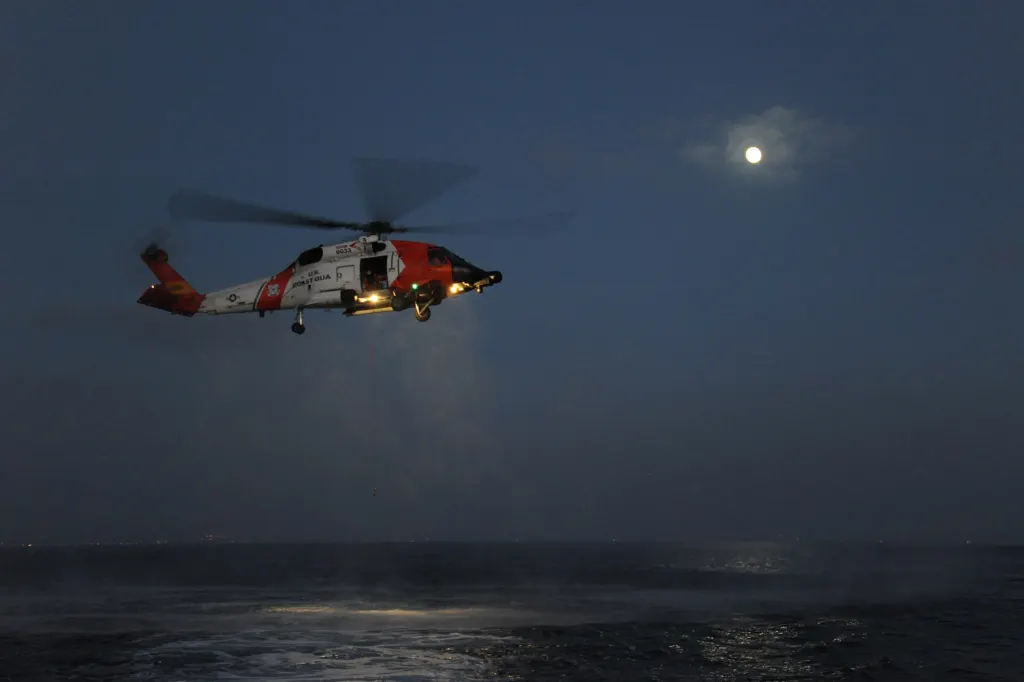
The last leg came on Thursday morning, October 29, when an MH-60 Jayhawk helicopter crew from Air Station San Diego hoisted both of them off the Grand Orion roughly 170 miles west of Ventura, California, and flew them to Coast Guard Sector San Diego. Medics took the sailor to Scripps Mercy Hospital for evaluation. He was described as weak and unsteady on his feet but without major injuries. The Coast Guard has not released his name, the dog’s name or breed, or how the two kept going for so long.
Why the beacon mattered more than the search
The US Coast Guard said the pair had set out from Astoria, Oregon, aboard the sailing vessel Willow Wind, bound for Pago Pago in American Samoa, a passage of thousands of miles across the open Pacific. Their last contact with shore was August 20. Nobody reported them overdue until Saturday, October 24, a gap of more than nine weeks.
How a 65-day silence ended in hours
The rescue itself fell to the merchant vessel Grand Orion, which reached the boat at about 3:20 a.m. on Wednesday, but rough seas made a transfer too dangerous. The crew waited. At 5:36 p.m., more than 14 hours after arriving, they brought the man and his dog aboard. The Willow Wind, its sails damaged, was left adrift.
The ship was there because the search had changed on the afternoon of Tuesday, October 27, when the Coast Guard’s rescue center in Alameda picked up a signal from an emergency position-indicating radio beacon registered to the Willow Wind. A C-27 Spartan aircrew from Air Station Sacramento was launched, an HC-130 Hercules and the cutter Robert Ward were diverted, and nearby ships were asked to help. The Spartan crew spotted the sailboat that evening.
“We are grateful to the merchant mariners and Coast Guard crews whose coordinated efforts brought this search to a successful conclusion,” said Cmdr. Jason Nguyen, command center chief for the Coast Guard’s Southwest District. “This case highlights the importance of carrying emergency communication equipment and creating a float plan so someone ashore knows your voyage plans.”
The timeline, start to finish
- August 20: Last contact from the Willow Wind after leaving Astoria, Oregon.
- October 24: Coast Guard Pacific Area receives the overdue report.
- October 27, afternoon: Emergency beacon alert reaches the Alameda rescue center; aircraft and a cutter are sent.
- October 27, evening: The C-27 crew finds the sailboat.
- October 28, 3:20 a.m.: Grand Orion arrives; seas too rough to transfer.
- October 28, 5:36 p.m.: Man and dog taken aboard the Grand Orion.
- October 29, morning: Jayhawk hoist, 170 miles west of Ventura; transfer to hospital in San Diego.
The numbers explain why Nguyen’s statement dwells on equipment rather than heroics. The Coast Guard had been searching for three days, from the overdue report on October 24 to the beacon alert on October 27, with no fix on a boat somewhere between Oregon and American Samoa. Once the beacon went off, the gap from alert to a visual sighting was a matter of hours, and from sighting to rescue roughly a day. A float plan filed in August would have closed the other, far longer gap: the 65 days between the last contact and the moment anyone told the Coast Guard he was missing.
Further reading
Image: US Coast Guard, Public domain via Wikimedia Commons
This article was produced with AI assistance and reviewed by our Editorial Desk. How we work.