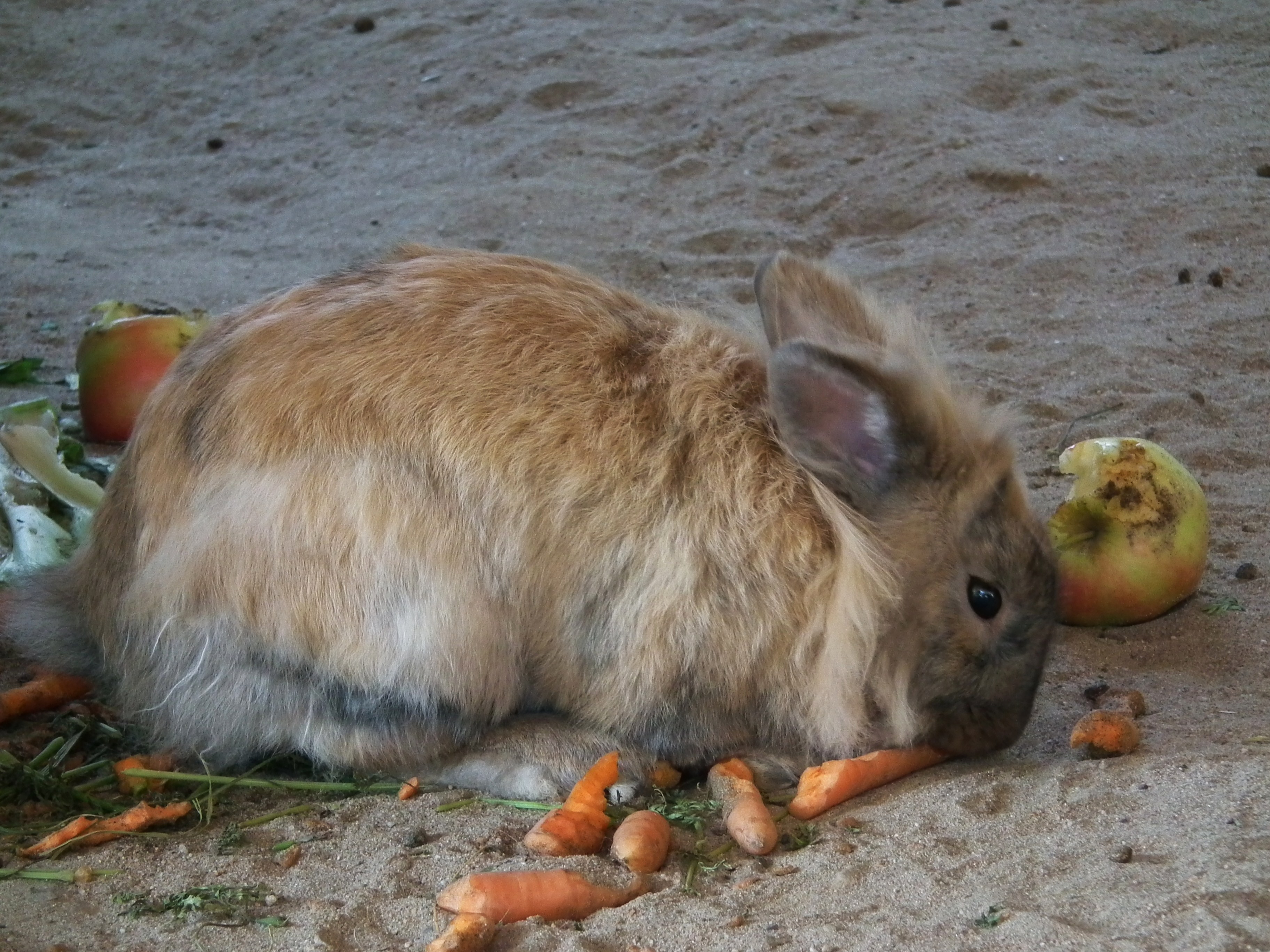
Blame Clark Gable. The image of a rabbit happily crunching a carrot owes more to a 1934 romantic comedy than to anything rabbits do in the wild, and the real rabbit diet is far stranger: they eat a special kind of their own droppings.
The carrot came from Hollywood
In It Happened One Night, Gable's character, Peter Warne, chomps a carrot while talking. Warner Bros. directors Friz Freleng, Chuck Jones and Bob Clampett all claimed that scene inspired Bugs Bunny's nonchalant carrot-chewing, according to Bugs Bunny's Wikipedia history. The same film gave Bugs his habit of calling people "Doc."
Bugs made carrots famous, but Wikipedia's rabbit article is blunt: wild rabbits do not naturally prefer carrots over other plants. The myth has led some owners to feed carrot-heavy diets, and carrots are high in sugar. Even Mel Blanc, the voice of Bugs, did not swallow them. He chewed, then spat the bits into a spittoon so he could keep talking.
What rabbits really eat
Rabbits are strict herbivores built for fiber. Wild ones graze grass after waking and move on to leaves and other plants through the day. Their teeth never stop growing, which is why all that chewing matters. In a veterinary textbook chapter by vet Molly Varga, the upper incisors are put at about 2 millimeters of growth a week, and wild rabbits are described as capable of chewing through aluminum.
The gross-out part: eating it twice
Here is the trick that makes a grass diet work. Rabbits produce two kinds of droppings. The familiar hard round pellets are waste. The others, called cecotropes, are soft, nutrient-packed capsules of fermented food from the cecum, a pouch in the gut, and rabbits eat them to absorb the nutrients a second time.
Varga's chapter, published in the Textbook of Rabbit Medicine, says cecotropes are made 4 to 8 hours after feeding during a quiet, undisturbed spell. The old name "night feces" is misleading, she writes, because wild rabbits produce them during the day while resting underground. Hard pellets are dropped above ground, never inside the burrow.
There is another quirk. Rabbits cannot vomit. The chapter describes a well-developed muscle ring at the top of the stomach that blocks it, so anything a rabbit swallows has to go all the way through, and a low-fiber diet can lead to dangerous blockages.
Fast facts
- A rabbit's field of view covers nearly 360 degrees, with a blind spot right in front of its nose.
- Rabbits often sleep with their eyes open.
- The longest-lived rabbit on record, a pet in Tasmania, reached 18.
So the next time Bugs asks "What's up, Doc?" with a carrot in his paw, remember the real menu is hay, greens and a second helping nobody talks about at dinner.
For more rabbit stories, read why pet rabbits are illegal in Queensland, the tale of Mary Toft's 300-year-old rabbit hoax and how Carole Lombard won Clark Gable over.
Sources
- Rabbit, Wikipedia, 2026
- Bugs Bunny, Wikipedia, 2026
- Rabbit Basic Science (Molly Varga, Textbook of Rabbit Medicine), PubMed Central, US National Library of Medicine, 2014
- "Rabbit Basic Science", Elsevier, Textbook of Rabbit Medicine, 2014
Image: 4028mdk09, CC BY-SA 3.0 via Wikimedia Commons
This article was produced with AI assistance and reviewed by our Editorial Desk. How we work.