NASA is putting $1 million on the table for students who can help design a permanent base at the Moon’s south pole. The agency opened its Moon Base Challenge on Sunday, November 8, at an event at the Kennedy Space Center Visitor Complex in Florida, and US high school and college teams have until January 25, 2027, to register, according to the NASA announcement.
Teams will pitch ideas in six areas: power generation and storage, construction, life support, surface mobility, communications networks and astronaut safety.
What NASA is asking for
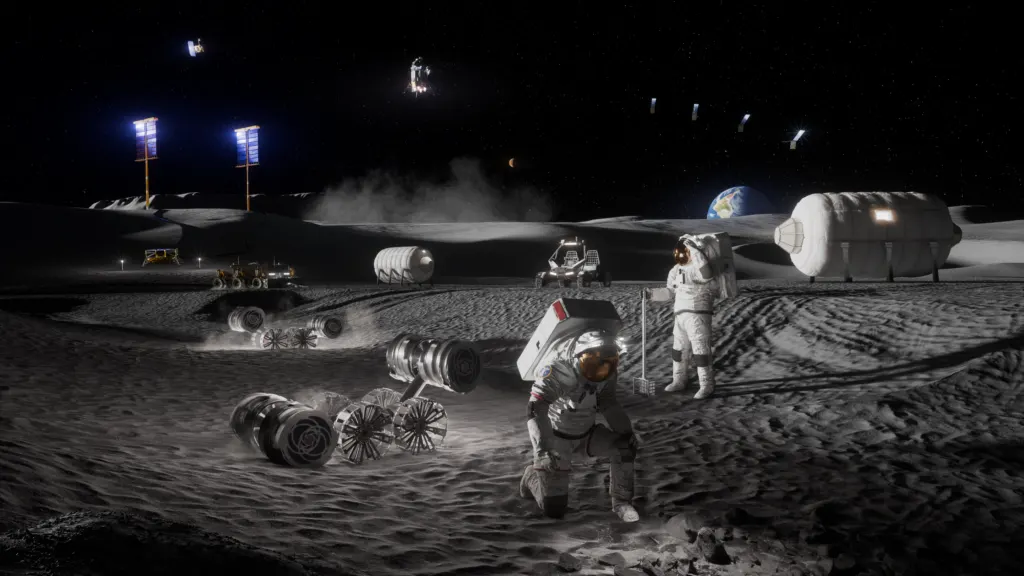
The agency says it is building a Moon Base where astronauts will live and work in the lunar South Pole region, and it frames a lasting human presence there as a step toward crewed trips to Mars. The contest runs in several phases. Instead of building hardware, teams produce the kind of paperwork real engineers do: trade studies that weigh options against each other, concept proposals and briefings for stakeholders.
NASA stressed that no prior specialized engineering experience is required, so students on vocational and other academic tracks can enter. Registration runs through the NASA STEM Gateway.
“You do not have to wait until graduation to contribute,” NASA Administrator Jared Isaacman said in the release. Carlos García-Galán, who manages the Moon Base Program, added: “Ultimately, Moon Base is for them, people who will experience a world where humans are on the Moon to stay.”
Why the south pole
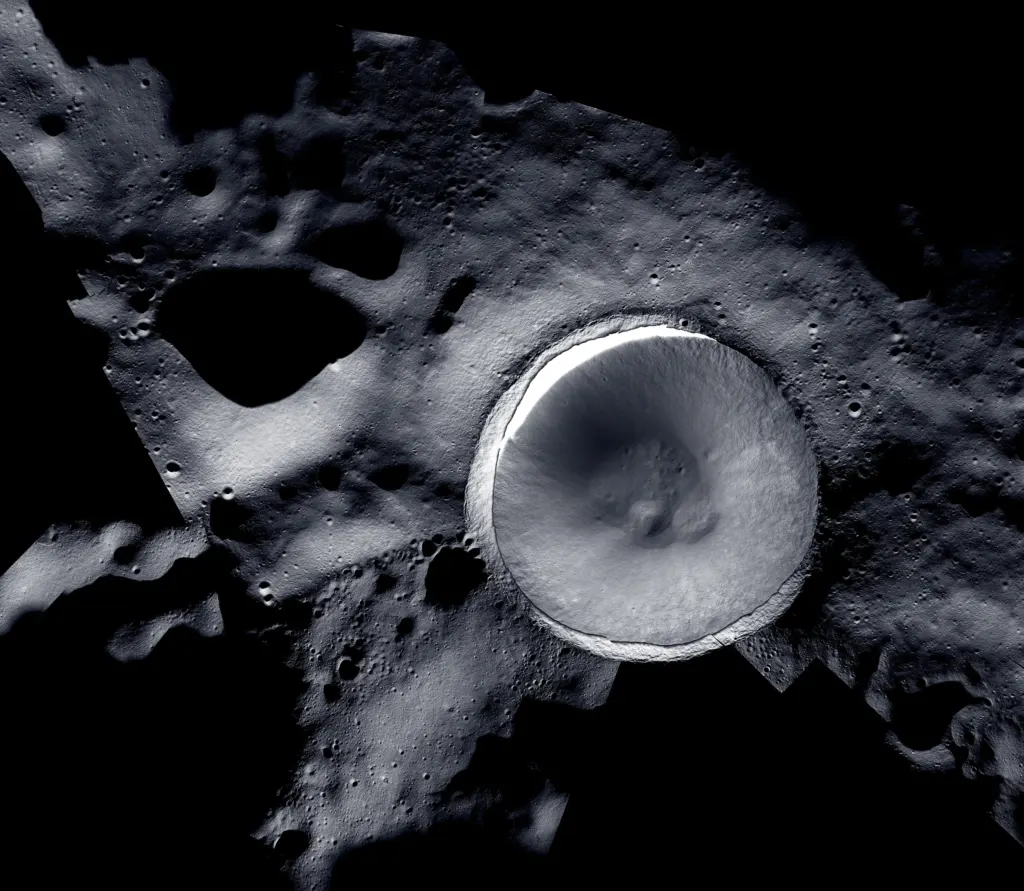
The site is not random. Craters near the lunar south pole have floors that never see sunlight, and those cold traps hold water ice and other frozen compounds that may date back to the early Solar System. NASA’s LCROSS probe, launched in 2009, deliberately crashed into one of them, Cabeus, and found material that was nearly 5% water.
Meanwhile, some ridges and peaks nearby sit in almost constant daylight. Laser mapping found spots on the ridge linking Shackleton and de Gerlache craters that get sunlight 92 to 96% of the time, with the longest stretches of darkness lasting only 3 to 5 days.
That pairing explains half the challenge categories. Solar panels on a sunny ridge could power a base, and ice in the shadows could, in principle, supply water and oxygen. The catch is moving people and equipment between the two, keeping radios in contact behind mountains, and surviving temperatures that average about minus 13 degrees Celsius, or 8 degrees Fahrenheit.
Putting the prize in perspective
Here is a simple way to read the numbers. Registration opened on November 8 and closes on January 25, a window of 78 days. Six categories share the $1 million pool, an average of about $167,000 per category if the money were split evenly. NASA’s release does not give the breakdown, which is set in the official rules on the challenge website.
Who runs it
NASA’s Office of STEM Engagement designed the contest with the Moon Base Program. The Institute of Competition Sciences administers it under a contract with the NASA Center of Excellence for Collaborative Innovation. Elaine Ho, who leads the STEM office, called students “the next generation of explorers and innovators.”
The challenge also lands as other missions head the same way. China has planned its Chang’e 7 lander for Shackleton Crater, and Blue Origin has a pathfinder lander aimed at the same area. For more Moon and space coverage, see our story on Japan’s MMX probe launching for the Mars moon Phobos and the history behind JFK’s “We choose to go to the moon” speech at Rice.
Student teams must sign up by January 25, 2027.
Further reading
Image: LROC and ShadowCam teams, NASA/KARI/ASU, Public domain via Wikimedia Commons
This article was produced with AI assistance and reviewed by our Editorial Desk. How we work.