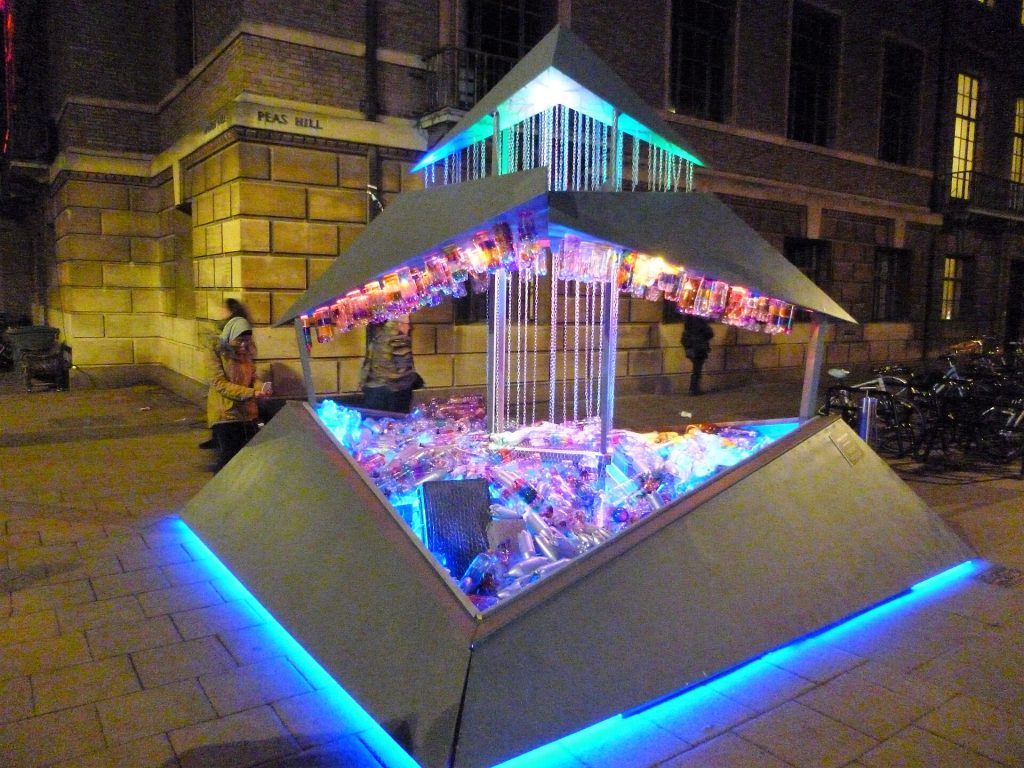
In 2002, with Brazil still reeling from an energy crisis and rolling blackouts, a mechanic in the city of Uberaba, in Minas Gerais, cut a hole in a roof tile and pushed a plastic bottle of water through it. On a sunny day, the bottle glowed. Alfredo Moser had made a light bulb that needed no electricity at all.
More than two decades later, what is now called the Moser lamp has been installed in homes across more than 20 countries. By 2017, the charity that spread it said it had reached over a million households. Moser, by his own account, never made money from it.
How a bottle becomes a bulb
The design is almost insultingly simple. A clear plastic bottle, around 600 millilitres in Moser’s original, is filled with water and fixed into a snug hole in the roof, with the top half outside in the sun and the bottom half poking into the room below.
Sunlight enters the exposed part of the bottle and is bent and scattered by the water, so instead of a single beam hitting the floor, light spreads in every direction inside the room. A small amount of bleach keeps algae from growing and clouding the water. Moser wrapped the cap in black tape to stop the sun degrading it.
It works only in daylight, and only as well as the weather allows. But in a home with no windows, or a roof of corrugated metal, the difference between a dark room at noon and a lit one is enormous.
Why it spread
The lamp costs almost nothing, uses materials that are everywhere, and can be installed by anyone with a knife and some sealant. Those qualities made it ideal for informal settlements, where electricity is unreliable or unaffordable and daytime lighting can mean the difference between working, studying and sitting in the dark.
The charity Liter of Light, known in Brazil as Litro de Luz, took the idea global, training local volunteers to build and fit the lamps, and later adding small solar panels and batteries to make night-time versions.
The quiet part
Moser was 65 and retired when he described the invention years later. He said the lamp had brought him no fortune, only a few invitations to give talks, and he seemed content with that. The idea, he suggested, mattered more than the credit.
The next time someone tells you innovation needs a lab and a funding round, remember that one of the most widely copied lighting ideas of the century began in a garage, with an empty bottle and a sunny afternoon.
Further reading
- Moser lamp — Wikipedia
- Liter of Light — Wikipedia
- Uberaba — Wikipedia
- Total internal reflection — Wikipedia
Image: Richard Humphrey, CC BY-SA 2.0 via Wikimedia Commons
This article was produced with AI assistance and reviewed by our Editorial Desk. How we work.