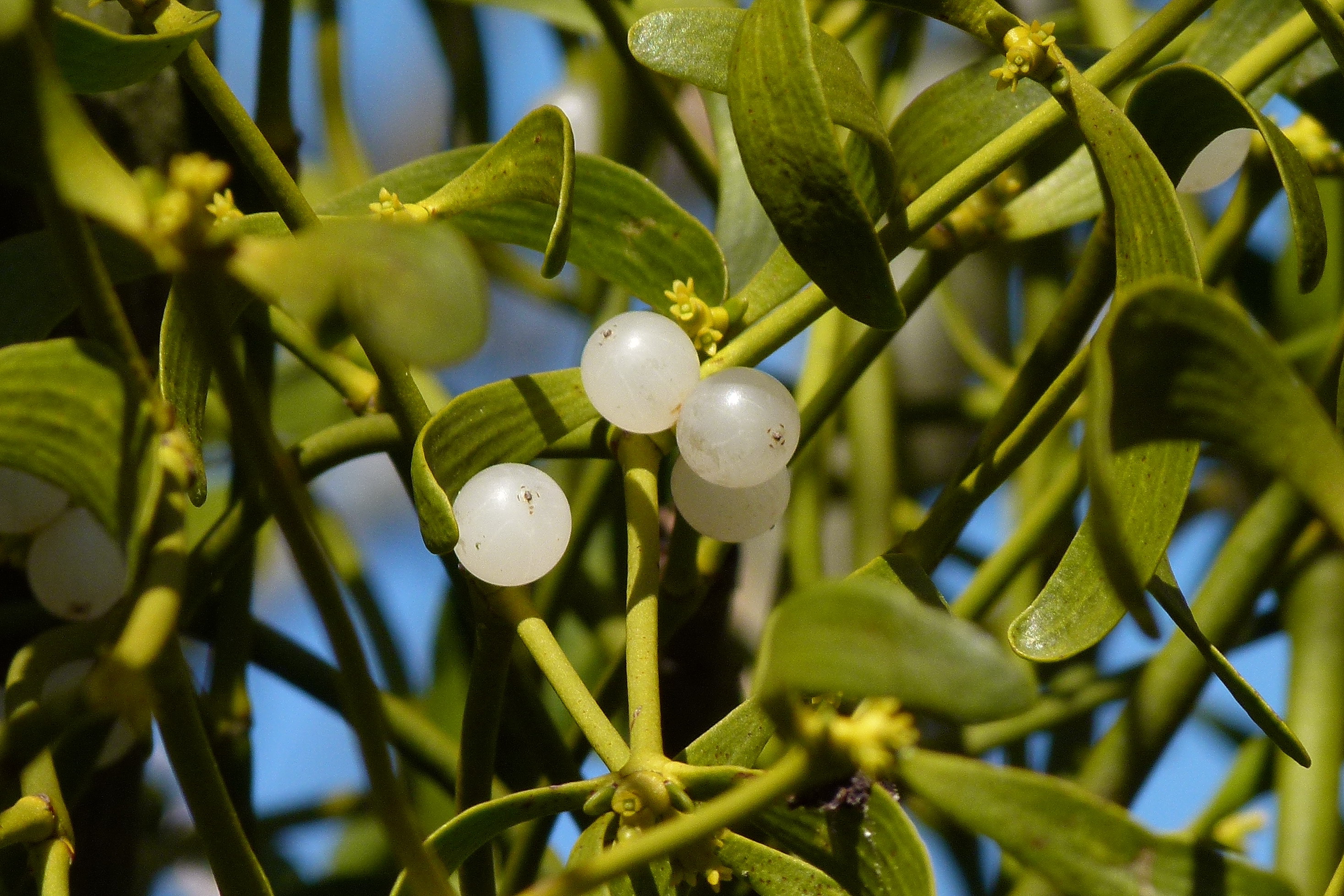
The world's most flirtatious houseplant is a parasite. Mistletoe, the sprig that turns doorways into kissing zones every December, survives by tapping into a host tree and drawing out its water and nutrients through a root-like structure called a haustorium, as Wikipedia's mistletoe entry explains.
So how did a tree freeloader become the season's most romantic prop? The trail runs from pagan fertility symbols through Roman doorways to the servants' halls of 18th-century England.
From fertility charm to Roman doorway
Long before anyone puckered up beneath it, mistletoe carried a cheeky reputation. Pagan cultures saw its white berries as symbols of male fertility, and the plant stayed linked with fertility and vitality right through the Middle Ages. The Romans gave it a gentler meaning, tying it to peace, love and understanding and hanging it over doorways to protect the home.
The Druids get much of the popular credit, but the record is thin. Only one ancient writer, Pliny the Elder, describes mistletoe in their oak ritual, and evidence from bog bodies suggests Celtic use may have been medicinal rather than ceremonial.
The servants who made it a kissing game
The kissing custom itself shows up in writing as a favorite among servants in late 18th-century England, and the serving class of Victorian England is credited with keeping it alive. Their rules were blunt: a man could kiss any woman standing under the sprig, and a woman who refused was supposed to have bad luck. One stricter version came with a built-in limit. Each kiss meant plucking one berry, and once the berries ran out, so did the kisses.
That berry rule is the detail worth borrowing. A European mistletoe cluster usually carries between two and six berries, so a single sprig under the old rules would have run dry after six kisses at most. Thankfully, the modern version runs on mutual choice rather than Victorian luck.
The English also built the custom into a full decoration. A kissing bough is a sphere or crown of wire covered in greenery, sometimes hung with red apples or oranges on ribbons and candles clipped to the frame, with mistletoe tied underneath, according to Wikipedia's kissing bough page. It was a fixture of Christmas in England and Lowland Scotland, and by the 18th century mistletoe had spread into Christmas celebrations around the world.
Five facts to drop under the doorway
- The name is old: it comes from the older word mistle plus the Old English tān, meaning twig.
- Birds do the planting: the seeds are coated in a sticky glue called viscin, and birds such as the mistle thrush spread them, sometimes by wiping their beaks on a branch.
- It is not native to America: European mistletoe was introduced to Northern California in 1900. Americans mostly kiss under a stand-in, the eastern mistletoe, which Wikipedia's Phoradendron leucarpum entry notes is sold commercially for exactly that tradition.
- It has official fans: mistletoe is the floral emblem of Oklahoma, which treated it as the state flower until it named the Oklahoma Rose in 2004, and the county flower of Herefordshire, and the English town of Tenbury Wells crowns a Mistletoe Queen at its yearly festival.
- It went to war: soldiers on the Western Front in December 1916 were photographed with sprigs pinned to their caps.
Mistletoe also has a darker side for anyone tempted to nibble. European mistletoe is the more toxic of the common species, so the berries belong on the ceiling, not the dessert table.
Badiyaa has traced other festive customs back to their roots, including the wishbone tradition that began with goose bones in 1455 and Stir-up Sunday, Britain's Christmas pudding ritual.
Sources
- Mistletoe, Wikipedia, 2026
- Kissing bough, Wikipedia, 2026
- Phoradendron leucarpum, Wikipedia, 2026
Image: Schnobby, CC BY-SA 3.0 via Wikimedia Commons
This article was produced with AI assistance and reviewed by our Editorial Desk. How we work.