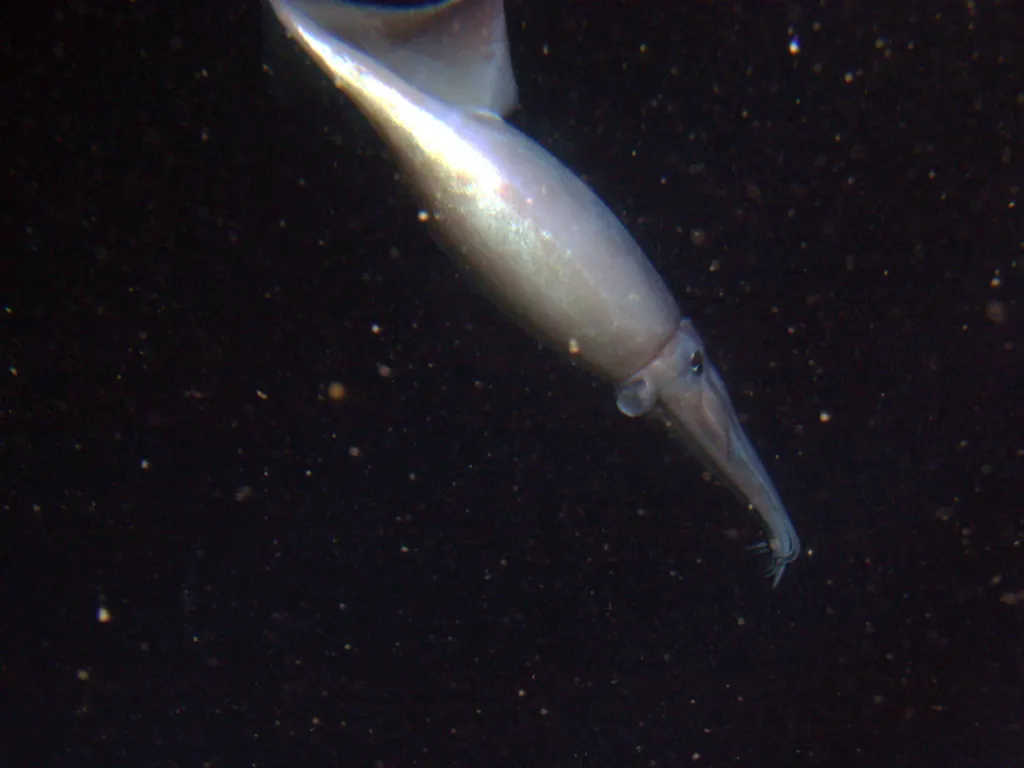
Picture a squid with a body about 1.5 meters (5 feet) long, weighing as much as 50 kilograms (110 pounds), flashing red and white as it charges through the dark in a shoal of up to 1,200 others. That is the Humboldt squid, and posts about it are climbing Reddit’s front page this week with the claim that it is six feet long, 100 pounds and hunts in packs. The real numbers are close, with one correction.
Checking the viral numbers
The figure scientists use is mantle length, the torpedo-shaped body that holds the organs and fins. For Dosidicus gigas that tops out around 5 feet, which makes it the largest member of its family and one of the biggest squid species alive. Arms and two long feeding tentacles add more, so a six-foot total length is plausible for a big individual, but the five-foot body is the measured number. On weight, the viral post undersells it slightly: the upper figure given for the species is 110 pounds.
The “packs” claim needs care. Humboldt squid travel in shoals that can number 1,200 animals and swim at up to 24 kilometers per hour (15 mph). For years, claims that they hunt cooperatively were treated as unproven; research carried out between 2007 and 2011 suggests they do coordinate, though the species’ Wikipedia entry flags that finding as needing more citations. What is well documented is cannibalism: a quarter of squid stomachs in one analysis held remains of other Humboldt squid.
How a Humboldt squid hunts
The attack is fast enough to beat a camera. The squid closes in with all ten appendages bunched forward in a cone, then spreads its eight arms and fires two long tentacles lined with hooks and toothed suckers. Those tentacles can reach, grab and retract in roughly a single frame of normal-speed video, pulling prey back to a sharp, parrot-like beak. Lanternfish, crustaceans, octopuses and other squid are all on the menu.
Why fishermen call it the red devil
Like its relatives, the Humboldt squid has color cells called chromatophores. Cameras strapped to a few animals showed two distinct displays: a whole-body red-white flash at two to four times a second when other squid are near, likely a signal, and a slow ripple of light and dark that may imitate sunlight dancing through water as camouflage. The frantic flashing of hooked squid earned the name diablo rojo, red devil, among fishermen off Baja California, Mexico.
Its reputation for attacking divers is mixed. Some researchers say aggression shows up mainly during feeding or when lights and shiny gear are present, and divers have described them as curious. But shoals have also wrecked deep-sea cameras, and attacks on recreational scuba divers have been confirmed.
Heading north
The species ranges along the eastern Pacific from Tierra del Fuego to California, usually 200 to 700 meters down. After the 1997-98 El Niño, it showed up in Monterey Bay for the first time, and since 2002 it has been seen there year-round. Sightings now reach Oregon, Washington, British Columbia and even Alaska. Badiyaa’s recent look at how the 2026 El Niño compares with 2023’s is a reminder that warm-water years can reshape where animals like this turn up. For more deep-water life, see our story on the elusive Omura’s whale off northwest Australia and the Monterey Bay Aquarium’s cannery origins.
For all that menace, the red devil lives fast and dies young: one to two years, with larger animals at the long end.
Further reading
Image: Rick Starr, NOAA/CBNMS, Public domain via Wikimedia Commons
This article was produced with AI assistance and reviewed by our Editorial Desk. How we work.