A toucan called Grecia, beaten so badly that the top half of her beak snapped off, ended up with a replacement made on a 3D printer. The clip of her story, posted by creator @xarashorts as a YouTube Short, has been racing through the viral feeds this week, and the facts behind it are stranger than the 30-second version lets on.
Grecia hatched in the wild around March 2014 near the Costa Rican town of Grecia, which gave her a name. A group of youths attacked the bird and broke off her upper beak. Government officials carried her to the Rescate Wildlife Rescue Center, formerly Rescate Animal Zoo Ave, west of Alajuela.
Several 3D-printing companies pooled their effort to design a prosthetic upper beak, and it was successfully fitted. That made Grecia the first toucan known to wear a printed beak. She lived with it for years, dying of natural causes around January 2022 at about seven years old, according to Zoo Ave staff.
Why a beak is harder than a leg
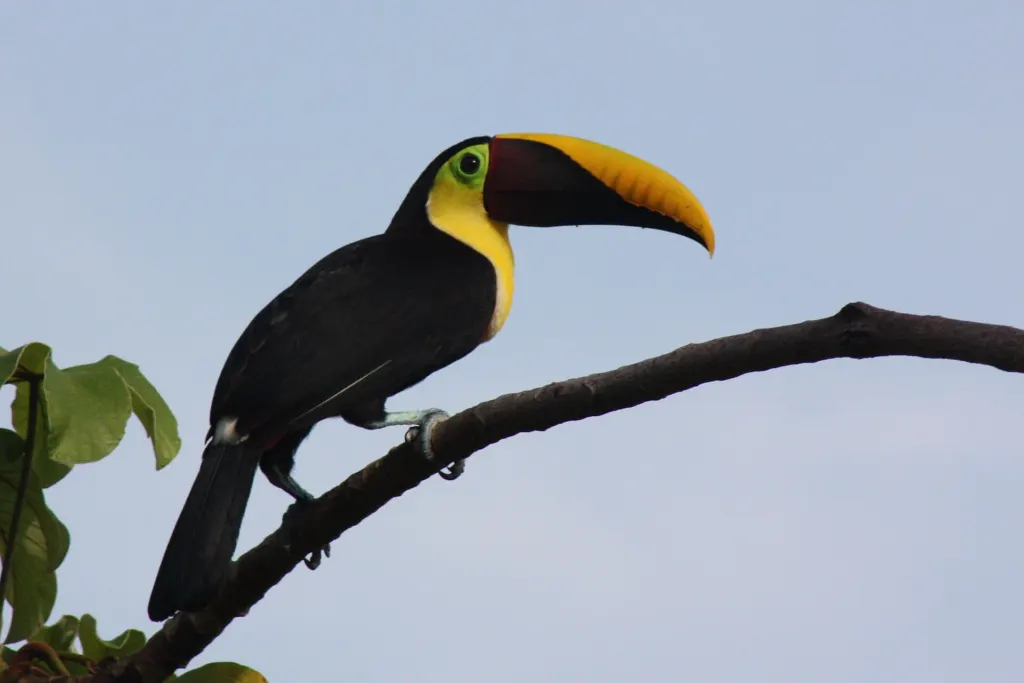
A toucan’s bill is not a decoration. Grecia was a yellow-throated toucan (the Costa Rican form is often called the chestnut-mandibled toucan), a bird that weighs roughly 1.3 to 1.6 pounds and carries a bill that, in males, can run almost eight inches long. Toucans use it to pluck fruit while hopping from branch to branch, sometimes hanging upside down to reach it, and to grab the occasional lizard, insect or egg. A toucan pins larger items under one foot and tears them apart with that bill, so a bird missing half of it cannot feed itself properly.
Here is the piece most clips skip. Grecia’s rescuers did not have to carve a replacement by hand. They could scan what was left, model the missing section on a computer and print it in lightweight plastic, then adjust the design and print it again if the fit was off. That loop, scan, print, test, reprint, is what 3D printing changed for animal prosthetics: a custom part for a single patient no longer needs a factory, only a file.
What the video gets right, and what it leaves out
The Short is accurate on the broad strokes: the injury, the Costa Rican rescue center and the printed beak. It does not mention that the injury was deliberate cruelty rather than an accident, nor that Grecia died in early 2022, so viewers may assume she is still alive. Nothing in the clip appears staged; the underlying events are documented from 2015 and 2016, so this is an old story trending again rather than news.
Timeline for anyone catching up: hatched around March 2014; attacked and rescued in early 2015; fitted with the prosthetic beak in 2016, when she began receiving visitors at the rescue center; died around January 2022. The viral clip arrived in the first days of November 2026, more than four years after her death, and the feed that surfaced it listed about 5.69 million views for the Short at the time of writing.
It does not always work. In a case published in the Journal of Veterinary Medical Science in November 2023, Korean veterinarians fitted an Oriental stork with a patient-specific lower beak of titanium alloy and nylon after repeated fracture surgeries failed; the bird fed normally for about three months before inflammation forced them to give up and euthanize it. Grecia’s years with her beak look even better against that record.
Her species is doing better than she did. The yellow-throated toucan is assessed as Least Concern, with a very large range from Honduras to Peru, although its numbers are falling as forest gives way to farms and ranches.
Further reading
- Wikipedia: Grecia (toucan)
- Wikipedia: Yellow-throated toucan
- PubMed: 3D-printed prosthetic lower beak in an Oriental stork (2023)
Image: Charles J. Sharp, CC BY-SA 3.0 via Wikimedia Commons
This article was produced with AI assistance and reviewed by our Editorial Desk. How we work.