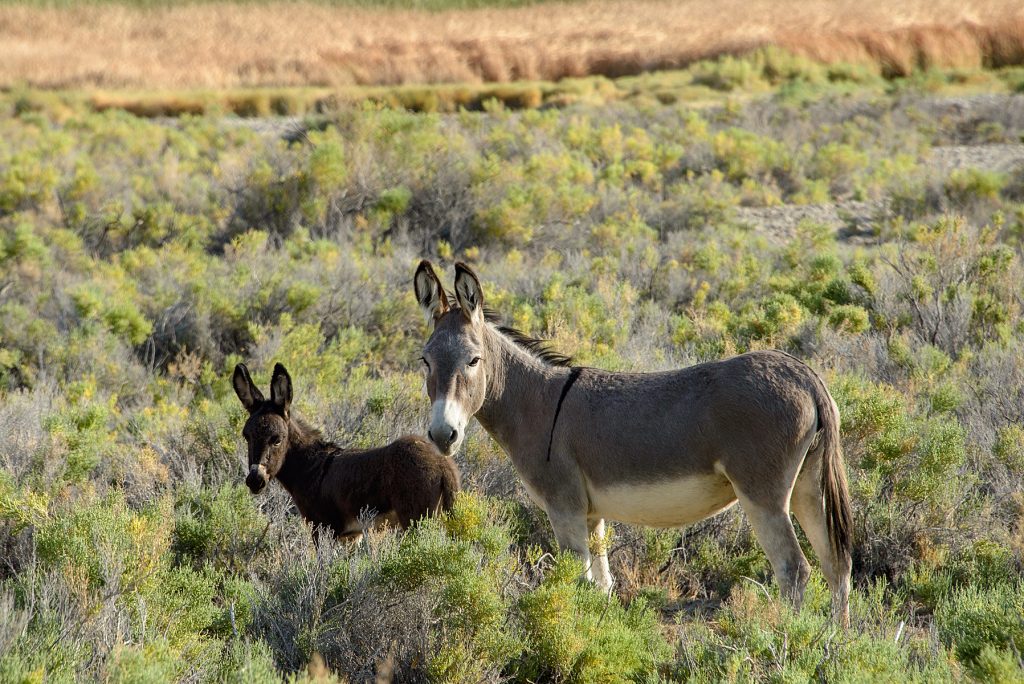
In the hottest weeks of a desert summer, when streams shrink to dry sand, wild donkeys and horses do something that turns out to matter far beyond themselves. They dig. Pawing with their hooves, they open holes up to about two metres deep until they reach groundwater, and then a whole procession of other animals comes to drink.
The behaviour was documented in detail by a team led by Erick Lundgren, then at the University of Technology Sydney, and published in the journal Science in 2021. Their findings still circulate because they challenge a simple story about introduced animals in the American West.
What the researchers found
The team surveyed four groundwater-fed streams in the Sonoran Desert every two to four weeks over three summers, and set camera traps at wells in the Sonoran and Mojave deserts.
- Cameras recorded 59 species of vertebrates at the wells, and 57 of them drinking.
- At perennial streams, wells supplied up to 74 per cent of the available surface water in dry stretches.
- At one stream that dried out completely, the wells were the only surface water left: 100 per cent.
- On average, wells raised the density of water points by 332 per cent compared with background water, and by up to 1,450 per cent at some sites.
Abandoned wells had a second life too. Along one dammed river, the damp ground around old wells became nurseries where riparian trees sprouted.
Why it is surprising
Feral donkeys and horses are descendants of animals brought by Europeans, and they are often treated purely as a problem: they graze, trample and compete with native wildlife, and federal agencies spend heavily managing their numbers. All of that remains true.
What the study adds is a reminder that they also do a job that has been missing from North American deserts for a long time. The authors argue that digging for water may replace a function lost when large animals such as ancient horses and camels disappeared from the continent at the end of the last ice age. Elephants, zebras and wild asses still dig wells in Africa and Asia, and many other species rely on them.
That does not settle the debate over how many wild equids the West should support. But it does mean the conversation has to weigh what they give as well as what they take, especially as droughts make desert water scarcer.
The open question now is scale: how much these wells matter across a whole landscape, and in years when the drought is worst.
Further reading
- Feral horse — Wikipedia
- Feral donkey — Wikipedia
- Sonoran Desert — Wikipedia
- Ecosystem engineer — Wikipedia
- Lundgren et al. (2021), “Equids engineer desert water availability”, Science
Image: Marshal Hedin from San Diego, CC BY-SA 2.0 via Wikimedia Commons
This article was produced with AI assistance and reviewed by our Editorial Desk. How we work.