For more than a billion years, Earth kept recycling the same old crust, and the rocks it made carried a family resemblance you can still read in their lead. Then the resemblance simply stops. Curtin University geologists say that sudden break, dated to around 2.5 billion years ago, is the clearest sign yet of the moment the planet's plate-tectonic engine started running the way it does now.
"But after 2.5 billion years ago, that fingerprint disappears from the geological record – and despite examining thousands of rocks, we never see it again," lead author Janne Liebmann said in Curtin University's release on the study, published November 11, 2026.
A chemical fingerprint that switches off
The team, from Curtin in Perth with a co-author at Queen's University in Ontario, worked with lead isotopes, which shift in a telltale way when old crust is melted to build new crust. According to the paper in Proceedings of the Royal Society A, chemically sorted pools of crust existed by 4.0 to 3.7 billion years ago and kept feeding granite-type magmas until roughly 2.63 billion years ago.
After a window of 2.75 to 2.63 billion years ago, that signature largely vanishes from the rocks geologists can reach. A statistical change-point test found the same break in the whole data set and in subsets split by region and by mineral. The authors read it as a switch to more efficient recycling of crust, with magma production moving to plate edges.
Co-author Chris Kirkland put it plainly in the same release: "This gives us our clearest geological evidence yet for when the tectonic engine that drives the modern Earth ‘switched on’."
Why the start date has been so slippery
Plate tectonics erases its own history by dragging old crust back into the mantle, so the evidence keeps getting destroyed. Wikipedia's overview of plate tectonics notes that proposed start dates span 85% of Earth's history, and that a mantle 100 to 250 °C hotter during the Archean may not have allowed modern-style plates at all.
The Archean itself was a strange world. Wikipedia's Archean entry says Earth's heat flow was nearly three times today's level when the eon began and still about double at its end, 2.5 billion years ago. Rocks from that eon now make up only about 8% of the continental crust; the rest has been recycled.
The numbers, lined up
Put the paper's dates next to the official geologic calendar and a detail jumps out. The Neoarchean, the last era of the Archean, runs from 2.8 to 2.5 billion years ago, according to Wikipedia's Neoarchean entry. The fingerprint dies out 130 million to 250 million years before that era's formal end, so the "2.5 billion" headline figure is a round number for a change that was already under way.
The old crustal pools also had remarkable staying power. Formed 4.0 to 3.7 billion years ago and still in use at 2.63 billion, they lasted somewhere between about 1.07 billion and 1.37 billion years before the new regime finished them off.
What it does and does not settle
The study does not claim that no plates moved before 2.5 billion years ago; it points to a punctuated change in how crust was made. Kirkland framed it as the shift from an Earth where old crust was melted and reworked in place to one able to move and recycle crust on a much larger scale, a feature that separates Earth from Venus and Mars.
Badiyaa has followed this deep-time detective work before, from the Great Unconformity carved by supercontinent tectonics to Botswana's Khurutshe Graben, an ancient rift waking up and gold leaking from Earth's core into Hawaii's lava.
Sources
- Ancient rocks reveal when Earth's tectonic engine 'switched on', Curtin University, 2026
- Paper on the loss of ancient crustal reservoirs (Liebmann et al.), Proceedings of the Royal Society A, Curtin University and Queen's University, 2026
- Plate tectonics, Wikipedia, 2026
- Archean, Wikipedia, 2026
- Neoarchean, Wikipedia, 2026
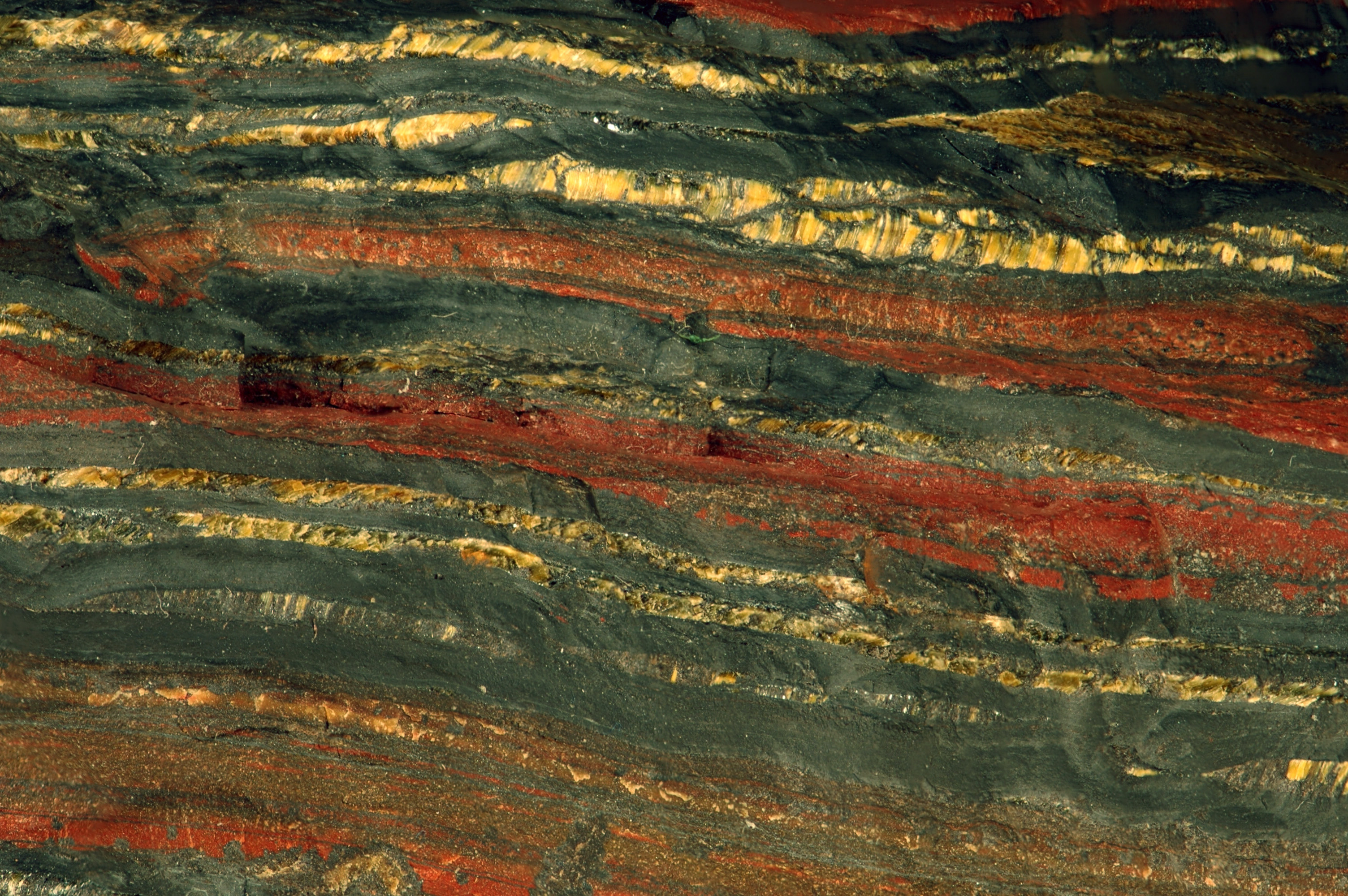
Image: James St. John, CC BY 2.0 via Wikimedia Commons
This article was produced with AI assistance and reviewed by our Editorial Desk. How we work.