Crows never forget a face, and they tell their friends. Researchers at the University of Washington put on a rubber mask, trapped a few wild American crows, banded them and let them go. Years later, crows that had never been caught were still diving and scolding at anyone who wore that mask.
The experiment, led by wildlife scientist John Marzluff, a professor at the University of Washington, is the best evidence that crows really do hold a grudge.
The mask experiment
The team chose a unique "dangerous face" mask and wore it while trapping, banding and releasing between 7 and 15 crows at each of five study sites near Seattle. Afterward, people walked the sites in the dangerous mask and in neutral masks and recorded how the birds reacted.
The results, published in a 2012 paper in Proceedings of the Royal Society B by Heather Cornell, Marzluff and Shannon Pecoraro, were striking. Crows that had been caught scolded the dangerous mask right away. So did crows that had only watched the capture from the mob that gathered overhead. Later, lone crows that were never trapped also recognized the mask, which the authors read as crows learning from one another.
The grudge even passed down the generations. Young crows whose parents had scolded the mask began scolding it on their own. At one site, scolding doubled in frequency and spread at least 1.2 km from where it started over five years.
There was one twist. Crows that had been caught themselves were better at telling the dangerous mask apart from neutral ones than crows that had only learned about it secondhand. First-hand trauma, it seems, sharpens the memory.
Inside a crow's brain
The same group went further and scanned the birds. In a 2012 study in PNAS, Marzluff and University of Washington radiology colleagues imaged the brains of awake wild crows as they looked at familiar human faces. The paper opens by noting that crows can remember specific faces for several years after a single encounter.
A face linked to capture lit up regions that in humans and other vertebrates are tied to fear, emotion and learning, including amygdala-like, thalamic and brainstem areas. A face linked to feeding and care lit up motivation and striatal regions instead. Shown the threatening face, crows froze, stared and blinked less, the same reaction the team saw in the field.
The work built on the group's 2010 paper in Animal Behaviour, titled "Lasting recognition of threatening people by wild American crows."
Why crows are so good at this
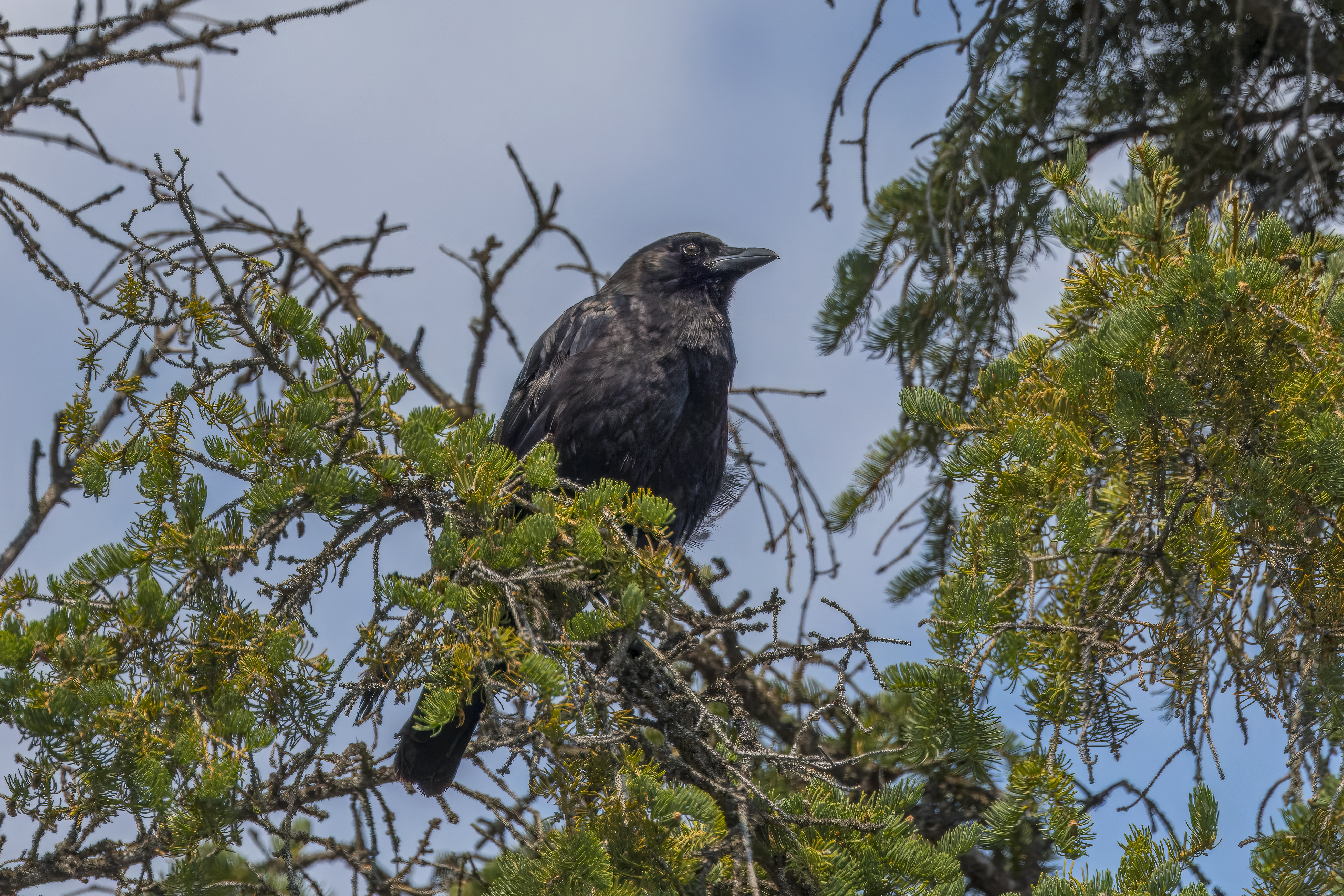
The American crow is a big, all-black corvid found across most of North America. Its Wikipedia entry notes that crows have the same brain-to-body weight ratio as humans, use a brain region called the pallium for tasks a neocortex handles in people, and can remember and identify people by appearance. They also live in tight family groups of up to 15 birds, which gives a warning plenty of ears to reach.
For a bird that may share a neighborhood with the same people for years, remembering who is dangerous is a survival skill. For more on crow smarts, read how a Tübingen study clocked carrion crows deciding twice as fast as humans and why crows gathering in US yards each autumn are heading for roosts of up to two million birds.
Sources
- "Social learning spreads knowledge about dangerous humans among American crows", Proceedings of the Royal Society B (University of Washington), 2012
- "Brain imaging reveals neuronal circuitry underlying the crow's perception of human faces", PNAS (University of Washington), 2012
- "Lasting recognition of threatening people by wild American crows", Animal Behaviour (University of Washington), 2010
- John Marzluff, Wikipedia, 2026
- American crow, Wikipedia, 2026
Image: Charles J. Sharp, CC BY-SA 4.0 via Wikimedia Commons
This article was produced with AI assistance and reviewed by our Editorial Desk. How we work.