Before dawn on November 1, 1756, Giacomo Casanova, the man whose name became shorthand for a seducer, crawled out through the lead roof of Venice's Doge's Palace in thick fog, with a renegade priest at his heels and a sharpened iron spike in his hand.
By 6 a.m. he was walking out the palace's front door and stepping into a gondola. Nobody had ever pulled off anything like it.
Locked under the Leads
Casanova was 30 when Venice's state inquisitors arrested him on July 26, 1755, for what they called public outrages against religion. He was never tried and never told the charge, yet that September he got five years.
His cell sat in the Piombi, or "the Leads," a prison in the palace attic named for the lead slabs on the roof. Wikipedia's entry on the Piombi explains that the metal let winter cold straight in and soaked up summer heat. Casanova later complained of "the worst of all the cells" and "millions of fleas."
The spike, the Bible and the plate of pasta
On exercise walks in the garret he found an iron bar and a piece of black marble. He hid the bar in his armchair and spent two weeks grinding it into a spike, then began digging through the floor under his bed. Three days before his planned breakout, the jailers moved him to a nicer cell.
So he recruited the prisoner next door, a rebel monk named Father Balbi. According to Wikipedia's biography of Giacomo Casanova, the spike traveled to Balbi hidden inside a folio Bible, balanced under a heaping plate of pasta, carried by a jailer who had no idea. Balbi cut through his own ceiling, crossed over and opened a hole above Casanova.
Casanova left a note quoting the Psalms: "I shall not die, but live, and declare the works of the Lord." A cellmate he suspected of spying was too frightened to follow.
Over the roof and out the front door
On the sloping roof, the drop to the canal was too far. Casanova pried open a dormer window, and the pair used a ladder they found and a rope of bedsheets to lower themselves into a room 25 feet below. In the morning they changed clothes, slipped through galleries and staircases, and talked a guard into believing they had been locked in after an official function. The guard let them out.
Casanova reached Paris on January 5, 1757. He soon became a trustee of France's first state lottery, and in 1787 he turned the breakout into a bestselling book, Story of My Flight. His verdict on himself was characteristically modest: "I admit that I am proud of it."
Seeing the scene today
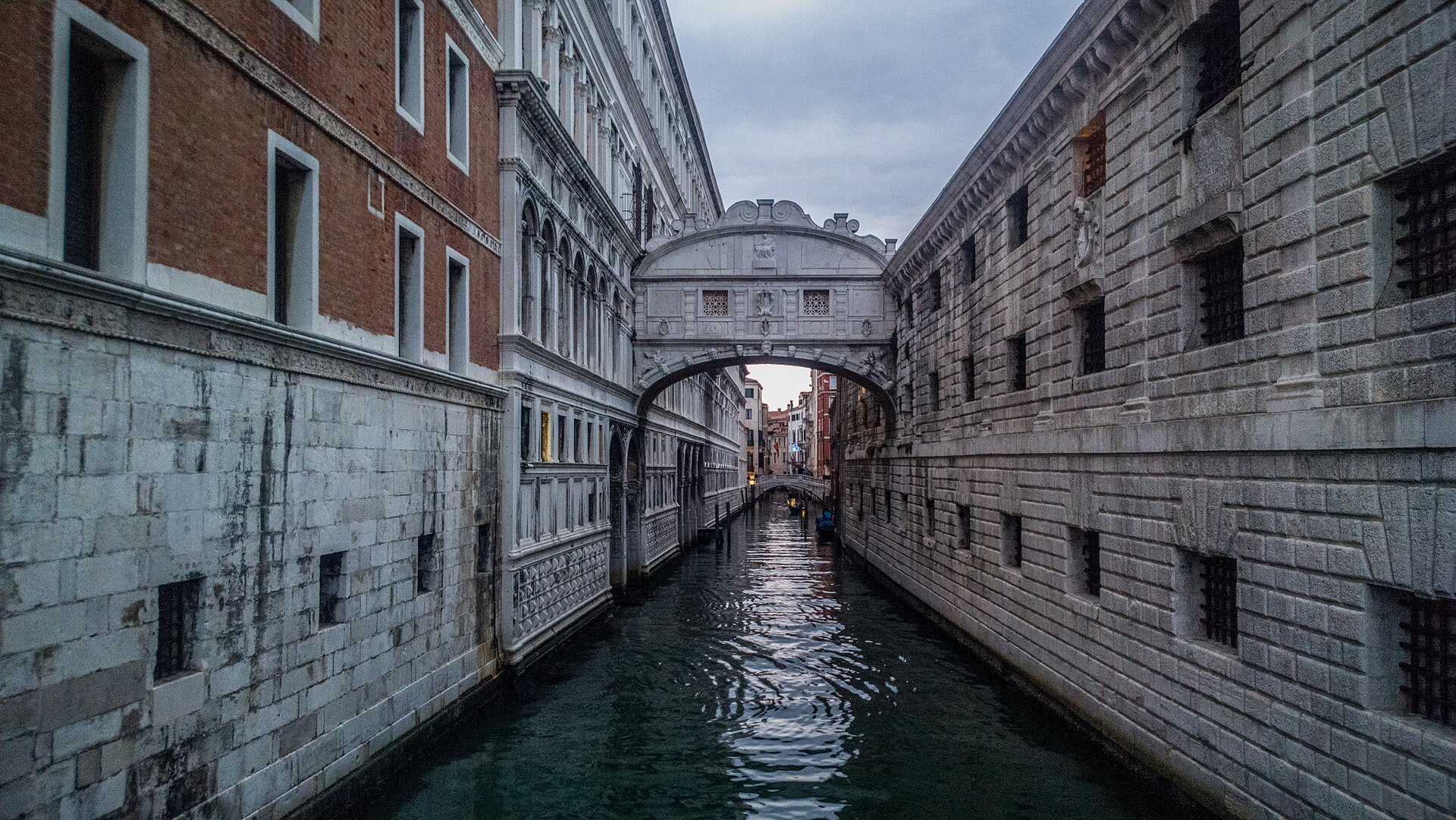
The Piombi was abandoned in 1797, but the palace still stands beside the Bridge of Sighs, the covered crossing to the New Prison. One cheeky footnote: Wikipedia's history of the Bridge of Sighs credits its romantic English name to Lord Byron, another famous charmer.
Badiyaa has chased other European rogues, from Šćepan Mali, the impostor who passed himself off as a tsar, to Napoleon's mud-soaked charge at the Arcole bridge in the Venetian Republic's final years.
Casanova spent his last years writing his memoirs as a librarian in Bohemia and died there on June 4, 1798, at 73.
Sources
- Giacomo Casanova, Wikipedia, 2026
- Piombi, Wikipedia, 2026
- Bridge of Sighs, Wikipedia, 2026
Image: Patrik Andersson, Public domain via Wikimedia Commons
This article was produced with AI assistance and reviewed by our Editorial Desk. How we work.