Black Friday 2026 is Friday, November 27. It always falls on the day after Thanksgiving in the United States, and this year Thanksgiving lands on Thursday, November 26. Counting from today, November 16, that is 11 days away.
The date moves every year because US Thanksgiving is fixed to the fourth Thursday of November rather than a calendar number. November 2026 starts on a Sunday, so its Thursdays fall on the 5th, 12th, 19th and 26th. The fourth one is the 26th, and Black Friday follows the next morning.
The full 2026 shopping calendar
Black Friday now sits inside a run of named days. Using the standard spacing, this year’s sequence works out like this:
- Thursday, November 26: Thanksgiving in the US
- Friday, November 27: Black Friday
- Saturday, November 28: Small Business Saturday, the following day
- Monday, November 30: Cyber Monday, three days after Black Friday
- Tuesday, December 1: Giving Tuesday, four days after Black Friday
Looking ahead, Black Friday moves a day earlier to November 26 in 2027, then jumps to November 24 in 2028. Across any span of years it can only land between November 23 and November 29, while Christmas Eve stays put. That is why the holiday shopping stretch is noticeably shorter in some years than others: in 2026 there are 27 days from Black Friday to December 24.
Where the name came from
The name is older and less cheerful than the sales. Calling a day “black” has long signaled disaster, and the best-known American example is the gold market crash of 1869, when financiers Jay Gould and James Fisk tried to corner the gold supply and President Ulysses S. Grant’s Treasury flooded the market, sending prices down 18% in a day.
The first known use of “Black Friday” for the day after Thanksgiving came in a factory trade journal in November 1951. It had nothing to do with shopping: managers used it for the habit of workers calling in sick to stretch the holiday into a four-day weekend.
The shopping meaning came from Philadelphia. In the 1950s and 1960s, police there used “Black Friday” and “Black Saturday” for the crowds and traffic jams that opened the Christmas season. In 1961, a public relations adviser to the city tried to rebrand them “Big Friday” and “Big Saturday.” Nobody adopted it.
The popular explanation, that stores finally move from red ink to black ink on that day, came later. Merchants who disliked a gloomy name promoted it as the term spread nationally in the early 1980s, and its earliest known appearance in print dates to November 28, 1981.
Not every country means the same day
The US version has spread worldwide, but local twists remain. In the UK, the phrase first belonged to police and hospital staff, who used it for the busy last Friday night before Christmas. Several Middle Eastern markets call it White Friday or Yellow Friday, Pakistan uses Blessed Friday, Turkey has “Legendary Friday,” and Mexico runs its own discount weekend, El Buen Fin. In Australia, “Black Friday” first recalled the deadly 1938–39 bushfires in Victoria. Canada adopted the US date as retailers tried to stop shoppers crossing the border.
For more on how stores and products are marketed, browse Badiyaa’s Lifestyle section, including our look at plastic-free coffee makers from Caraway and Simply Good Coffee that sold out.
Black Friday weekend wraps up with Cyber Monday on November 30, the last day of the month.
Further reading
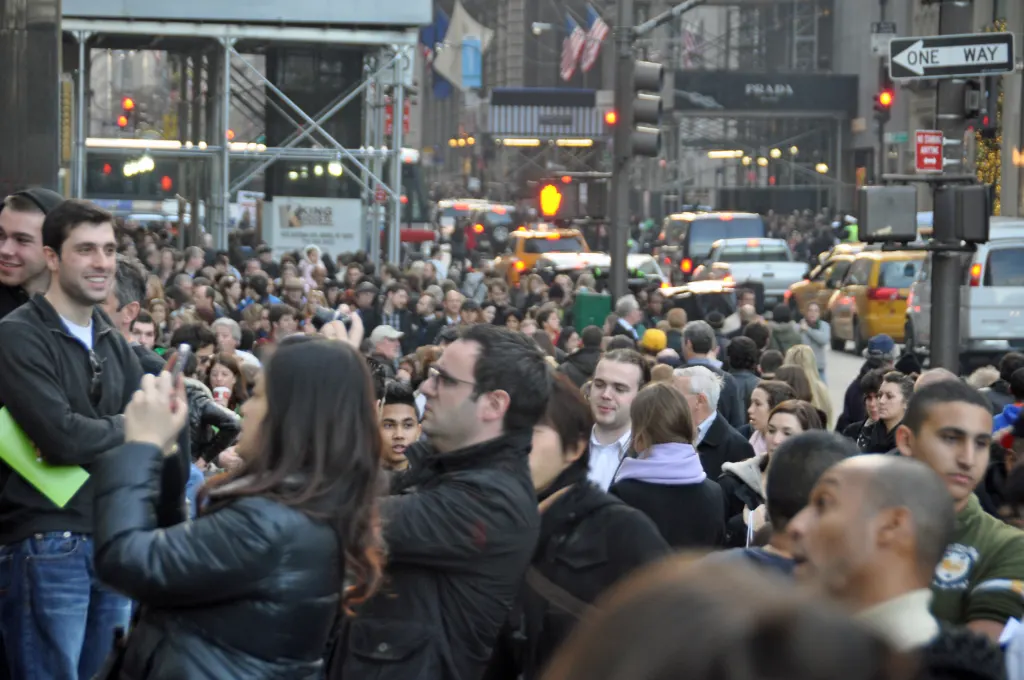
Image: JoeInQueens from Queens, USA, CC BY 2.0 via Wikimedia Commons
This article was produced with AI assistance and reviewed by our Editorial Desk. How we work.