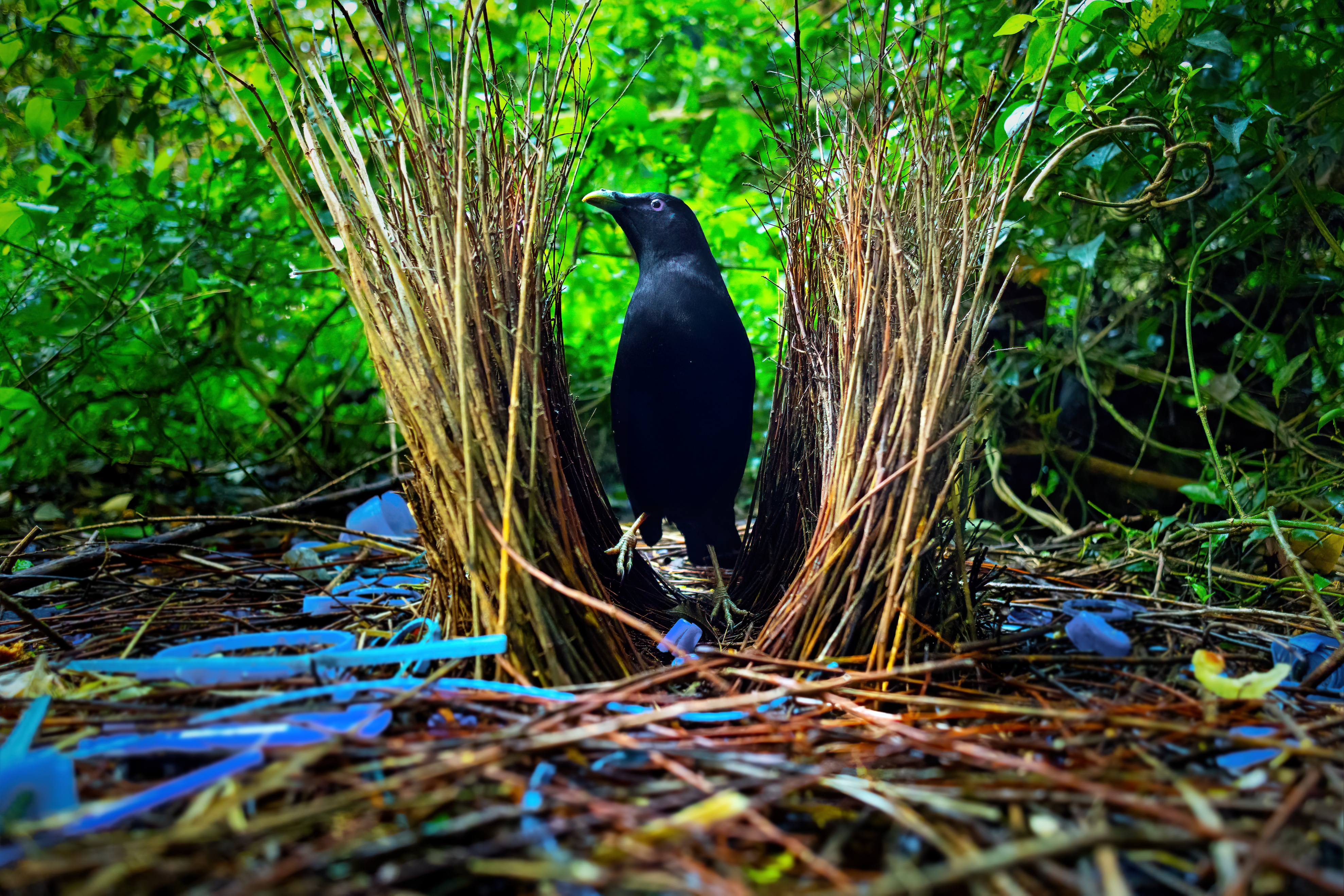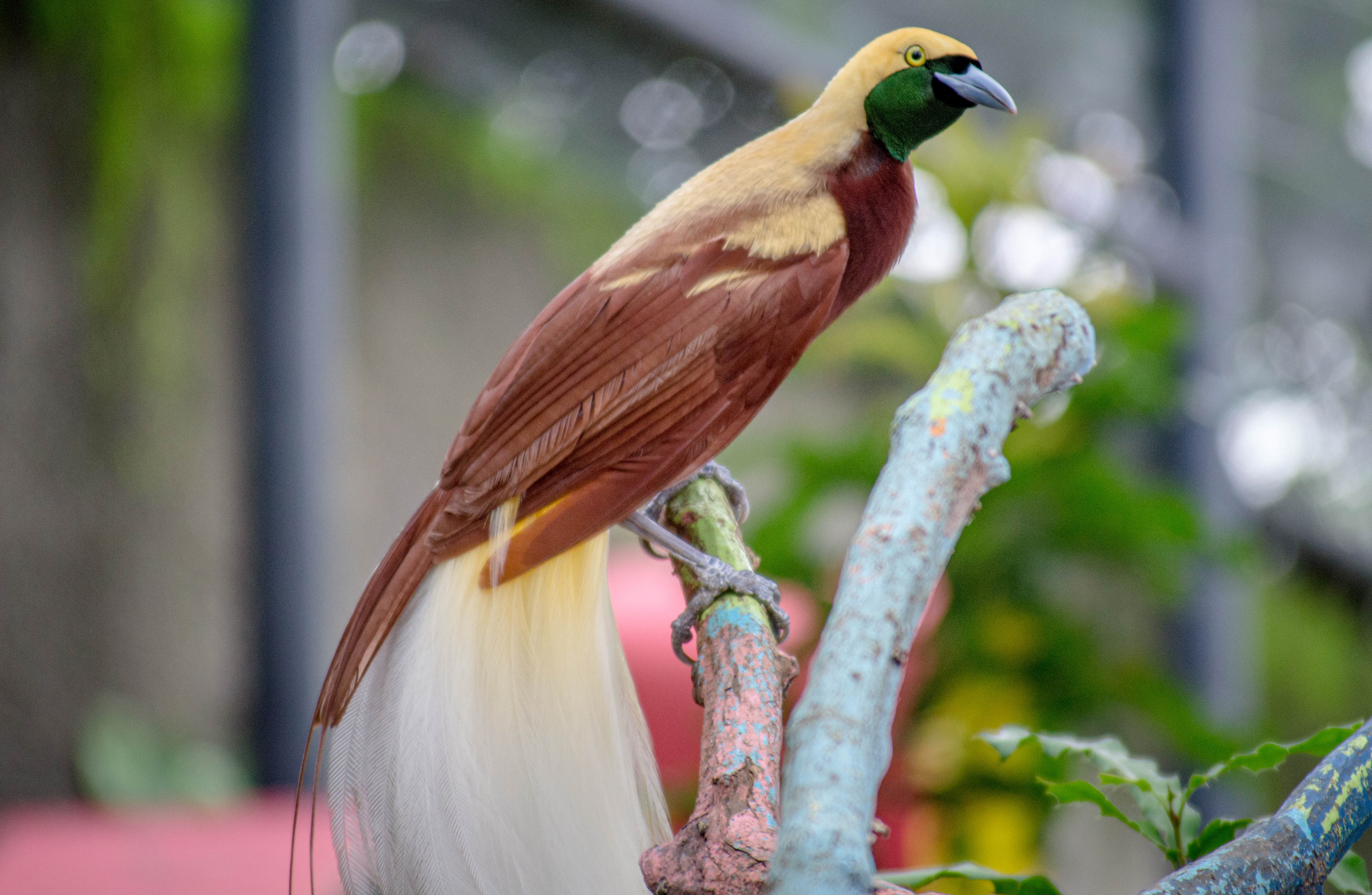
Male birds-of-paradise do not just show up to a date. They clear a dance floor, put on a costume and perform. Some twirl like ballerinas in black feather skirts, some flash breastplates that flip color in an instant, and some wear black so deep it swallows more than 99.6% of the light that hits it.
The family, Paradisaeidae, holds 44 species in 17 genera, found mainly in New Guinea, with a few in eastern Australia and the Maluku Islands. Wikipedia's bird-of-paradise entry notes that most species have elaborate mating rituals, at least eight court females on leks, communal display grounds, and female preference has driven the evolution of the males' combinations of sound, color and movement.
The ballerina
The parotias are the dancers. The western parotia's Wikipedia entry likens the male's routine to a ballerina's: he fans long black flank plumes out like a tutu beneath a shimmering breast shield, then jerks his head and neck to make a silver triangle on his crown flash at the watching females. Six thin head wires, three sprouting behind each eye, complete the look.
Researchers take those routines seriously. Edwin Scholes III broke one species' performance into its component moves in a 2008 study in Zoology on the courtship of Lawes's parotia, treating the dance as a trait to be measured like a beak or a wing.
Feathers that flip like a switch
Lawes's parotia has a trick in its chest, which the Lawes's parotia Wikipedia entry describes as a switch between bright blue-green and orange-yellow. A team from the University of Groningen, the University of Queensland and the University of Sussex found that its breast feathers have tiny barbules with a boomerang-shaped cross section. In their 2010 paper in Proceedings of the Royal Society B, they showed that each barbule works as three colored mirrors: a yellow-orange one facing out and two bluish ones angled about 30 degrees to either side. A small move during the display flips the breastplate sharply between colors instead of letting it shimmer gradually. As far as the authors knew, no other structure, natural or man-made, had been found packing several of these thin-film mirrors into one piece.
Blacker than black
Then there is the darkness. A 2018 study in Nature Communications by Dakota McCoy and colleagues examined feathers from five bird-of-paradise species and found super black plumage that reflects as little as 0.05% to 0.31% of incoming light, rivalling the darkest coatings engineers make. The barbules are reshaped and slanted so light ricochets between them until it is soaked up. The team thinks the velvet black works as a frame, making the bright patches beside it pop during a display.
How the birds got their name
- 1500s: skins reached Europe from trading voyages with wings and feet removed, so some believed the birds never landed.
- Magellan's voyage: chronicler Antonio Pigafetta wrote that locals called them "birds of God," the origin of "bird of paradise."
- Apoda: the greater bird-of-paradise's species name means "without feet."
- Today: a Raggiana bird-of-paradise flies on Papua New Guinea's flag.
Females, meanwhile, stay drab brown, and young males wear female-like plumage for up to seven years before earning the full costume. Plume hunting for European hats once pushed some species toward danger; habitat loss is now the main threat.
For more animal romance, read how bowerbirds decorate love nests with blue bottle tops, how gentoo penguins court with pebbles, and why superb fairywren males turn bright blue.
Sources
- “Bird-of-paradise”, Wikipedia, 2026
- “Western parotia”, Wikipedia, 2026
- “Lawes's parotia”, Wikipedia, 2026
- “Courtship phenotype in the bird of paradise Parotia lawesii”, Zoology (Scholes), 2008
- “Dramatic colour changes in a bird of paradise”, Proceedings of the Royal Society B (Stavenga et al.), 2010
- “Structural absorption by super black bird of paradise feathers”, Nature Communications (McCoy et al.), 2018
Image: Philip Nalangan, CC BY 4.0 via Wikimedia Commons
This article was produced with AI assistance and reviewed by our Editorial Desk. How we work.