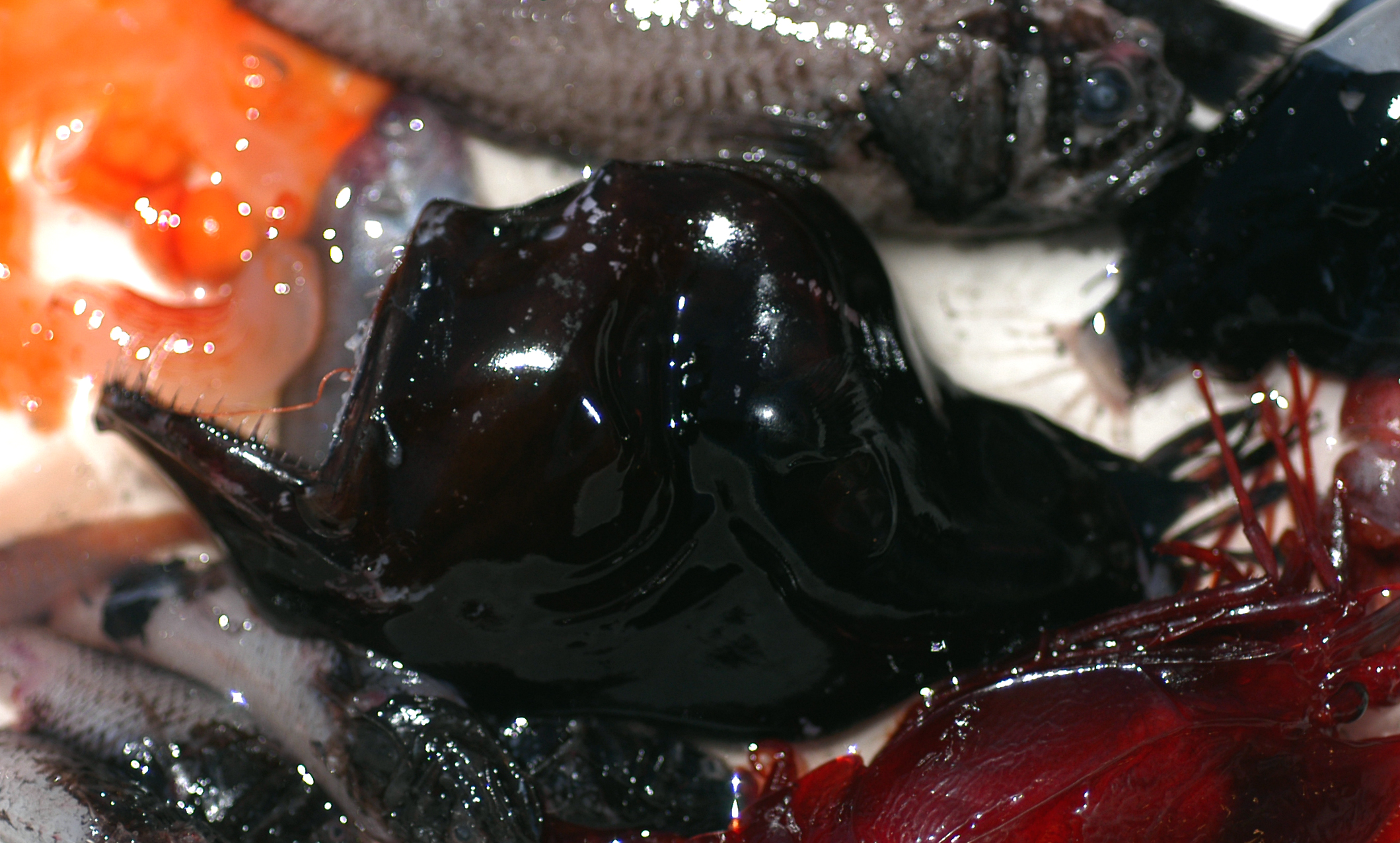
In the pitch-black deep sea, some anglerfish romances are literally for life. A tiny male finds a female many times his size, bites onto her body and never lets go. Over time, in some species, his tissues fuse with hers and their blood supplies join, until he is little more than a permanent part of her.
Biologists call it sexual parasitism, and it is one of the strangest relationships in the animal kingdom.
The mystery of the missing males
When scientists began hauling up deep-sea anglerfish, every specimen they caught seemed to be female, and many carried what looked like small parasites stuck to their skin. Those hangers-on turned out to be the males, according to Wikipedia's overview of the anglerfish order.
The British ichthyologist Charles Tate Regan worked it out in 1924, spotting that the little fish clinging to a bigger anglerfish was in fact a male caught while mating, as the humpback anglerfish's Wikipedia entry recounts. Before that, dwarf males had been filed as entirely separate species.
A size gap that is hard to believe
The mismatch can be staggering. In the warty seadevil Ceratias holboelli, males reach about 16 centimeters while females commonly grow to around 77 centimeters. In Photocorynus spiniceps, mature males measure just 6.2 to 7.3 millimeters, smaller than any other known mature fish or vertebrate, while females grow to about 50.5 millimeters.
The reason is the deep sea itself. Anglerfish are rare, scattered and weak swimmers, so a chance meeting with a partner may never come twice. Latching on means the female always has a mate on hand when it is time to spawn. Call it the ultimate commitment strategy.
Not every species goes all the way. The University of Washington ichthyologist Theodore Pietsch surveyed the range of arrangements in a 2005 review in Ichthyological Research, which sorted deep-sea anglerfish by their modes of reproduction. Some males attach only briefly. Humpback anglerfish males, for example, hold on temporarily and then swim off in search of other females.
How the body accepts a stranger
Permanent fusion raises a big puzzle. In most vertebrates, joining two individuals' tissues would trigger a violent immune rejection, the same reaction that makes organ transplants so difficult.
In 2020, a team from Germany's Max Planck Institute of Immunobiology and Epigenetics, working with Pietsch, examined the genes of multiple anglerfish species. Their study in Science found that species which fuse have evolved increasingly reduced immune responses, including the loss of what had been considered essential parts of the vertebrate immune system. The journal's summary says these shifts "suggest that vertebrate immune systems may be more flexible over evolutionary time than was previously thought."
In other words, the fish appear to have traded away some of their defenses to make a lifelong merger possible.
A young idea in fish terms
A 2024 study cited by Wikipedia found that the deep-sea anglerfish families, along with their trademark fusion, arose during the Eocene in a rapid burst of evolution after a period of extreme global warming about 56 million years ago. Their glowing lures, powered by bioluminescent bacteria, came along with the package.
No deep-sea anglerfish has ever been kept alive in an aquarium, so almost everything known about their love lives comes from specimens hauled up from the depths and from the rare video captured by submersibles.
For more on the science of attraction and bonding, see Badiyaa's report on how kissing began in ape ancestors 21.5 million years ago, and our look at how octopuses change color with light-sensing skin.
Sources
- “The immunogenetics of sexual parasitism”, Science (Max Planck Institute of Immunobiology and Epigenetics, University of Washington), 2020
- “Dimorphism, parasitism, and sex revisited”, Ichthyological Research, 2005
- “Anglerfish”, Wikipedia, 2026
- “Photocorynus spiniceps”, Wikipedia, 2026
- “Humpback anglerfish”, Wikipedia, 2026
Image: Personnel of NOAA Ship DELAWARE II, Public domain via Wikimedia Commons
This article was produced with AI assistance and reviewed by our Editorial Desk. How we work.