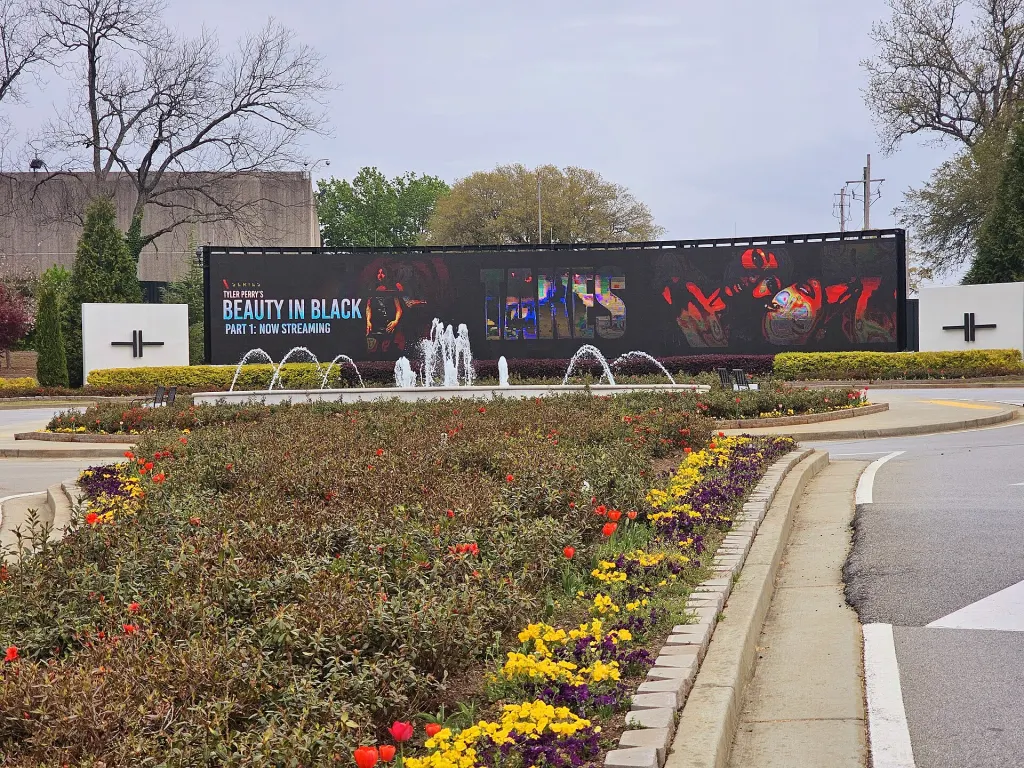
Tyler Perry Studios now lists 12 purpose-built sound stages, 40 buildings on the National Register of Historic Places and 200 acres of greenspace on the 330-acre lot in southwest Atlanta that Perry bought in 2015. Eleven years on, the figures on the studio’s own website describe one of the largest production facilities in the United States, sitting on land the US Army used for 126 years.
The ground is the former Fort McPherson, about four miles from downtown Atlanta. Before it hosted Madea, it held recruits, prisoners of war, hospital patients and, for its final decades, several major Army headquarters.
From barracks to backlot: the timeline
- 1867: A first Army post opens in west Atlanta during Reconstruction, on ground now occupied by Spelman College. Troops leave in December 1881.
- 1885: Congress sets aside $15,000 for a new post. Five tracts totaling 140.09 acres are bought that September, and the fort is named for Maj. Gen. James B. McPherson, the Union commander killed in the 1864 Battle of Atlanta.
- 1898: During the Spanish–American War the fort trains close to 20,000 recruits and serves as a general hospital.
- 1917–1918: A camp just west of the post holds German prisoners, peaking at 1,411 in July 1918, while the barracks become a hospital of roughly 2,400 beds that admits more than 10,000 patients.
- 1945: At the end of World War II the base becomes a separation center for almost 200,000 soldiers heading home.
- 2005–2011: The Base Realignment and Closure round of 2005 orders the fort shut. Forces Command and the Army Reserve Command move to Fort Bragg in North Carolina, and the gates close on September 15, 2011.
- 2007–2014: A local redevelopment authority approves a reuse plan built around a biomedical research park of about 115 acres. In August 2014 it reveals plans to sell much of the land to Perry instead, and residents and a state senator press for more transparency.
- June 2015: Perry completes the purchase of 330 acres. A separate public authority keeps 145 acres for other redevelopment.
- October 2019: The studio holds its grand opening. That November it stages a 2020 Democratic presidential debate, and in December it hosts Miss Universe.
- 2026: The US Food and Drug Administration opens a laboratory in the former Forces Command building on the old base.
Plans shifted along the way. At the time of the sale, Perry was expected to build up to 16 soundstages and move about 350 employees onto the site; reports then put the price at roughly $30 million. The finished lot has 12.
What 330 acres buys
The stage list on the studio’s site gives each building’s footprint. Stage 1 is the giant at 38,500 square feet. Eight more measure 20,000 square feet each and three are 10,000. Added up, that is 38,500 + 160,000 + 30,000, or 228,500 square feet of stage floor, a little over 5 acres under roof on a 330-acre property. The rest is backlot, standing sets and the historic district.
Those sets are unusually literal. They include a White House replica, a 16,000-square-foot mansion, a trailer park, a cul-de-sac of 12 houses with furnished interiors and a 1950s diner that was moved from a town 100 miles away. The stages themselves carry the names of prominent Black figures in entertainment, and Perry’s ownership made him the first African American to own a major film studio outright.
How it compares with a Hollywood lot
Size is where the Atlanta site stands apart. Warner Bros. Studios in Burbank, built in 1926, covers 62 acres, so Perry’s property is roughly 5.3 times larger by land area. Burbank still wins on stage count: it had 35 sound stages by 2015, almost three times Perry’s dozen. The difference is age and space. The California lot was packed tight over a century, while the Atlanta studio inherited open parade grounds, a former golf course and room to spare.
Perry has said he wants more. In June 2021 he and T. D. Jakes announced the purchase of more than 130 acres nearby for an entertainment district with theaters, shops, restaurants and a Georgia film and TV museum. In February 2024 he paused an $800 million expansion that would have added stages, citing fears that AI-generated video could cut demand for traditional production. The studio also signed a first-look deal with Netflix in October 2023, and the entertainment district has a target completion year of 2028.
Further reading
Image: OneofaKind25, CC BY-SA 4.0 via Wikimedia Commons
This article was produced with AI assistance and reviewed by our Editorial Desk. How we work.