A team of theoretical physicists collected 50 problems that nobody had ever published, each the kind of puzzle a world expert would need about a day to crack. Then they handed them to AI agents with no hints. The best one got 98% of the final answers right, and each problem cost it under $3 in computing.
The results come from TheoPhysEval, a benchmark paper posted to arXiv by 35 authors, with Suvrat Raju, a black hole physicist at the Tata Institute of Fundamental Research's International Centre for Theoretical Sciences in Bengaluru, listed last and submitting it. The co-authors include Andreas Karch, Jonathan Heckman and Gary Shiu. Version 2 went up on November 12.
Why the problems had to be secret
Large language models are trained on vast amounts of public text, so a problem already discussed online may simply be remembered. TheoPhysEval sidesteps that by using unpublished, research-level questions with answers that can be checked. Without AI help, the authors write, a typical problem "could be solved by a world expert in about a day or less but would take considerably longer for experts in adjacent specialties."
The agents worked the way a researcher would: they could search the literature and write scripts for numerical and symbolic math. The top performer was OpenAI's GPT-6-Astra, run inside the company's Codex coding tool.
The numbers
- 98% accuracy on final answers for the best agent, which on a 50-problem set works out to 49 correct.
- Under $3 per problem on average, against roughly a day of an expert's time.
- Little change without the internet. When agents were denied web search and background papers, accuracy barely moved, which the authors say suggests "significant memorization of the literature."
That last point cuts both ways. The models are not just looking things up, but they also carry a great deal of physics already baked in.
Brilliant calculators, no breakthroughs yet
The paper's headline conclusion is that "state-of-the-art agents can accurately perform concrete calculations required across theoretical physics research." Just as striking is what it does not claim. The authors set out to discuss "possible explanations for the current lack of agent-led breakthroughs in theoretical physics despite their outstanding problem-solving abilities."
In other words, the machines can now grind through the algebra that used to eat a postdoc's week, but nobody has yet watched one invent a new theory. For a field long told to "shut up and calculate," a phrase physicist N. David Mermin coined about attitudes to quantum theory, according to Wikipedia's article on interpretations of quantum mechanics, the calculating part may be the first to go.
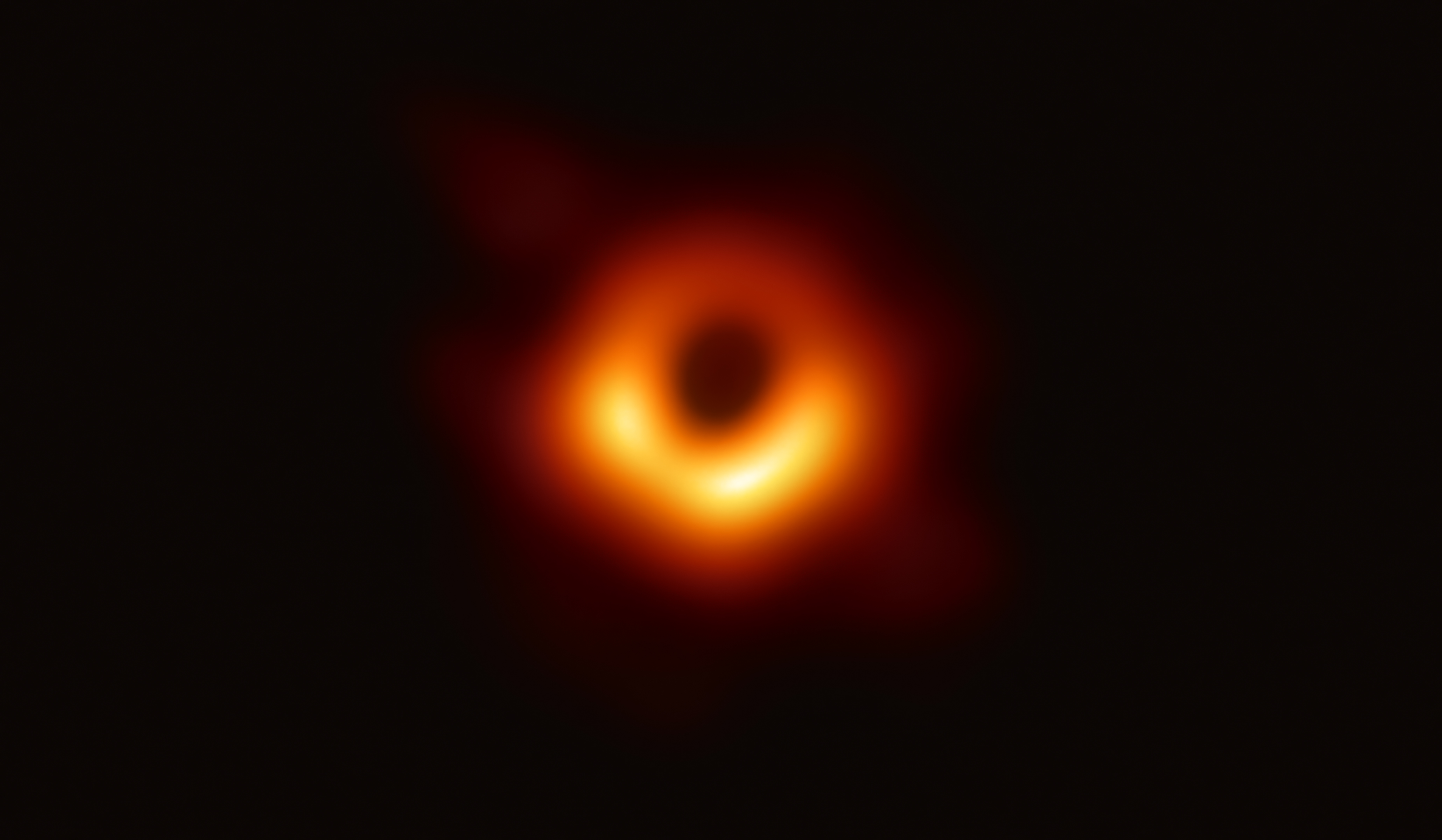
The open frontier is exactly where Raju made his name. His research centers on the black hole information paradox, the clash between quantum mechanics and gravity that no benchmark can grade because nobody knows the answer. Badiyaa covered a related claim last week, when Anthropic said Claude Fable 5.2 solved two open black hole physics problems, and has tracked new attempts at that deeper puzzle, such as tiny primordial black holes that may have reheated the early universe.
The benchmark itself, at 8 pages plus 48 of appendices, is free to read on arXiv.
Sources
- TheoPhysEval: Assessing AI agents at autonomous theoretical physics problem solving, arXiv (Chandra et al., Raju), 2026
- Suvrat Raju, Wikipedia, 2026
- Interpretations of quantum mechanics, Wikipedia, 2026
Image: 11thdimensionphysics, CC0 via Wikimedia Commons
This article was produced with AI assistance and reviewed by our Editorial Desk. How we work.