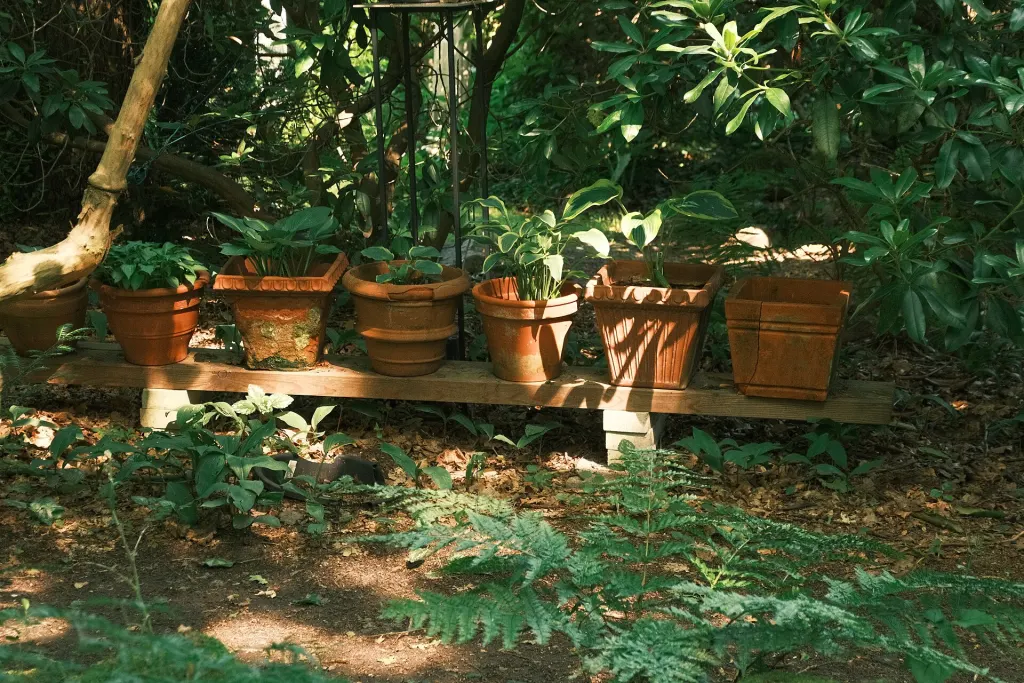
A cracked or spare clay pot already has the one feature a lamp shade needs: a hole in the bottom. Push a bulb or a cord through it and the pot glows, throws a warm ring of light and costs nothing if it was destined for the trash. The idea is spreading as a patio project heading into autumn evenings, and it is genuinely easy. The parts that deserve care are the electricity and the weather, because terracotta is not watertight.
Three ways to do it
1. Mini pots on a light strand. The simplest version threads each bulb of a string of mini lights through the drainage hole of a small pot. Widen the hole gently with an old scissor blade, then fix the bulb’s plastic base to the pot with hot glue. One crafter who uses this method gives a firm warning: “Do not get hot glue anywhere near the bulb.” Seal the clay before painting; it is porous and soaks up acrylic paint otherwise, and a top coat of sealant is needed if the string lives outdoors.
2. One big pot as a pendant. A pot about 6 inches across at the rim works as a hanging shade. You take apart a pendant cord kit at the socket, feed the cord through the drainage hole, reassemble, and hang it from a bracket. Note that the published tutorials for this design are for indoor rooms. A baking-soda wash that gives the clay an aged look rinses away in rain, for instance.
3. A cut-pattern lantern. Turn the pot upside down, pencil a design on the wall, and cut it out with a rotary tool fitted with a tile-cutting bit. Dremel’s own project plan says to enter the clay at about 45 degrees, then hold the bit square (90 degrees) once you are through, and to make many light passes rather than pushing hard, which cracks the pot. Wear eye protection and a dust mask and clamp the pot where you can.
The electrical rules, in numbers
Anything plugged in outside needs three things. First, lights certified for outdoor use and tested by a nationally recognized testing laboratory, which is the standing advice of the US Consumer Product Safety Commission. Second, an extension cord rated for outdoors and for the amperage of what it feeds. Third, a ground-fault circuit interrupter (GFCI), either built into the outlet or as a plug-in portable unit, which needs no special skill to fit.
The GFCI is the piece that earns its place. It watches the current going out on one wire and coming back on the other; if they differ, some of it is leaking, possibly through a person or a puddle, and the device cuts the power. A North American GFCI rated for shock protection trips at an imbalance of 5 milliamps within 25 milliseconds. A residual-current device does the same job in Europe, usually set at 30 milliamps.
Beyond that: check every string for cracked sockets and bare wire before it goes up, keep cords and plugs out of standing water, do not close doors or windows on them, unplug before changing a bulb, and switch everything off at bedtime. Overloading one outlet with decorations can overheat it.
The common mistake
Treating clay as weatherproof. Terracotta is fired at around 1,000°C and stays porous, so rain soaks in and an upturned pot can hold water around a socket. Paint without a sealer wears off outdoors. Put pot lamps under a roof overhang or use a battery or solar light inside instead of mains power.
If you prefer a candle glow, the US Fire Administration recommends battery-powered flameless candles. For real flames, keep each one in a stable holder at least 12 inches from anything that burns, and blow it out before you go indoors; US fire departments still see about 20 home candle fires a day.
Further reading
- Wikipedia: Terracotta
- Wikipedia: Residual-current device
- US Fire Administration: Candle fire safety
- US Consumer Product Safety Commission: Holiday decorating safety guide
Image: Torsten Behrens, CC BY 2.0 via Wikimedia Commons
This article was produced with AI assistance and reviewed by our Editorial Desk. How we work.