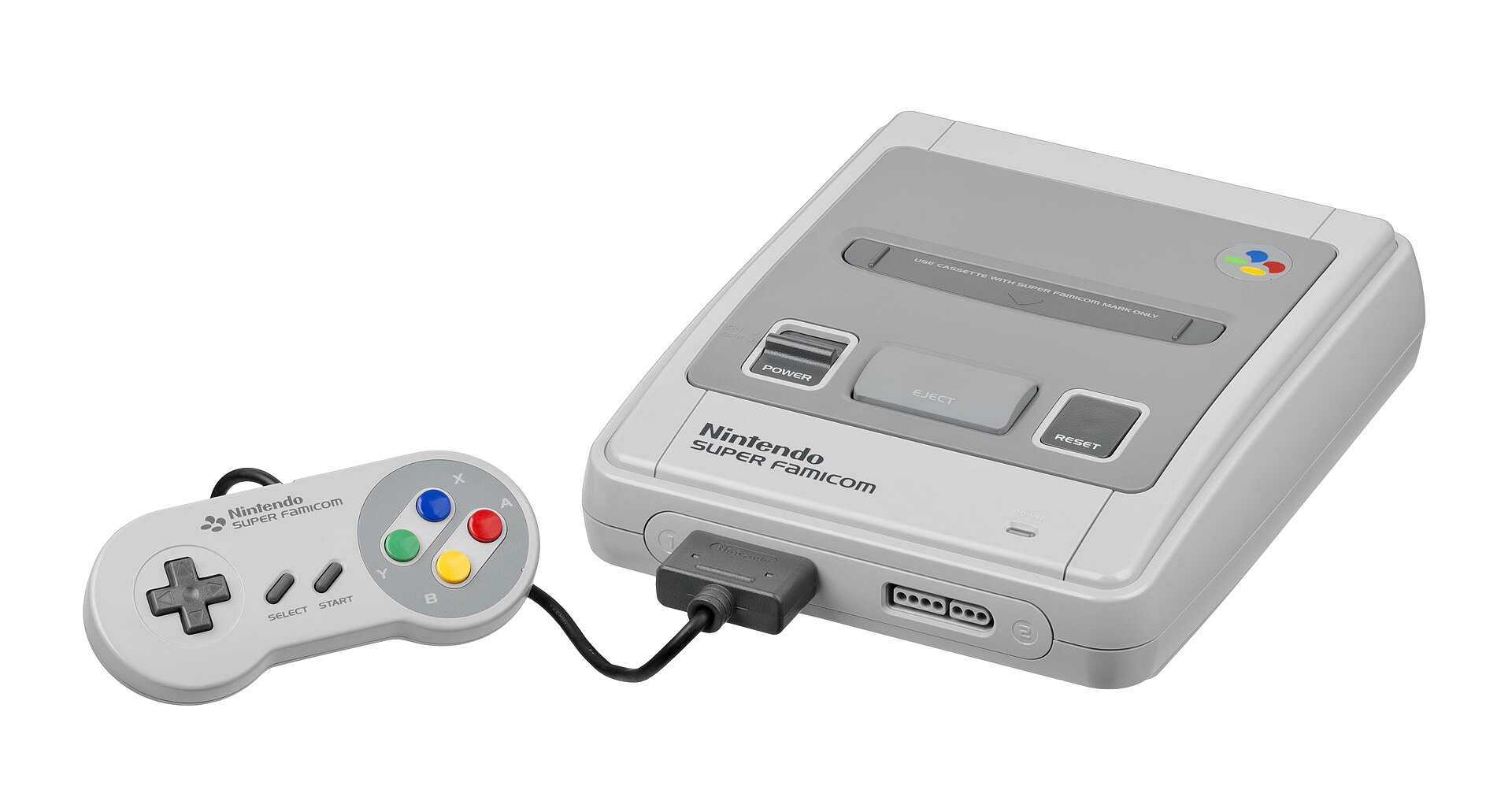
Nintendo's Super Famicom went on sale in Japan 36 years ago, on November 21, 1990, priced at 25,000 yen, and the first shipment of 300,000 consoles sold out within hours. Known outside Japan as the Super Nintendo Entertainment System, it went on to sell 49.1 million units, the most of any home console of its 16-bit generation.
Trucks at midnight
Demand was obvious before launch day. After the final design was shown at Nintendo's Shoshinkai trade show in August 1990, wholesalers placed 1.5 million pre-orders, according to the console's Wikipedia entry. Nintendo asked shops to run reservation systems to keep launch day orderly.
On November 20, the day before release, Nintendo loaded 100 trucks with consoles and copies of Super Mario World and F-Zero, then sent them out late at night in what it called "Operation: Midnight Shipping," hoping to keep the cargo away from thieves.
The first wave covered only a fraction of the demand: 300,000 consoles against 1.5 million pre-orders, or about one for every five orders placed. Japanese buyers had just two games at launch, Super Mario World and F-Zero.
What was inside
Engineer Masayuki Uemura, who had also designed the original Famicom, led the hardware. Its main processor, a Ricoh 5A22, ran at 3.58 MHz, and its graphics could pick from a palette of 32,768 colors. Mode 7 let games fake 3D by rotating and scaling a flat background, which F-Zero and Pilotwings used to show off.
The sound chip has its own story. Sony engineer Ken Kutaragi agreed to design it for Nintendo without telling his bosses, and was nearly fired when they found out, Wikipedia's history of the console notes. A later Sony project to build a CD drive for the Super Nintendo produced a prototype called the PlayStation, which never shipped but laid the groundwork for Sony's own console.
Super Famicom timeline
- September 9, 1987: Nintendo president Hiroshi Yamauchi reveals the console is in development.
- November 21, 1990: Japanese launch.
- August 23, 1991: the redesigned Super NES begins shipping in North America at $199.
- April 1992: UK and Ireland launch at 150 pounds.
- November 1994: Donkey Kong Country arrives and sells 6.1 million copies in the last 45 days of the year.
- September 25, 2003: Nintendo ends Super Famicom production in Japan, almost 13 years after launch.
The legacy in numbers
Nintendo and its partners released 1,757 games for the system worldwide, including The Legend of Zelda: A Link to the Past, Super Metroid and Chrono Trigger. Super Mario World, packed in with the console, sold 20.6 million copies. Of the 49.1 million consoles sold, 23.35 million went to the Americas and 17.17 million to Japan.
Its controller layout, with four face buttons in a diamond and two shoulder buttons, became the template for later pads from PlayStation to Xbox.
Nintendo's hardware history keeps coming up on Badiyaa, from the Wii turning 20 to Ocarina of Time on Switch 2 compared with the Nintendo 64 original, along with Nintendo's takedown of the Picofly modchip.
Sources
- Super Nintendo Entertainment System, Wikipedia, 2026
Image: Evan-Amos, Public domain via Wikimedia Commons
This article was produced with AI assistance and reviewed by our Editorial Desk. How we work.