The YouTube video trending in the US as “Shakira Ft. Bob Marley – Rolling in the Deep (Official Music)” is not by Shakira, does not feature Bob Marley and is not official. It was posted on Sunday, October 25, by a channel called Mohib Beats, and by Tuesday, October 27, it had 51,590 views. Its description lists Mohib Beats as the source of the video, the music and the mixing and mastering, and tells anyone who wants the track on streaming services that “you need to purchase a license.”
What the page leaves out is the word AI. There is no disclaimer in the description and no “Made with AI” label under the title, and Mohib Beats was not the first channel to use this exact title.
The same title, twelve days earlier
A channel called Riddim House posted a video with an identical title on October 13, Pacific time. By Tuesday it had about 180,500 views, more than three times the trending copy, and both clips run 6 minutes 48 seconds. The Riddim House version is open about what listeners are hearing. It carries YouTube’s AI tag beside the channel name, a “Made with AI” note saying “Sounds or visuals were altered or fully generated,” and a disclaimer in the description: “This track is AI-generated and created as a fan-made musical concept. It is not an official collaboration with Shakira or Bob Marley.”
So in less than two weeks the same packaging moved from a channel that labels the song as synthetic to one that credits the music to itself and offers licenses. Badiyaa has not established who generated the audio in either case, and the matching run time alone does not prove the two uploads share a recording. The pattern is familiar, though. On Monday, October 26, Badiyaa showed that the viral “Damian Marley ft Bob Marley – When God Calls” video was an AI-made upload, and Mohib Beats was one of the channels carrying that title as well. Its “When God Calls” upload sits in the recommendations beside the Shakira clip.
Why the pairing cannot be real
The arithmetic rules it out before anyone presses play. Bob Marley died in Miami on May 11, 1981, at 36. “Rolling in the Deep” was written by Adele and producer Paul Epworth and released on November 29, 2010, as the lead single from her album 21. That is 29 years and six months after Marley’s death (May 1981 to November 2010), so no session could have put him on the song. Adele’s original spent seven weeks at No. 1 in the US and won Record of the Year and Song of the Year at the 2012 Grammys, which helps explain why its title keeps getting borrowed.
Riddim House has built a small catalog this way. Its “Shakira Ft. Bob Marley – Easy on me” went up on September 21 with a similar AI disclaimer, “Shakira Ft. Bob Marley – Love Never Felt So Good” followed this month, and newer uploads pair Marley’s name with Michael Jackson and Adele. A separate channel, Reggae Groove Lab, posted “Bob Marley ft. Shakira – Dancing Queen (Official Music Video)” on September 16 and calls it an “unofficial, fan-made AI music concept.” A fourth channel, Dub Dynasty, posted its own “Rolling in the Deep” variant on October 23.
What YouTube’s rules say about this
YouTube’s help pages require creators to disclose realistic AI content, and the list of cases that need a disclosure includes content that “Creates music that’s the main focus of the video.” A text disclaimer in a description is not the same thing as that disclosure: creators make it through the “AI use” setting in YouTube Studio, and YouTube then labels the video. For AI-generated music, the company says, the label can appear on the player itself.
Since May 2026 YouTube has also been adding labels on its own. In a May 27 announcement, the company said it would move disclosure labels for photorealistic and meaningfully AI-altered content directly below the player, and that “If a creator doesn’t specify whether or not they used AI, but our systems detect significant photorealistic AI use, we will now automatically apply a label.” Its help page says the automatic labels cover content its internal systems detect as AI-generated or altered.
Two limits are worth knowing. The announcement frames automatic detection around photorealistic content, and it does not spell out how the system treats an AI-generated song played over ordinary-looking footage. And a label is information, not a penalty: according to YouTube, carrying a disclosure label has no effect, by itself, on recommendations or on a video’s ability to make money. Penalties, up to removal of content or suspension from the YouTube Partner Program, are reserved for creators who consistently fail to disclose.
How to check a “ft. Bob Marley” upload in a minute
- Do the dates. Marley died in 1981. Any “new” collaboration on a song released after that is either an archival vocal the estate has licensed or a fake, and a licensed one would be announced on his official channels.
- Read the channel name, then the whole description. Disclaimers like the Riddim House one tend to sit several lines down, under the hashtags.
- Look for the AI tag and the “How this was made” box. On the Riddim House upload both are visible; on the trending copy neither is.
- Search the original title. If the song already belongs to another artist, as “Rolling in the Deep” belongs to Adele, the “feat.” credit is fiction.
When Badiyaa checked on Tuesday, October 27, the labeled Riddim House original had about 180,500 views, and the unlabeled Mohib Beats copy still carried “(Official Music)” in its title at 51,590 views.
Further reading
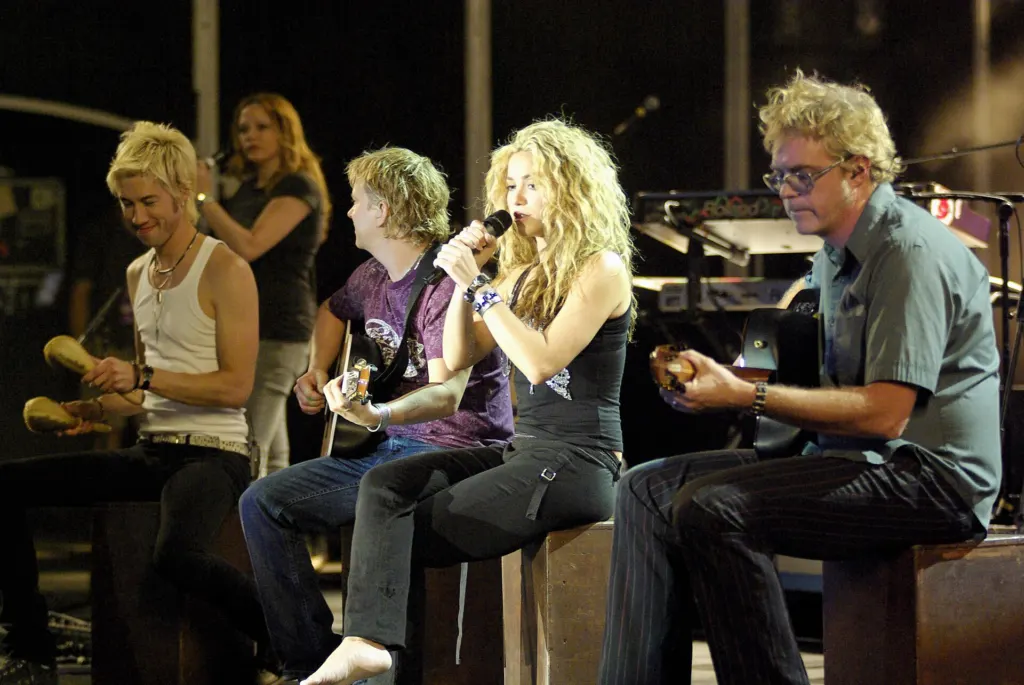
Image: Andres Arranz, CC BY 2.5 via Wikimedia Commons
This article was produced with AI assistance and reviewed by our Editorial Desk. How we work.