Before he won an Oscar for co-writing “Glory,” Chicago rapper Rhymefest built one of the most quietly ambitious songs on his debut album around another songwriter’s hook. “Bullet,” track 14 on Blue Collar, features Citizen Cope and samples Cope’s own “Bullet and a Target,” which makes the guest less a feature than a co-architect.
Blue Collar came out on July 11, 2006, through Mark Ronson’s Allido imprint at J Records, so the song is now two decades old. It remains a useful snapshot of how a rapper known mostly as a ghostwriter tried to step forward under his own name.
Who built “Bullet”
The credits are stacked. Rhymefest, born Che Smith, wrote it with Clarence Greenwood, the singer-songwriter who records as Citizen Cope, and Emile Haynie. Emile produced the track, Ronson took a co-production credit and Jon Brion, the film composer and producer, is listed for additional production. The four-minute cut sits near the end of the album, after the Malik Yusef-voiced “Mr. Blue Collar” interlude.
Cope was an unusual pick for a Chicago rap record. Born in Memphis and raised mostly in Washington, D.C., he blends blues, soul, folk, rock and hip-hop, and other artists, including Santana, Dido and Richie Havens, have recorded his songs. “Bullet and a Target” was already circulating as a sync favorite, turning up in the 2006 thriller The Sentinel, the film Alpha Dog and the TV series Cold Case. Rhymefest’s version gave that brooding hook a rap frame.
The album around it
Blue Collar was assembled over three years, from 2003 to 2006, in studios across Milwaukee, New York, Burbank, Atlanta, North Miami and Chicago. Its producers included No I.D., Kanye West, Just Blaze, Cool & Dre and Ronson, and the guest list ran from West and Q-Tip to Ol’ Dirty Bastard on the closer “Build Me Up.” It debuted at No. 61 on the US albums chart and No. 10 on the R&B/hip-hop albums chart, while the West-assisted lead single “Brand New” reached No. 32 in the UK.
Those are modest numbers next to the songs Rhymefest wrote for others. By the time Blue Collar landed, he already held a Grammy for Best Rap Song as a co-writer of Kanye West’s “Jesus Walks.” He later co-wrote West’s “New Slaves” and, in 2014, “Glory” with Common and John Legend for the film Selma, which won the Golden Globe and the Academy Award for Best Original Song.
That split, a writer’s résumé that outshines his solo charts, is why album cuts like “Bullet” reward a second listen: they show what Rhymefest sounded like when the hook belonged to a collaborator rather than to a superstar client.
Same year, different lanes
2006 was a crowded year for rap albums. It also brought Jay-Z’s return, covered in Badiyaa’s look at Jay-Z’s Kingdom Come at 20. And Q-Tip, who opens Blue Collar on its “Feel Free” intro, later steered A Tribe Called Quest’s final album, made at his home studio.
Rhymefest followed Blue Collar with El Che in 2010, then went 14 years before his third album, James & Nikki: A Conversation, arrived in 2024.
Further reading
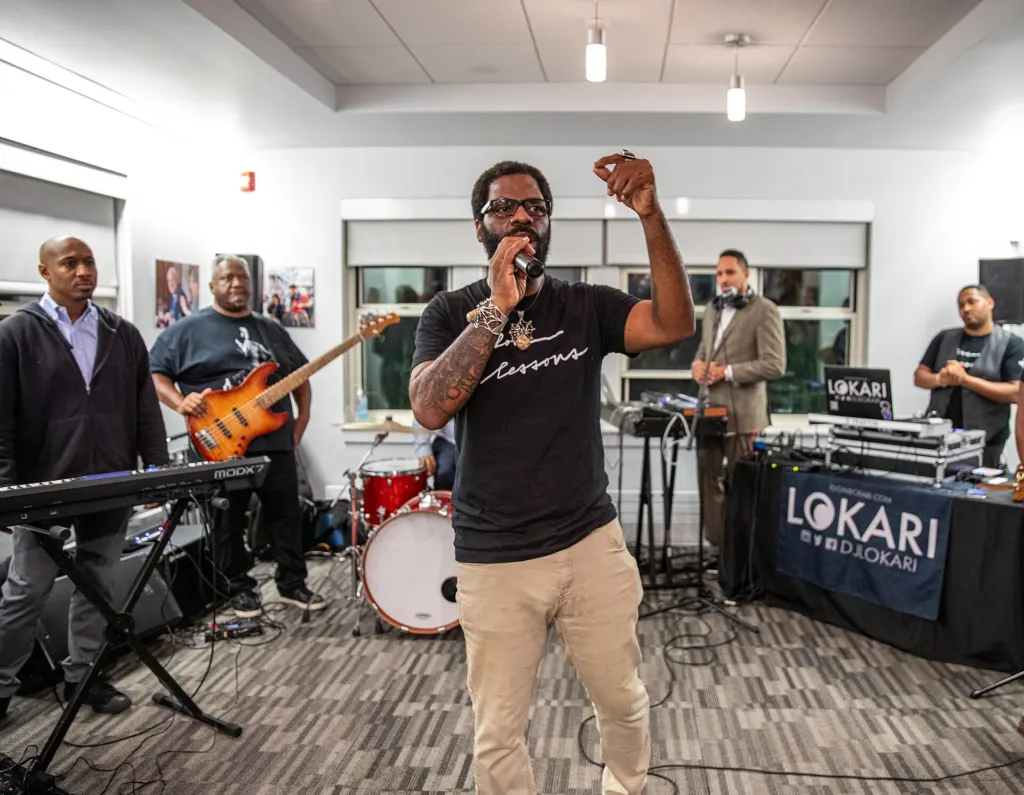
Image: University of Chicago Institute of Politics, CC BY 4.0 via Wikimedia Commons
This article was produced with AI assistance and reviewed by our Editorial Desk. How we work.